.webp)


What you eat when you have a cough or cold can make a difference in how comfortable you feel during recovery. Although food cannot cure a viral infection, nutritious meals and adequate fluids can support your body's natural healing process. Choosing the right foods for cough and cold may also help soothe a sore throat, maintain energy, and prevent dehydration.
Are you wondering what to eat during a cold when your appetite is low? Warm soups, soft fruits, honey, and other nourishing foods can be gentle on the throat and easy to consume. The best foods for cough and cold are those that provide hydration, essential nutrients, and comfort while your body fights the infection.
1. How Can Warm Chicken Soup Help During a Cold?
Why is chicken soup often recommended when you have a cough and cold? Warm chicken soup can provide fluids, energy, and essential nutrients when you are feeling unwell. The warmth may temporarily soothe a sore throat and help loosen nasal mucus, making congestion feel more manageable.
Chicken provides protein, while vegetables such as carrots, beans, and spinach add vitamins, minerals, and fibre. If you follow a vegetarian diet, vegetable soup with lentils or beans can offer similar nutritional benefits.
Helpful tip: Choose a lightly seasoned soup and sip it while warm, not excessively hot.
Visit our Pulmonology Department in Hyderabad for expert respiratory care and advanced diagnostic services.
2. Why Are Oranges and Other Vitamin C-Rich Fruits Helpful?
Can oranges, guavas, and other vitamin C-rich fruits support cold recovery? Fruits such as oranges, guavas, kiwis, strawberries, and sweet lime provide vitamin C and other nutrients that support normal immune function.
Vitamin C is important for the body's immune system, but eating large amounts after a cold begins is not a guaranteed way to shorten the illness. Still, including fresh fruits in your meals can help you maintain a balanced diet.
Helpful tip: Choose soft fruits or fresh fruit preparations if your throat feels sore.

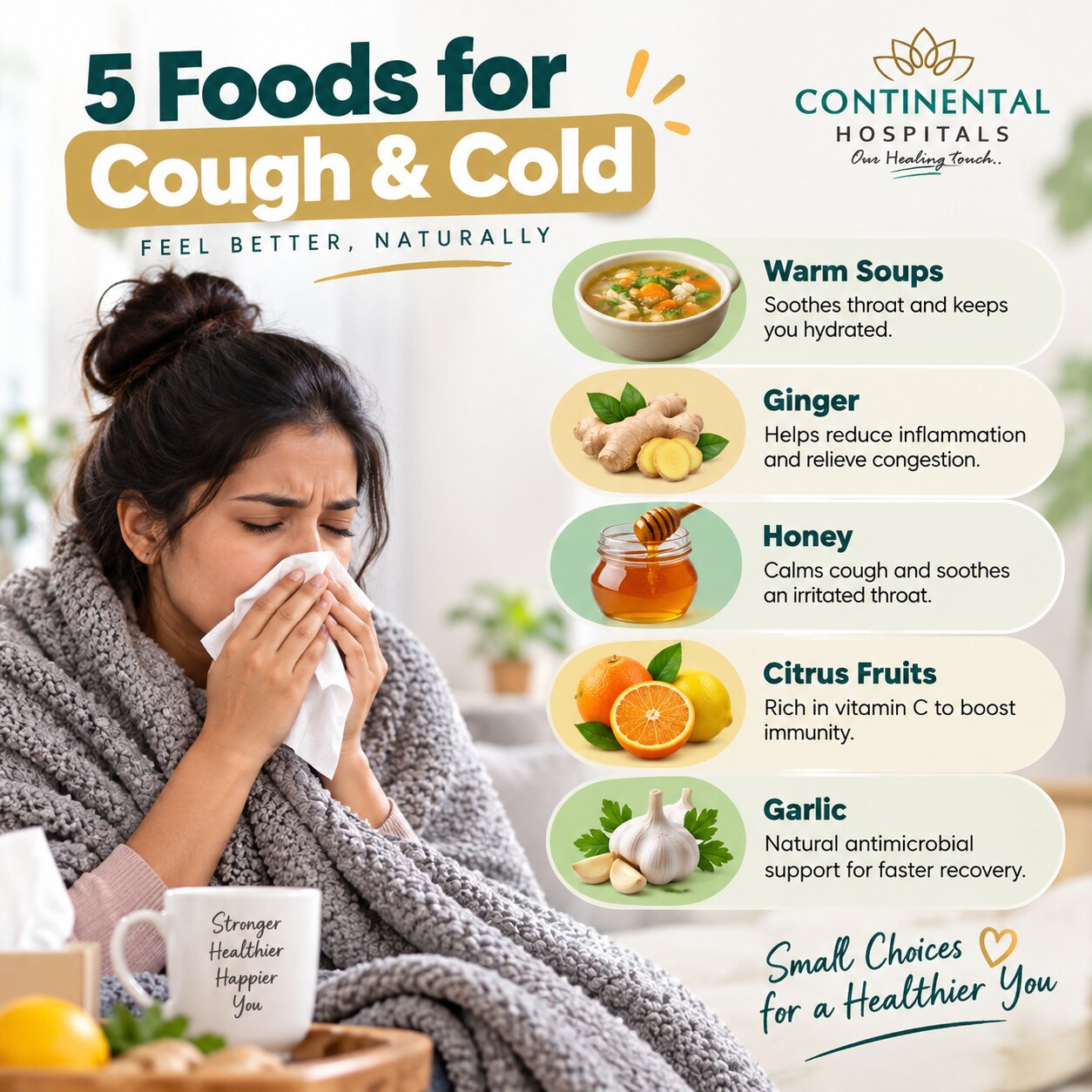
3. Is Honey One of the Foods That Help Relieve Cough?
Could a spoonful of honey help calm a troublesome cough? Honey may help soothe the throat and reduce coughing, particularly at night, in children over one year of age and adults. It can be consumed on its own or added to warm water or tea.
Honey does not eliminate the infection causing a cold, but it may provide temporary relief from cough-related irritation.
Important safety point: Never give honey to babies younger than one year because of the risk of infant botulism.
4. How Can Ginger Tea Help When You Are Sick?
Why do many people choose ginger tea when they have a cold? Warm ginger tea can provide fluids and may feel soothing when you have throat irritation or nasal congestion. Ginger is also commonly used to support digestive comfort.
However, ginger tea is not a proven cure for coughs or viral infections. Avoid making it excessively strong if it causes stomach discomfort.
Helpful tip: Try warm ginger tea with a little honey if suitable for your age and health needs.
5. Why Are Bananas Good Foods to Eat When Sick?
Are bananas suitable when you have a cough and cold? Bananas are soft, easy to chew, and generally gentle on the stomach. They provide carbohydrates for energy and contain potassium, which supports normal muscle and nerve function.
When you have a reduced appetite, a banana can be a convenient snack. You can also combine it with plain yogurt or oatmeal for a more filling meal.
Helpful tip: Choose a ripe banana if swallowing or chewing is uncomfortable.
6. Can Warm Oatmeal Support Cold Recovery?
How can oatmeal help when you are recovering from a cold? Warm oatmeal provides carbohydrates, fiber, and other nutrients that support everyday energy needs. Its soft texture may be comfortable for people experiencing a sore throat.
You can prepare oatmeal with milk or a suitable alternative and add mashed banana or other soft fruits for extra nutrition.
Helpful tip: Keep the consistency soft and avoid serving it too hot.
7. Why Are Yoghurt and Other Protein-Rich Foods Important?
Can yogurt be included in your diet during a cough and cold? Plain yogurt provides protein and other nutrients that help support normal body functions. It may be a convenient choice when you do not feel like eating a heavy meal.
Some people find cold foods soothing, while others prefer warm meals when they have throat irritation. If dairy products seem to worsen your discomfort, choose another suitable protein source, such as lentils, eggs, or beans.
Helpful tip: Choose plain yogurt and avoid highly sugary preparations.
What Other Foods and Drinks Can Support Cold Recovery?
- Drink enough water throughout the day to help prevent dehydration.
- Try warm broths, soups, and caffeine-free herbal drinks.
- Include vegetables, fruits, and protein-rich foods in balanced meals.
- Eat smaller portions if your appetite is reduced.
- Avoid smoking and exposure to secondhand smoke, which can irritate the airways.
When Should You See a Doctor for a Cough and Cold?
When does a cough or cold require medical attention? Most common colds improve with time and supportive care, but some symptoms need professional evaluation.
Consult a doctor if you experience:
- A cough that persists or keeps getting worse.
- High or persistent fever.
- Difficulty breathing or chest pain.
- Signs of dehydration, such as very little urine or severe dizziness.
- Symptoms that improve and then become significantly worse.
Why Choose Continental Hospitals for Respiratory Care?
Why is specialist care important when a cough or cold does not improve? Persistent respiratory symptoms may sometimes indicate an underlying condition that requires further evaluation.
Continental Hospitals, Hyderabad, provides comprehensive healthcare supported by experienced medical specialists, advanced diagnostic facilities, and multidisciplinary expertise. The hospital follows established patient safety and healthcare quality practices and holds national and international accreditations, including JCI and NABH, reflecting its commitment to quality standards and continuous improvement.
Patients with persistent cough, breathing difficulties, or recurring respiratory infections can receive appropriate assessment and individualized care from the relevant specialists.
Conclusion
What are the key things to remember about foods for coughs and colds? Nutritious meals, adequate hydration, and sufficient rest can help support your body's recovery and make symptoms more manageable. Warm soups, fruits, honey for appropriate age groups, oatmeal, bananas, and protein-rich foods are useful choices when you are feeling unwell.
If you suffer from a persistent cough, recurring cold symptoms, breathing difficulty, or worsening respiratory discomfort, consult our best pulmonologist in Hyderabad at Continental Hospitals, Hyderabad, for appropriate evaluation and personalized treatment.
Related Blogs: