
post-title

Can Adrenal Gland Cancer Affect Hormone Levels? Understanding the Connection

Written by - Editorial Team
Medically Reviewed by - Dr Harish N L

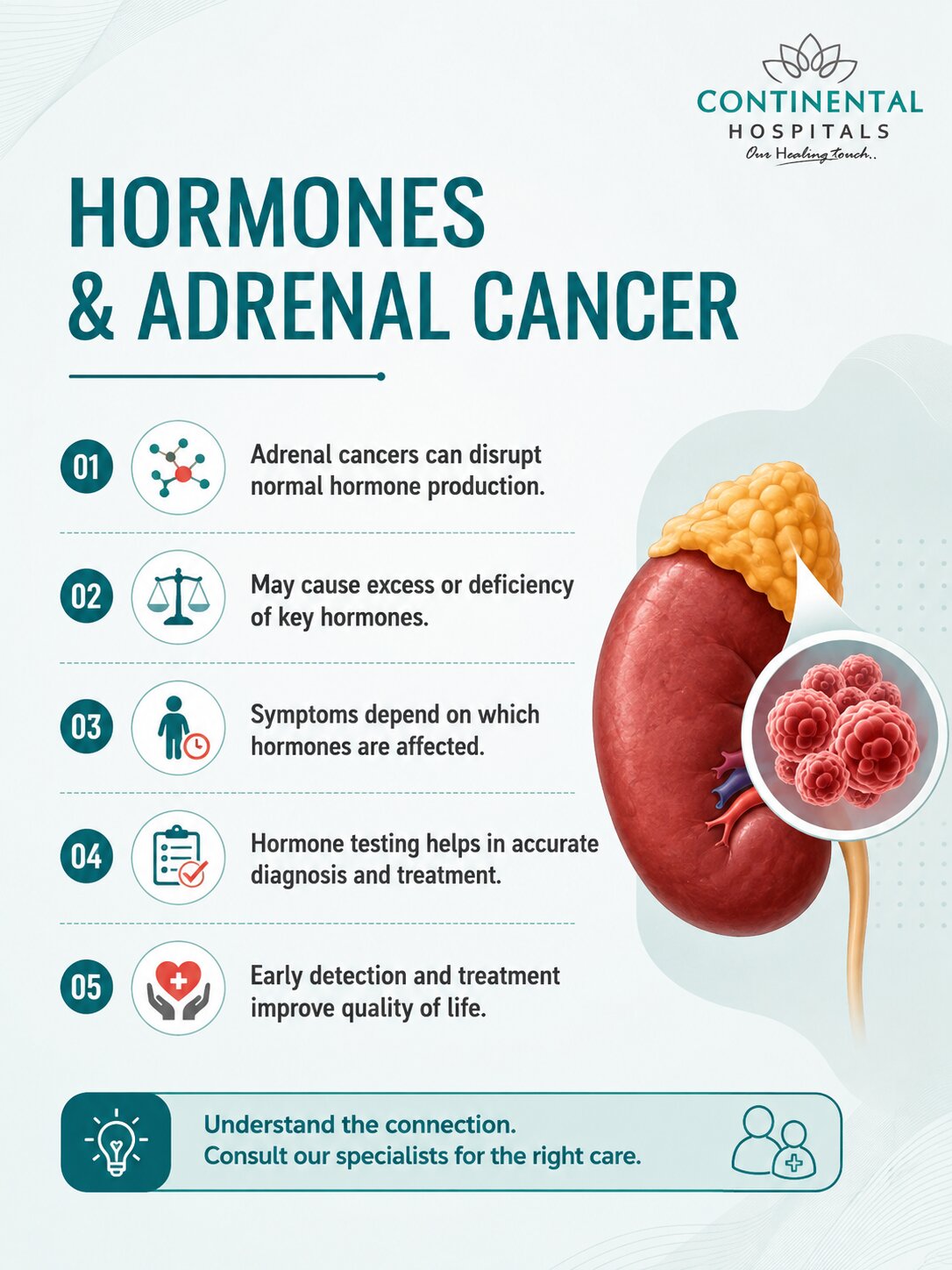
Can the cancer of the adrenal gland have an impact on hormones produced in the body? Yes, that can sometimes be the case. Adrenal gland cancer is a rare type of cancer affecting one of the adrenal glands located above the kidneys. The adrenal glands are responsible for producing some hormones which are used in regulating blood pressure, metabolism, stress, and other important functions of the body.

Why are hormones important in understanding adrenal gland cancer? Some adrenal tumors can produce many hormones while others do not produce hormones at all. Once the tumor modifies the hormone production, it leads to changes in the organism. Understanding the relations between adrenal cancer and hormones is important because it allows one to identify the potential signs and seek the appropriate medical checkup in time.

How Do the Adrenal Glands Create Hormones?

What is the function of the adrenal gland in the body? Each adrenal gland has an outer layer called the adrenal cortex and an inner portion called the adrenal medulla. Different regions of the adrenal gland produce different types of hormones.

Among the hormones produced by the adrenal glands, the following are included:

  • Cortisol - a body hormone that enables the body to respond to stress and impacts metabolism
  • Aldosterone - a hormone responsible for blood pressure and salt and fluid balance
  • Androgens - the sex hormone that is produced in less quantity
  • Adrenaline - a hormone that the body secretes when there is stress

Since these hormones act upon different body systems, an adrenal tumor can sometimes result in severe symptoms.

Visit the Best Oncology Doctors in Hyderabad at Continental Hospitals, Hyderabad, for comprehensive cancer care and expert treatment guidance.

Can Cancer Affect Hormone Production?

Is it true that cancer in the adrenal gland has a connection with hormones? Yes, it is. Some adrenal gland cancers are referred to as "functioning tumors", as they produce hormones. Others are known as non-functioning tumors, which means that they do not increase hormone production to a significant level.

Adrenal gland tumors may introduce hormone imbalance. Symptoms depend on the specific type of hormone involved.

For example:

Second Opinion

  • Increased cortisol may affect weight, blood pressure, blood sugar and muscle.
  • Increased aldosterone may result in high blood pressure and low potassium levels.
  • Increased androgens result in effects associated with their high activity.
  • Increased hormones secreted by the adrenal medulla cause episodes of sweating, heartbeating, headaches and in some cases, increased blood pressure.

Not all patients suffering from adrenal gland cancer experience hormone symptoms.
What Symptoms Should You Be Aware of in the Event of Adrenal Gland Cancer?

What are a few main adrenal gland cancer symptoms? Those symptoms can change with respect to tumor characteristics such as its size, site, hormones produced by it, and spread of cancer cells.

Some of the possible symptoms include:

  • Abdominal or back pain
  • Feeling of fullness in the abdomen
  • Presence of a lump in the abdomen
  • Unintentional weight gain or loss
  • Ongoing hypertension
  • Weak muscles
  • Changes in blood glucose levels
  • Abnormal sweating or heart rate due to hormone-producing tumors
  • Symptoms connected to sex hormone synthesis

Some tumors can be found by means of imaging methods used for another health condition. Thus, the absence of any symptoms does not indicate that there are no tumors present in the adrenal glands.

How Is Adrenal Gland Cancer Diagnosed?

Doctors begin by gathering information about you and your medical history. This is usually followed by a physical examination.

Doctors may order:

Need an Appointment?

  • Blood and urine tests to check hormone levels
  • Imaging tests such as CT or MRI scans
  • Tests to determine the exact size of the tumor and its properties
  • Additional tests to check if the tumor has spread
  • Specimen analysis when necessary to get the full diagnosis

Hormone testing is especially useful in cases where a functioning adrenal tumor is suspected since it can help identify excessive hormone production.

Adrenal Gland Cancer Treatment: What It Entails

How do we treat adrenal cancer? Treatment is determined by several factors such as tumor size, tumor stage, hormone status, general health, and whether it has spread or not.

Treatment might consist of the following methods:

  • Surgery to remove the adrenal gland tumor appropriately
  • Medications that help regulate abnormal hormone production
  • Radiation therapy in specific cases
  • Systemic therapies when required
  • Regular monitoring and follow-up

Hormone regulation, in functioning tumors, is an important aspect of treatment. A multidisciplinary team may be needed to address both the cancer and any imbalance.

When Should You See a Doctor?

When is it necessary to assess hormone fluctuations or symptoms that could suggest adrenal cancer? Any case of worsening unexplained condition should be discussed with a physician if any of the following conditions persist: hypertension, unusual hormone-related changes, abdominal symptoms without any clear explanation or presence of an adrenal tumor on diagnostic imaging.

Assessment at an early stage can help find out the reason behind unexplained symptoms. Diagnosing adrenal cancer is difficult because it is rare, meaning that proper testing needs to be performed.

Why choose Continental Hospitals for adrenal cancer treatment?

Why is seeing a specialist important when it comes to adrenal cancer treatment? Adrenal tumors can be both a cancer disease and a major source of hormonal imbalance. Therefore, evaluation can be quite complicated.

Continental Hospitals is one of the best cancer treatment hospitals in Hyderabad because it provides patients with diagnoses based on modern equipment, highly developed infrastructure, and qualified specialists.

What Should You Take into Consideration?

What You Need to Learn Regarding Hormone Levels and Adrenal Cancer?

  • Adrenal cancer is a type of cancer of the adrenal glands found above the kidneys.
  • Certain adrenal tumors produce excessive amounts of hormones.
  • Functional tumors leading to an imbalance in adrenal hormones.
  • Hormonal symptoms will vary depending on the type of hormone secreted.
  • Blood and urine tests are used to evaluate hormone levels for adrenal cancer.
  • Different imaging studies are utilized by medical professionals to assess adrenal tumors.
  • Treating adrenal cancer will depend on several factors, including the tumor type, stage, hormonal activity, and patient’s health condition.
  • Any persistent and undefined symptoms connected with hormones should be referred to a doctor.

Conclusion

Is it possible for adrenal gland cancer to influence your hormone levels? Yes, this is indeed possible, especially in patients with a functioning tumor that produces excessive amounts of adrenal hormone. These hormonal changes can cause various symptoms related to blood pressure, metabolism, body weight, muscle strength, and other bodily functions. At the same time, there are many cases of adrenal gland tumors where excess hormone has not been produced, and that is why it is important to undergo all necessary medical examinations and evaluations.

Therefore, if you experience unexplained symptoms related to hormones, persistent changes in blood pressure, and ailments in your abdomen, or if you were diagnosed with adrenal gland tumors, it is necessary to consult our best oncologist in Hyderabad at Continental Hospitals in Hyderabad to undergo tests and get tailored cancer treatment.


Frequently Asked Questions

Yes, adrenal gland cancer can affect hormone levels in some people. Certain adrenal tumors can produce excess hormones. These tumors are called functioning adrenal tumors. They may release cortisol, aldosterone, androgens, or other hormones. Excess cortisol can cause symptoms such as weight gain and high blood pressure. Excess aldosterone may contribute to high blood pressure and low potassium levels. Androgen-producing tumors can cause increased body hair or other hormonal changes. Some adrenal cancers do not produce hormones at all. Hormone-related symptoms can vary depending on the tumor and hormone involved. Doctors may perform blood and urine tests to check hormone levels. Imaging tests may also be used to evaluate the adrenal gland. Early assessment can help identify hormone-related complications. Treatment depends on the tumor type, stage, hormone activity, and overall health.
Adrenal tumors can affect several hormones produced by the adrenal glands. The adrenal cortex normally produces cortisol, aldosterone, and androgen hormones. Some tumors may cause excessive production of cortisol. Others may increase aldosterone production. Some tumors can produce androgen or estrogen-related hormones. Excess cortisol may lead to features associated with Cushing syndrome. Excess aldosterone can contribute to high blood pressure and low potassium. Excess androgen may cause unusual hair growth or other physical changes. Hormonal effects can differ from one person to another. Some adrenal cancers may not produce any excess hormones. Doctors use laboratory tests to determine whether a tumor is functioning. Hormone testing can help guide diagnosis and treatment planning. A specialist can recommend the appropriate tests based on symptoms and findings.
Symptoms can vary depending on which hormone the tumor produces. Excess cortisol may cause weight gain, muscle weakness, and easy bruising. It may also contribute to high blood pressure and changes in blood sugar. Excess aldosterone can cause high blood pressure and low potassium levels. Low potassium may sometimes cause muscle weakness or abnormal heart rhythms. Androgen-producing tumors may cause increased facial or body hair. Women may experience voice changes or menstrual changes. Some hormone-producing tumors can cause rapid or unusual physical changes. Symptoms may develop gradually or become noticeable over time. Some adrenal cancers do not cause hormone-related symptoms. Other symptoms may include abdominal pain, a feeling of fullness, or an abdominal mass. Unexplained or persistent symptoms should be evaluated by a doctor. Hormone testing and imaging may help identify the underlying cause.
Yes, some adrenal tumors can produce excessive amounts of cortisol. Cortisol is an important hormone produced by the adrenal glands. When cortisol levels remain too high, several body systems can be affected. High cortisol may cause weight gain, especially around the abdomen and face. It can also contribute to muscle weakness and thinning of the skin. Some people may develop easy bruising or purple stretch marks. High blood pressure and elevated blood sugar can also occur. Changes in mood, sleep, or menstrual cycles may be noticed. These symptoms can occur with conditions other than adrenal cancer as well. Doctors may use blood, urine, or saliva tests to evaluate cortisol levels. Imaging tests can help assess an adrenal mass when necessary. If excess cortisol is confirmed, treatment focuses on controlling hormone levels. The underlying adrenal tumor also needs appropriate specialist evaluation.
Adrenal tumors can sometimes contribute to high blood pressure. Hormones produced by the adrenal glands can influence blood pressure regulation. Excess aldosterone can cause the body to retain sodium and lose potassium. This hormonal change can lead to persistent or difficult-to-control hypertension. Excess cortisol can also contribute to increased blood pressure. Some adrenal tumors may produce hormones that affect the cardiovascular system. Not everyone with high blood pressure has an adrenal tumor. However, certain unusual hormone patterns may prompt further investigation. Doctors may check blood and urine hormone levels when an adrenal tumor is suspected. Electrolyte testing can also help identify changes such as low potassium. Imaging studies may be recommended to evaluate an adrenal mass. Treating the underlying hormone excess may help improve blood pressure control. A specialist can determine the appropriate diagnostic and treatment approach.
Diagnosis usually begins with a detailed medical history and physical examination. Doctors may ask about symptoms that suggest excess hormone production. Blood tests can measure specific adrenal hormones and related substances. Urine tests may also be used to assess hormone production over a specific period. In some cases, saliva testing may help evaluate cortisol levels. Imaging tests can provide detailed information about an adrenal mass. CT scans and MRI scans may help assess the size and characteristics of a tumor. Additional tests may be needed to determine whether the tumor has spread. A biopsy is not always required for diagnosing an adrenal mass. The medical team considers hormone results together with imaging findings. Pathology may be used when tissue is removed during surgery. Specialists may work together to confirm the diagnosis and stage. An individualized treatment plan is then developed based on the findings.
Treatment depends on the stage and characteristics of the adrenal cancer. Surgery is often an important treatment when the tumor can be completely removed. The type of surgery depends on the tumor's size and location. Some patients may require treatment to control excess hormone production. Medicines can sometimes help reduce the effects of excess cortisol or other hormones. Additional cancer treatments may be considered when the disease has spread. These may include chemotherapy, radiation therapy, or other systemic treatments. Treatment decisions depend on the individual patient's condition. Doctors may also monitor hormone levels before and after treatment. Managing hormone changes can help reduce complications and improve wellbeing. Regular follow-up is important after treatment. Follow-up may include blood tests, imaging, and clinical examinations. A multidisciplinary cancer team can help develop a comprehensive treatment plan.
You should speak with a doctor if you develop persistent or unexplained hormonal symptoms. Unusual weight gain, muscle weakness, or easy bruising may need evaluation. Persistent high blood pressure can also require further assessment in some situations. Low potassium without an obvious cause may warrant additional testing. Unexpected changes in body hair, voice, or menstrual cycles should not be ignored. Persistent abdominal pain or a feeling of fullness should also be evaluated. An adrenal mass found during imaging requires appropriate medical follow-up. These symptoms do not necessarily mean that you have adrenal cancer. Many hormonal conditions can cause similar symptoms. Doctors can perform appropriate blood or urine tests when needed. Imaging may be recommended based on the clinical findings. Early evaluation can help identify hormonal problems and possible adrenal tumors. If adrenal cancer is suspected, timely referral to a specialist is important.
Disclaimer: The information provided in this blog is intended for general knowledge and informational purposes only, and does not constitute medical advice. Always consult with a qualified healthcare professional for any medical concerns or before making any decisions about your health.

Get in Touch With Us

Whether you are from India or abroad, we are here to help you with your medical queries. Please fill out the form below and our team will connect with you shortly.

  • ✔ Quick response from our medical experts
  • ✔ Secure data handling & privacy
  • ✔ Easy upload for reports & documents
banner_image

Chat with our medical experts on WhatsApp for quick assistance and hassle-free appointment booking

Recent Posts