.webp)


What could be the reasons behind the increase of digestive health issues in India? This development involves several illnesses, such as fat liver disease and cancer. Some of the possible factors contributing to the increase in digestive problems in India are improvements in eating habits, lifestyle changes, drinking alcohol, smoking, stress, and others.
Is it possible that ordinary habits are harming the health of one’s digestive system? For instance, fatty liver disease can develop insidiously, similarly to colorectal cancer. To avoid this, it is crucial to learn the major gastrointestinal diseases, pay attention to the signs and symptoms, and have regular health check-ups.
What Is Fatty Liver Disease and Why Is It on the Rise?
Fatty liver disease occurs when a liver has accumulated too much fat. It is increasingly connected with obesity, diabetes, elevated cholesterol levels, unhealthy eating habits, and low levels of activity.
Fatty liver might not show serious symptoms initially, but it might be linked to some of the following:
• Fatigue
• Pain in the upper right part of the abdomen
• Unusual results from liver tests
• Mystery health problems
If the situation worsens, liver inflammation or damage may occur in some of the patients. But timely diagnosis can help with both identifying the problem and creating further recommendations concerning lifestyle and medication.
Visit the gastroenterology doctor in Hyderabad at Continental Hospitals, Hyderabad, for comprehensive digestive health care, advanced diagnostics, and personalised treatment.
Why Is the Concern About Colorectal Cancer Increasing?
This type of cancer affects the colon or rectum and develops from the abnormal growths called polyps. Some polyps may gradually become malignant.
There are numerous factors that can increase the risk of colorectal cancer, such as age, family history, obesity, smoking, drinking alcohol, lack of physical activity and some dietary habits.

Some of the warning signs are:
• Blood in the stool
• Persistent changes in bowel habits
• Constant diaphoresis or obstipation
• Loss of weight for no apparent reason
• Abdominal pain
• Feeling of fullness in the bowels
• Fatigue or anemia for no known reason
Even though these symptoms do not always indicate cancer, consult a doctor in case of any persistent or unexplained changes.
What Is Causing the Increase of Gastrointestinal Diseases in India?
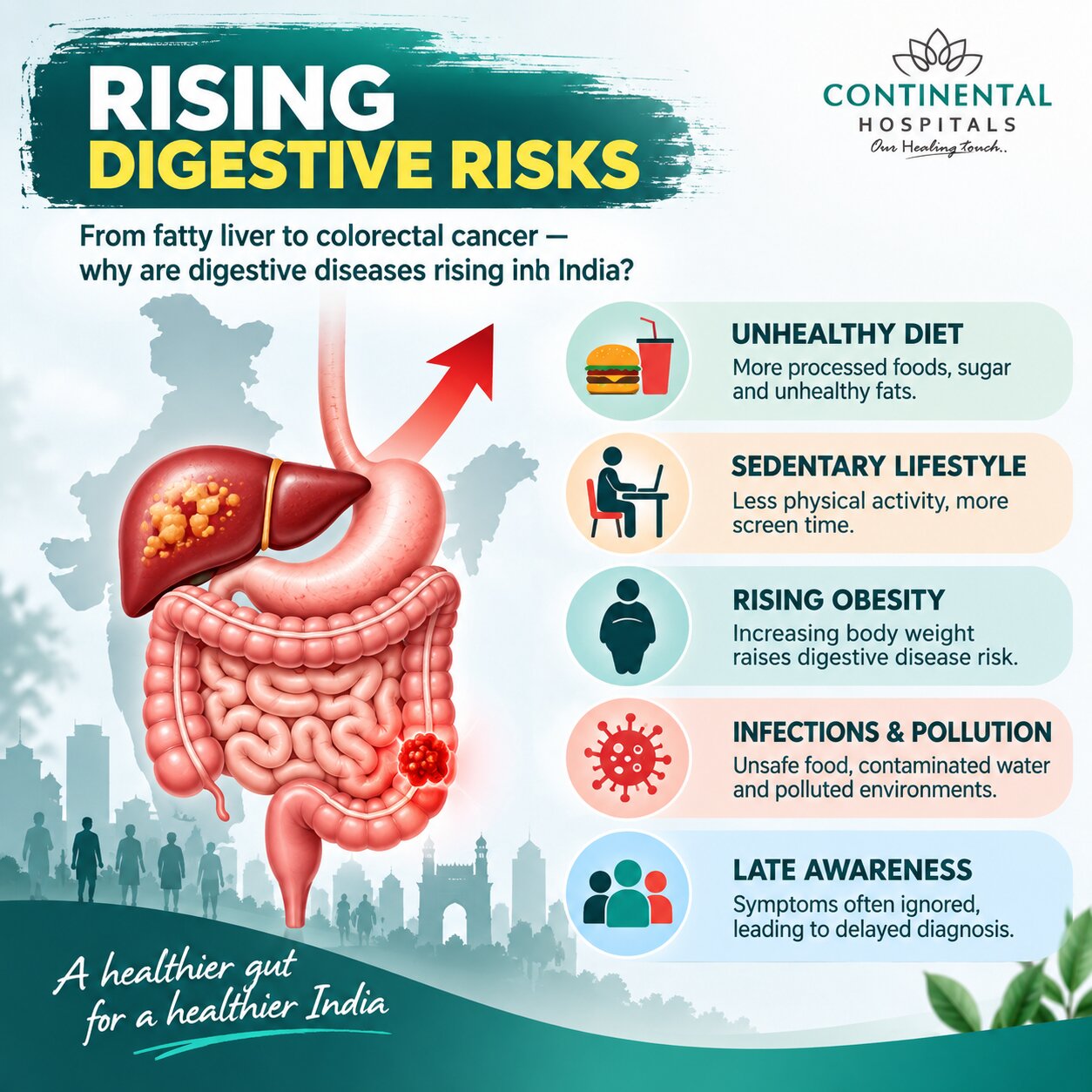
What elements may be behind the increasing incidence of gastrointestinal disorders in India? A variety of environmental and lifestyle conditions may have an impact on the health of the digestive system.
They are as follows:
• Growing consumption of processed and heavily refined food
• High content of unhealthy fat, sugar, and excessive calories in one’s diet
• Less physical activity
• Obesity and metabolic disorders on the rise
• Smoking and drinking alcohol
• Stress and poor sleep quality
• Delay in going to the doctor for persistent symptoms
• Family history of specific gastrointestinal diseases
Different factors have an effect on different people in different ways, and it is worth mentioning that digestive diseases can be provoked by multiple reasons. At the same time, healthy lifestyle habits are capable of promoting better digestive health.
Does Having Fatty Liver Mean a Person Will Get Colorectal Cancer?
Does the diagnosis of fatty liver indicate that you are about to develop colorectal cancer? The answer is in the negative. Having a fatty liver does not mean you will get colorectal cancer.
Nevertheless, it is possible for fatty liver, obesity, insulin resistance, the presence of diabetes, and other metabolic conditions to be simultaneously present and associated with the risk of developing a number of health issues. This is why it is important to identify all metabolic risk factors and maintain digestive health.
Regular health check-ups can enable early detection of health issues before meaningful symptoms develop.
How to Care for Your Digestive Health?
• Eat a healthy food diet consisting of vegetables, fruits, whole grains, and other protein sources.
• Avoid processed food and sugar.
• Maintain normal weight.
• Exercise.
• Do not smoke and drink as little alcohol as possible.
• Drink enough fluids.
• Do not disregard any irregular bowel-related issues.
• Follow the recommended screening according to your age, background, and risk factors.
• See a doctor in case of any digestive problems.
When Should You Visit a Gastroenterologist?
When discussing digestive issues, when is it necessary to consult a specialist? Abdominal pain, unintended loss of weight, presence of blood in the stool, abnormal changes in bowel habits, difficulties in swallowing, long-term abdominal pain, or any abnormal liver test results should always be taken into account.
Those who have a family history of bowel cancer or other digestive diseases may need to discuss their screening procedure in detail with a doctor. A gastroenterologist will assess the patient's symptoms, medical history, and possible risk factors to decide upon the best test to carry out in order to establish a diagnosis.
Why Is It Necessary to Receive Comprehensive Medical Care for Digestive Disorders?
Why is comprehensive assessment important for gastrointestinal diseases? There may be many reasons behind digestive issues; moreover, some diseases may not show their signs for a long period of time. Thus, proper diagnosis, screening procedure, and thorough post-diagnosis treatment are extremely important in gastroenterology.
Continental Hospital in Hyderabad offers comprehensive treatment in gastroenterology with the help of specialists in the field and with the application of advanced technologies.
How Is Digestive Disease in India Important?
• Fatty liver disease is becoming more closely linked to obesity and diabetes.
• Colorectal cancer is a condition that can take many years to develop and may show very few symptoms in the earliest stages.
• Among the things that can affect gastrointestinal diseases in India are one’s age, genetics, lifestyle and diet, and other health-related issues.
• Issues such as blood in stools and prolonged changes in bowel habits need medical evaluation.
• Healthy lifestyle choices such as a good diet, being physically active, and maintaining a healthy weight help in maintaining digestive health.
• Screening is helpful when it comes to early detection of health conditions.
• Persistent symptoms relating to digestion should not be treated without the help of a doctor.
Conclusion
Could better awareness and timely medical evaluation make a difference in digestive health? Recognizing risk factors and paying attention to persistent symptoms can help identify gastrointestinal diseases earlier. From fatty liver to colorectal cancer, digestive conditions can vary widely, but prevention, screening, early diagnosis, and appropriate treatment remain important.
If you suffer from persistent abdominal discomfort, changes in bowel habits, blood in the stool, unexplained weight loss, abnormal liver test results, or other digestive concerns, consult our best gastroenterologist in Hyderabad at Continental Hospitals, Hyderabad, for expert evaluation and personalized care.
Related Blogs: