post-title

Is Hydration the Key to Beating Constipation?

Written by - Editorial Team
Medically Reviewed by - Dr Guru N Reddy

Constipation is one of the most common digestive problems affecting people of all ages. It can leave you feeling bloated, uncomfortable, and even irritable. While there are many causes behind constipation, one simple solution is often overlooked — hydration.

So, is drinking more water the answer to beating constipation? Let’s explore how hydration affects your digestive system and how staying properly hydrated can help you stay regular and feel better.

What is Constipation?

Constipation happens when bowel movements become less frequent or more difficult to pass. You may feel like your stool is hard, dry, or incomplete even after a trip to the bathroom. For many people, going fewer than three times a week is a sign of constipation.

Other symptoms include:

  • Hard or lumpy stools
  • Straining during bowel movements
  • A feeling of blockage in your rectum

Needing help to empty your rectum (such as pressing on your abdomen)
How Does Water Help with Digestion?

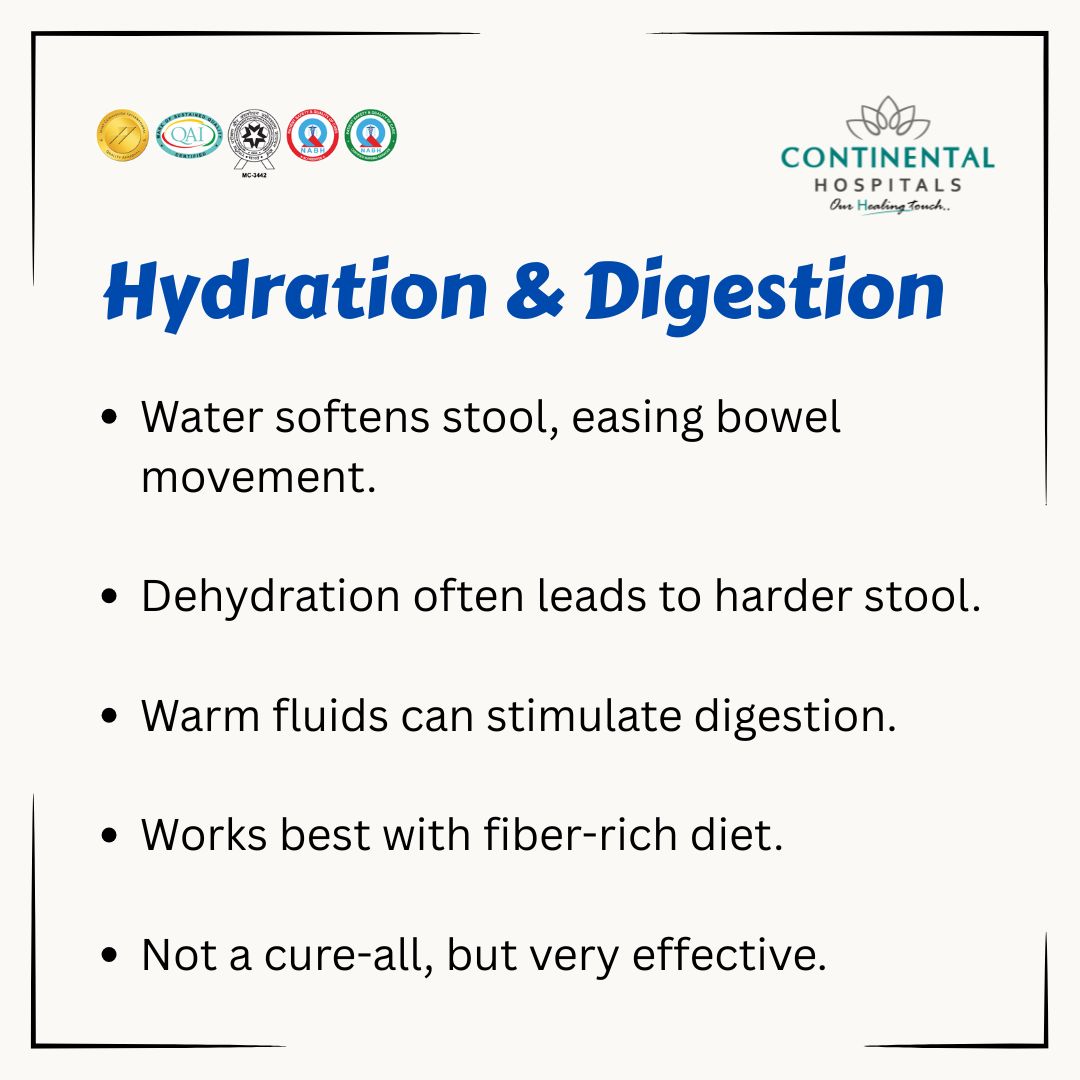
Water plays a vital role in almost every function of your body — and digestion is no exception. Here’s how hydration helps your digestive system:

1. Softens Stool
Water helps break down food and moves it through the digestive tract. When your body is properly hydrated, your colon absorbs water into your stool, making it soft and easier to pass.

2. Prevents Blockages
Without enough water, your colon pulls more water from your stool to hydrate your body. This makes the stool dry and hard, which can lead to constipation and painful bowel movements.

Second Opinion

3. Supports Muscle Movement
Your intestines rely on smooth muscle contractions (peristalsis) to move stool along. Dehydration weakens this process, slowing down the movement and causing a backup.

Facing constipation or digestive discomfort? Visit our gastroenterology specialist doctors at Continental Hospitals for expert diagnosis, personalized treatment, and lasting relief.

Are You Drinking Enough Water?

Many people don’t drink enough water daily. Whether it’s due to a busy lifestyle, forgetting, or not feeling thirsty, low water intake can gradually lead to constipation.

A good way to check your hydration is to look at your urine. If it’s light yellow or clear, you’re likely well hydrated. Darker urine could be a sign that you need more fluids.

What are the signs of dehydration?

Dehydration can sneak up on you. Watch for these signs:

  • Dry mouth
  • Fatigue
  • Headache
  • Dizziness
  • Reduced urine output
  • Constipation

These symptoms may not always feel serious, but they can disrupt your overall well-being, especially your gut health.

How Much Water Do You Need?

While needs vary depending on your age, gender, activity level, and climate, most adults should aim to drink enough water to keep their urine light in color and to stay hydrated throughout the day.

Need an Appointment?

Remember, fluids come not only from water but also from herbal teas, fruits like watermelon and oranges, and vegetables like cucumber and lettuce.

When Is Water Not Enough?

While water helps in most cases of constipation, sometimes drinking more water alone won’t fix the issue. Other causes of constipation can include:

  • Low fiber diet
  • Lack of physical activity
  • Certain medications
  • Ignoring the urge to go
  • Medical conditions like hypothyroidism or IBS

If your constipation is frequent or lasts longer than a few days, it’s important to speak with a doctor. You may need other treatments or dietary changes along with hydration.

How Can I Stay Hydrated to Beat Constipation?

1. Start Your Day with Water
Drink a glass of water when you wake up. It helps jumpstart your metabolism and rehydrates your body after a night’s sleep.

2. Carry a Water Bottle
Having a bottle with you reminds you to drink throughout the day, especially if you're busy or working long hours.

3. Eat Water-Rich Foods
Fruits and vegetables like oranges, berries, cucumbers, tomatoes, and zucchini can boost your water intake while giving you fiber.

4. Set Reminders
Use a phone app or set hourly reminders to take a few sips, especially if you forget to drink during the day.

5. Add Natural Flavor
If plain water feels boring, try adding slices of lemon, mint, or cucumber for a refreshing twist.

How do water and fiber work together to relieve constipation?

Drinking water alone is helpful, but combining it with fiber gives better results. Fiber adds bulk to your stool, while water softens it. Together, they make bowel movements smoother and easier.

There are two types of fiber:

Soluble fiber: Found in oats, beans, apples, and citrus fruits, it dissolves in water to form a gel-like substance.

Insoluble fiber: Found in whole grains, nuts, and vegetables, it adds bulk and helps stool move through the gut.

Without enough water, fiber can actually worsen constipation, so always hydrate well when increasing your fiber intake.

Why Choose Continental Hospitals?

At Continental Hospitals, we believe that good digestive health starts with simple, daily habits — and hydration is one of the most important. Our expert team of gastroenterologists and nutrition specialists offers personalized care to help you manage and prevent constipation.

Whether your constipation is occasional or ongoing, we help identify the root cause and offer safe, effective solutions to get your digestive system back on track.

We are equipped with:

  • Advanced diagnostic tools
  • Experienced digestive health specialists
  • Personalized diet and hydration plans
  • Safe, evidence-based treatment approaches

Your comfort, privacy, and long-term wellness are always our top priorities.

Conclusion: Don’t Let Constipation Slow You Down

Hydration is one of the easiest and most effective ways to prevent and manage constipation. Drinking enough water daily can improve your digestion, make your bowel movements smoother, and help you feel lighter and more energized.

Facing constipation issues? Talk to our best gastroenterologist in hyderabad at Continental Hospitals for expert gut health advice and treatment.

Frequently Asked Questions

Yes, drinking enough water can help relieve constipation, especially when dehydration is a contributing factor. Water softens the stool, making it easier to pass through the intestines. Proper hydration supports healthy bowel movements by allowing the digestive system to function efficiently. However, water alone may not completely resolve constipation if the diet is low in fiber or if there are underlying medical conditions. Drinking sufficient fluids works best when combined with fruits, vegetables, whole grains, and regular physical activity. Adults should aim to drink adequate fluids throughout the day, although individual needs vary depending on age, climate, and activity level. If constipation continues despite good hydration, it is important to consult a gastroenterologist for proper evaluation and treatment.
There is no single amount of water that suits everyone, but most healthy adults benefit from drinking around 2 to 3 liters of fluids daily, depending on their age, body size, physical activity, and weather conditions. People who exercise frequently or live in hot climates may require more fluids. Drinking water consistently throughout the day is more effective than consuming large amounts at once. Including hydrating foods such as watermelon, cucumber, oranges, and soups also contributes to daily fluid intake. Maintaining adequate hydration helps keep stools soft and easier to pass. Combining proper hydration with a fiber-rich diet offers the best protection against constipation.
Yes, dehydration is a common cause of constipation. When the body lacks sufficient water, the large intestine absorbs more water from waste material to preserve body fluids. This process results in hard, dry stools that are difficult to pass. Mild dehydration can gradually slow bowel movements without obvious symptoms. People who do not drink enough water, experience excessive sweating, have vomiting or diarrhea, or take certain medications may be at higher risk. Staying hydrated helps maintain normal stool consistency and supports healthy digestive function. Persistent constipation despite proper hydration should be medically evaluated to identify other possible causes.
Water remains the best and healthiest choice for preventing dehydration and supporting regular bowel movements. However, other beverages such as warm water, herbal teas, and natural fruit juices like prune juice may also help stimulate bowel activity in some individuals. Prune juice contains sorbitol and natural fiber, which can promote easier bowel movements. Caffeinated beverages may stimulate the bowels in some people but can also contribute to dehydration if consumed excessively. Sugary soft drinks are not recommended as a treatment for constipation. Choosing water as the primary source of hydration while maintaining a balanced diet remains the most effective long-term approach.
Fiber and water work together to support healthy digestion and prevent constipation. Fiber adds bulk to the stool, while water softens it and allows it to move more easily through the intestines. Increasing fiber intake without drinking enough water can sometimes worsen constipation by making stools harder and more difficult to pass. Adults should consume fiber from fruits, vegetables, legumes, whole grains, nuts, and seeds while maintaining adequate fluid intake. This combination encourages regular bowel movements and supports overall gut health. A gradual increase in fiber with proper hydration is generally recommended to avoid bloating or discomfort.
Yes, constipation can occur despite adequate hydration. Factors such as low dietary fiber, lack of physical activity, certain medications, stress, pregnancy, aging, and digestive disorders can all contribute to constipation. Medical conditions such as irritable bowel syndrome, hypothyroidism, diabetes, and neurological disorders may also affect bowel function. Drinking sufficient water supports digestive health but does not address every cause of constipation. A comprehensive evaluation may be necessary if constipation is persistent, severe, or associated with symptoms such as blood in the stool, unexplained weight loss, or significant abdominal pain.
Several healthy lifestyle habits can reduce the risk of constipation. Eating a diet rich in fiber from fruits, vegetables, whole grains, and legumes promotes healthy bowel function. Regular physical activity stimulates intestinal movement and supports digestion. Responding promptly to the urge to have a bowel movement helps prevent stool from becoming hard and difficult to pass. Managing stress and maintaining consistent meal timings may also improve digestive health. Limiting highly processed foods and ensuring adequate hydration further supports regular bowel movements. These habits together provide a comprehensive approach to preventing constipation naturally.
You should consult a doctor if constipation lasts for more than two to three weeks, becomes severe, or frequently recurs despite lifestyle changes. Medical attention is also recommended if constipation is accompanied by blood in the stool, unexplained weight loss, persistent abdominal pain, vomiting, fever, or a sudden change in bowel habits. These symptoms may indicate an underlying digestive disorder requiring prompt evaluation. A gastroenterologist can identify the cause through a detailed medical history, physical examination, and appropriate investigations. Early diagnosis allows timely treatment and helps prevent complications while improving long-term digestive health.
Disclaimer: The information provided in this blog is intended for general knowledge and informational purposes only, and does not constitute medical advice. Always consult with a qualified healthcare professional for any medical concerns or before making any decisions about your health.

Get in Touch With Us

Whether you are from India or abroad, we are here to help you with your medical queries. Please fill out the form below and our team will connect with you shortly.

  • ✔ Quick response from our medical experts
  • ✔ Secure data handling & privacy
  • ✔ Easy upload for reports & documents
banner_image

Chat with our medical experts on WhatsApp for quick assistance and hassle-free appointment booking

Recent Posts