.webp)


Have you been feeling a sudden ache in the lower right part of your belly and are you wondering if you might have appendicitis? Pain in the lower right abdominal area need to be approached with caution. While appendicitis is a possible answer, there are also other causes that can cause such pain.
Being aware of the possible causes of lower right abdominal pain can assist you in identifying when to see a doctor. It is possible that the location, intensity, duration and accompanying symptoms in each case would give vital clues, however, in the end the doctor would determine what is actually going on.
What is appendicitis?
It is a medical diagnosis, which means that the appendix is inflamed and infected. This is a small organ which is linked to the large intestine. The pain in case with appendicitis generally appears right next to the belly button and then gets more intense in the lower right abdomen.
In some situations the inflamed appendix might burst, which leads to serious complications and must be treated immediately.
Visit the best gastro doctor in Hyderabad at Continental Hospitals for comprehensive digestive healthcare.
What are the symptoms of appendix pain?
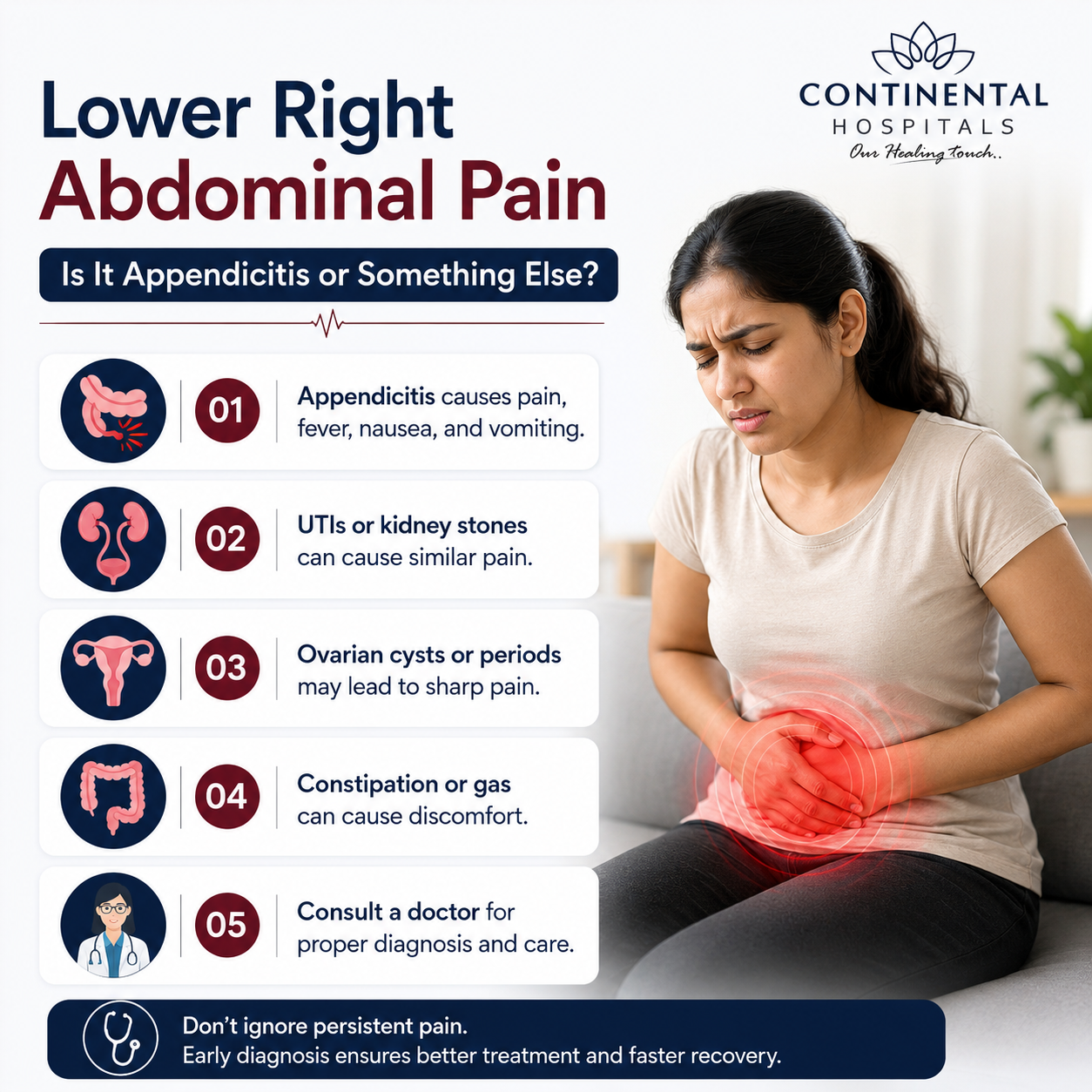
Is lower right abdominal pain appendicitis? Common symptoms of appendicitis follow a certain pattern:
Some common symptoms of appendicitis include:
- You may feel pain starting from the area beside your belly button and moving toward the lower right abdomen.
- The intensity of the pain may increase as time passes.
- More pain when moving, coughing, or engaging in physical activity.
- Loss of appetite.
- Nausea or vomiting.
- Fever.
- Constipation or diarrhea.
- Tenderness in the belly area.
However, different people can have different symptoms. In some cases, appendix pain can occur few hours after the onset of the initial symptom.

What signals indicate the presence of appendicitis?
What warnings do you need to watch for in case of appendicitis?
You need to contact a doctor when you feel recurrent severe pain in the lower right side of your belly and it’s getting worse.
- Increase in abdominal pain
- High fever
- Vomiting
- Lack of appetite
- Abdominal tenderness
- Limitations in movement
- Swelling in the abdomen
- Pain that radiates over the abdomen
Intense abdominal pain, continued vomiting, fever, and severe tenderness need to be checked.
Can there be any other condition that is related to lower abdominal pain?
Indeed, though there are different conditions causing pain in the lower abdomen, some of these may not be serious, while others may need immediate medical attention.
Here are some reasons that could make someone feel pain in the lower abdominal region:
- Bloating, indigestion, or constipation.
- Gastroenteritis.
- Irritable bowel syndrome.
- Crohn's disease.
- Urinary tract infection.
- Kidney stones.
- Hernia.
- Intestinal inflammation.
- Ovarian cysts or gynaecological issues.
- Ectopic pregnancy in women who are pregnant or may become pregnant.
It's crucial to note that there are several possible reasons for similar symptoms, making it tough to determine the reason without seeking the help of a medical professional.
Can Left-Side Abdominal Pain Be Caused by Appendicitis?
Is it true that appendicitis usually causes pain on the left side of the abdomen? Not really. This condition usually produces pain on the right side of the abdomen, but the exact location of the pain may differ from case to case due to several reasons.
There are many other conditions that lead to left-side abdominal pains, such as kidney disease or intestinal problems. The localization of the pain is useful information, but it cannot be used to make a diagnosis.
How Is Appendicitis Diagnosed?
What should doctors do to find out whether your pain in the lower right abdomen is caused by appendicitis?
They may evaluate several factors, including:
- Your history and your symptoms
- The area where you feel the pain
- Your tenderness in the abdomen
- The results of tests
- Blood and urine tests
- An ultrasound
- A CT scan when necessary
- Pregnancy tests when applicable
Doctors cannot rely on one single test to find out whether you have appendicitis or not. Instead, they might need to rely on various pieces of information to reach a conclusion.
What is the process of treating appendicitis?
Once the pain has confirmed itself as appendicitis, how will the condition be treated?
The treatment of appendicitis varies with the severity and individual case. Removal of the appendix through surgery is the treatment of choice for appendicitis. In some cases, treatment with antibiotics may be appropriate.
If the appendix has burst, urgent treatment is required, including surgery, the use of antibiotics, and the management of infection. Early diagnosis allows for the identification of complications and the provision of appropriate treatment.
When Should One Consult with a Physician Regarding Pain in the Lower Right Abdomen or Stomach?
Should one wait for the pain to end on its own?
It is advisable to go see the doctor if:
Lower Right Abdominal Pain:
- Increases with time
- Does not show signs of healing
- Comes along with an increase in body temperature
- Is associated with continuous vomiting
- Is accompanied by tenderness of the stomach area
- Comes with signs of swelling
- Makes movement easier as pain is triggered
Pain that is experienced in the abdomen and becomes worse should be checked urgently.
Why choose Continental Hospitals in case of abdominal pain?
What makes Continental Hospitals a reliable option for abdominal pain diagnosis and treatment?
Continental Hospitals, located in Gachibowli, Hyderabad, is a multispecialty hospital that specializes in the treatment of surgical and gastroenterological problems. The General and Laparoscopic Surgery Department at Continental Hospitals handles both elective and emergency surgical cases with the help of the latest diagnostic and surgical equipment.
Continental Hospitals is an accredited tertiary and quaternary hospital with JCI and NABH ratings. The hospital is equipped with modern facilities that include state-of-the-art infrastructure and green operation theaters, among others.
These quality and safety accreditations are the proof of the hospital's seriousness towards maintaining high clinical standards, safety, and quality of health care.
Can Lower Right Abdominal Pain Be Ignored?
Lower right abdominal pain should not automatically be assumed to be gas or indigestion, particularly when the pain is severe, persistent or getting worse. Appendicitis is one important possibility, but other digestive, urinary, and reproductive conditions can cause similar symptoms.
If you are experiencing persistent or worsening lower right abdominal pain, consulting a doctor can help identify the cause and ensure timely treatment.
Conclusion
Is every case of lower right abdominal pain appendicitis? No. However, appendicitis can become serious if treatment is delayed. Paying attention to the pattern of pain and associated symptoms is important.
If you suffer from persistent lower right abdominal pain, especially with fever, vomiting, loss of appetite, or increasing tenderness, consult our best gastroenterologist in Hyderabad for proper evaluation. At Continental Hospitals, Hyderabad, experienced specialists can assess abdominal conditions and recommend appropriate diagnostic and treatment options based on your symptoms.
Related Blogs: