.webp)


A monsoon diet consists of fresh, hygienic, nutritious, and easily digestible foods that help you maintain your health during the rainy season. High humidity, varying temperatures, and food storage conditions can lead to food contamination, digestive distress, and infections.
Diligently following monsoon health tips can aid you in choosing safer food. Knowing what to eat in the monsoon and which foods to avoid in the monsoon can help maintain your digestion, hydration, and health throughout the season.
Why Should You Pay Extra Attention to Your Diet in Monsoon?
Why does Monsoon need extra attention when it comes to diet? Warm and humid weather can foster the growth of harmful microorganisms when food is poorly stored or handled. Consuming contaminated food and water can increase your risk of stomach infections, food poisoning, and diarrhea.
A wholesome monsoon diet can help you defend against these risks while providing adequate nutrition for your body.
Visit the General Physician Department at Continental Hospitals, Hyderabad, for prompt assessment, accurate diagnosis, and appropriate medical care.
Which foods should you avoid in the monsoon?
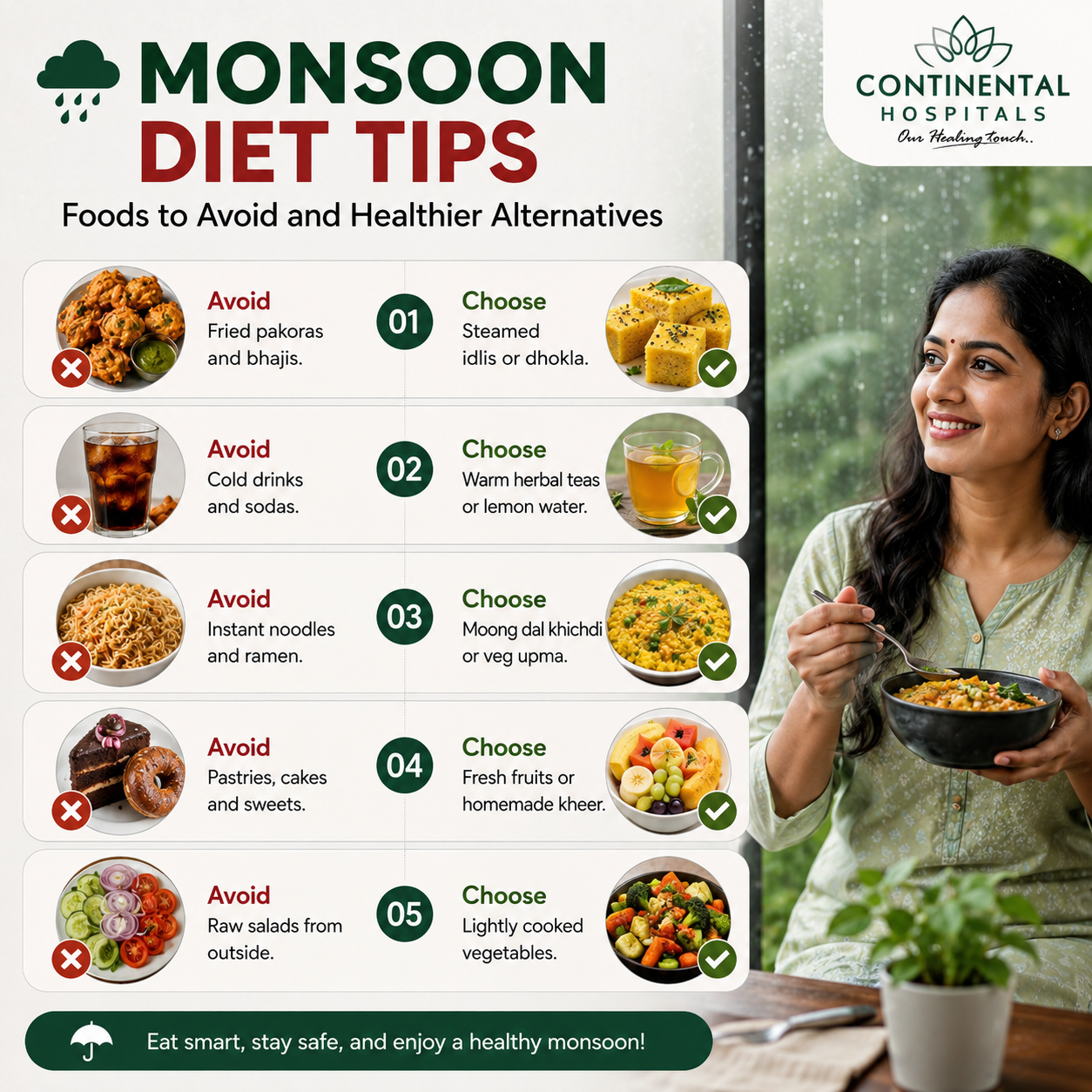
Which food is better to avoid or limit in the rainy season?
1. Should you avoid street food?
Yes, it is best to limit uncovered street food eaten in the open or poorly handled in the monsoon. These foods are exposed to rain, dust, insects, or contaminated water and can hence harbor harmful microorganisms.

Healthier alternative – opt for freshly cooked foods prepared at home or from hygienic eateries.
2. Should you avoid deep-fried foods?
Why should you limit fried foods? Foods like pakoras, samosas and chips and other deep-fried foods are heavy and if consumed frequently, may give rise to indigestion, bloating or acidity.
Healthier alternative – opt for steamed, grilled, baked or lightly cooked snacks like roasted veggies, steamed corn, or homemade snacks.
3. Should you avoid raw salads from non-reputable sources?
Why are raw vegetables risky in the monsoon? Raw foods can become infected if not washed properly or if handled in unhygienic conditions.
Healthier alternative – wash veggies thoroughly and opt for freshly prepared salads made at home. Lightly cooked veggies are also a safer option.
4. Should you avoid cut fruits sold from outdoor stalls?
Why should cut fruits be limited? Cut fruits that remain exposed for longer periods can become infected.
Healthier alternative – opt for whole fruits that can be washed and husked before consumption, such as bananas, oranges and apples.
5. Should You Avoid Unclean or Unsafe Water?
Why is drinking water important during the monsoon? Contaminated water can contribute to several gastrointestinal infections.
Healthier alternative: Drink clean, filtered, or properly treated water and carry safe drinking water when travelling.
What Should You Eat During the Monsoon?
What are some healthier foods to include in your monsoon diet?
- Freshly prepared home-cooked meals
- Rice, dal and khichdi
- Steamed or lightly cooked vegetables
- Soups and warm homemade meals
- Seasonal fruits that are washed properly
- Bananas, apples and oranges
- Curd or yoghurt if it suits your digestive system
- Nuts and seeds in appropriate portions
- Adequate amounts of safe drinking water
These choices can provide carbohydrates, protein, fiber, vitamins, and minerals while supporting a balanced diet.
What Monsoon Health Tips Help a lot in digestion?
Which simple chores can make a monsoon diet safer?
- Wash the fruits and vegetables properly before eating them.
- Eat freshly prepared food instead of storing the food for later.
- Refrigerate your food as soon as it is cooled down.
- Reheat the leftovers properly before eating them.
- Wash your hands before handling or eating food.
- Avoid food that has an odd smell, color, or taste.
- If your digestive system is not so comfortable, then choose smaller portions more frequently for a day.
- Drink sufficient water for a day.
- Avoid very oily, fried, and highly processed foods.
When do you need to see a doctor during monsoon season?
Never ignore persistent diarrhea, repeated vomiting, abdominal pain, high fever, blood in stool, dizziness, or any sign of dehydration.
If you develop these serious symptoms after consuming contaminated food or drinking unsafe water, then visit a general physician for proper diagnosis and treatment.
Why Choose Continental Hospitals For Your Monsoon Health Concerns?
Why choose Continental Hospitals for your medical needs in Hyderabad? Continental Hospitals, Gachibowli, is a multispecialty, tertiary, and quaternary care hospital with best-in-class diagnosis and treatment facilities and experienced specialists in various departments. Continental Hospitals are JCI and NABH accredited hospitals, which ensure that the best standards of healthcare and patient safety are met.
Continental Hospitals is also a multidisciplinary health care hospital where diagnosis and treatment facilities are integrated efficiently. Continental Hospitals is located in Hyderabad's IT and Financial District.
Conclusion
What is the simplest way to stay healthy during a monsoon season? Eat freshly prepared, hygienic, balanced meals; safely drink water; and avoid foods that may cause health problems.
A planned monsoon diet does not require you to go into extreme restrictions. By following safer food choices, good hygiene practices, and these helpful monsoon health tips, you can navigate a monsoon season effectively without compromising your digestive system and general health.
During monsoon season, if you are experiencing recurrent digestive issues, vomiting, diarrhea, abdominal pain, fever, or dehydration, then we recommend you seek medical assistance from the best general physician in Hyderabad at Continental Hospitals, Hyderabad, for prompt assessment and proper medical care.
Continental Hospitals, Hyderabad, brings you specialist skills along with advanced medical facilities and accredited quality standards to help with comprehensive healthcare.
Related Blogs: