Piles in women are a common health problem that affects the blood vessels inside or around the anus. Also called hemorrhoids, piles develop when these blood vessels become swollen and inflamed. They can cause discomfort during bowel movements, itching, swelling, and sometimes bleeding. Although piles can affect anyone, women may experience them during pregnancy, after childbirth, or due to constipation and straining while passing stools.
Recognizing piles symptoms in women early can help prevent discomfort and complications. Some women may notice only mild itching, while others may experience pain, swelling, or bright red blood during bowel movements. Many women feel uncomfortable discussing these symptoms, but piles are treatable. Understanding the causes of piles in women and seeking medical advice when needed can help you choose the right treatment and maintain better digestive health.
What Are the Early Symptoms of Piles in Women?
What signs should women look for? Piles symptoms in women can vary depending on the location and severity of the swollen blood vessels.
Common symptoms include:
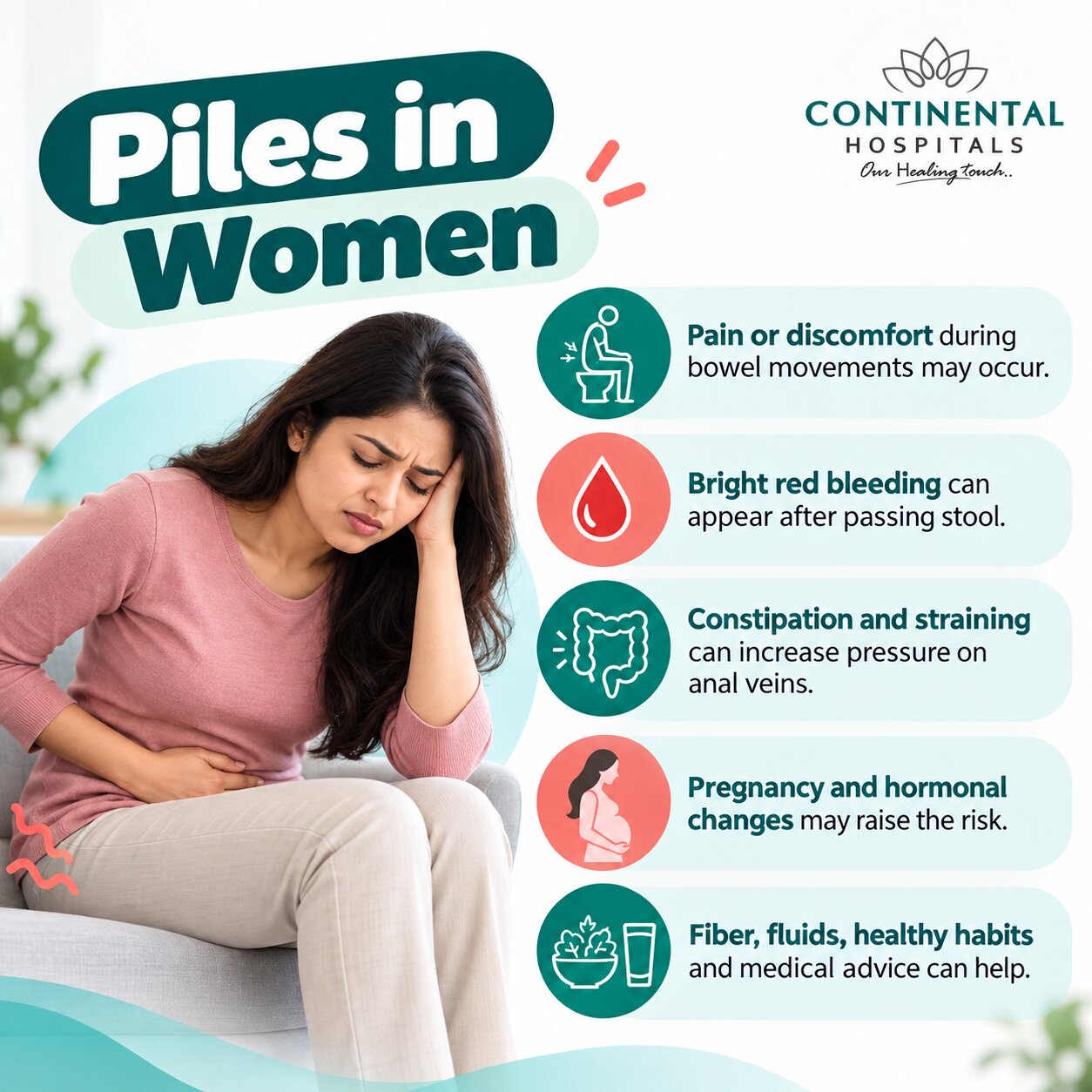
- Bleeding during bowel movements: Bright red blood may appear on toilet paper or the surface of the stool.
- Pain or discomfort: Pain may occur while passing stools, especially when external piles develop a blood clot.
- Itching around the anus: Irritation and itching may cause discomfort throughout the day.
- Swelling or lumps: A small lump may develop near the anus.
- A feeling of incomplete bowel emptying: Some women may feel that they have not completely emptied their bowels.
- Mucus discharge: Some cases may cause mucus and irritation around the anal area.
Rectal bleeding should not automatically be assumed to be piles. Consult a doctor to identify the cause, particularly if bleeding continues or returns.
Visit the General Surgery Department at Continental Hospitals, Hyderabad, for expert diagnosis and personalised treatment for piles and other anorectal conditions.
What Are the Causes of Piles in Women?
What causes piles in women? Piles usually develop when increased pressure affects the blood vessels around the anus and lower rectum. Several everyday habits and health conditions can contribute to this problem.
Common causes include:
- Constipation: Hard stools and repeated straining can increase pressure on the anal blood vessels.
- Pregnancy: Hormonal changes, increased pressure from the growing uterus, and constipation can contribute to piles.
- Childbirth: Pushing during labor may increase pressure on the blood vessels around the anus.
- Prolonged sitting: Sitting for long periods, particularly on the toilet, can contribute to increased pressure.
- Low fiber intake: Eating too little fiber can lead to hard stools and difficulty passing them.
- Chronic diarrhea: Frequent bowel movements and repeated irritation may worsen symptoms.
- Aging: Supporting tissues around the rectum may weaken over time.
How Are Piles in Women Diagnosed?
How can a doctor confirm piles? Diagnosis usually begins with a discussion about symptoms, bowel habits, and medical history. The doctor may examine the area around the anus and perform a rectal examination when appropriate.

Depending on the symptoms, additional tests such as anoscopy or other bowel investigations may be recommended. These tests help identify internal piles and rule out other causes of rectal bleeding.
Early assessment is important because conditions such as anal fissures, inflammatory bowel disease, and colorectal problems can sometimes cause similar symptoms.
What Are the Treatment Options for Piles in Women?
Can piles be treated without surgery? Many mild cases improve with dietary changes and simple home care. More severe or persistent piles may require medical procedures.
Common piles treatment options for women include:
- Increase fiber intake: Eat vegetables, fruits, whole grains, and other fiber-rich foods to soften stools.
- Drink enough water: Adequate fluid intake helps support regular bowel movements.
- Avoid straining: Do not force bowel movements or sit on the toilet longer than necessary.
- Take warm sitz baths: Sitting in warm water may help relieve discomfort and irritation.
- Use prescribed medicines: A doctor may recommend suitable creams or medicines for short-term symptom relief.
- Consider medical procedures: Persistent piles may require treatments such as rubber band ligation, injection therapy, or other procedures.
- Undergo surgery when necessary: Larger or severe piles may require a surgical procedure based on the doctor's assessment.
The best treatment depends on the severity of symptoms, the type of piles, and the patient's overall health. Pregnant or breastfeeding women should consult a doctor before using medicines or creams.
How Can Women Prevent Piles?
Can lifestyle changes reduce the risk of piles? Healthy bowel habits can help prevent constipation and reduce pressure on the anal blood vessels.
Follow these practical steps:
- Include fiber-rich foods in your daily diet.
- Drink adequate water throughout the day.
- Exercise regularly to support bowel health.
- Respond promptly to the urge to pass stools.
- Avoid prolonged sitting on the toilet.
- Seek medical advice for persistent constipation or repeated rectal bleeding.
Why Choose Continental Hospitals for Piles Treatment?
Why is specialist care important for piles in women? An accurate diagnosis helps determine whether symptoms are caused by hemorrhoids or another condition and guides the choice of treatment.
Continental Hospitals, Hyderabad, provides comprehensive medical and surgical care supported by experienced specialists, modern diagnostic facilities, and multidisciplinary expertise. The hospital holds national and international healthcare accreditations, including National Accreditation Board for Hospitals and Healthcare Providers (NABH) and Joint Commission International (JCI), reflecting its commitment to quality standards and patient safety.
Patients can receive individualized evaluation and treatment recommendations based on their symptoms and medical needs. The focus is on relieving discomfort, improving bowel health, and supporting recovery.
Conclusion
Piles in women can cause itching, swelling, pain, and bleeding during bowel movements. Pregnancy, childbirth, constipation, and straining are common contributing factors. Fortunately, many mild cases improve with dietary changes, healthy bowel habits, and appropriate medical care. Persistent or severe symptoms may require additional treatment.
If you suffer from rectal bleeding, painful bowel movements, anal swelling, or other piles symptoms, consult our best general surgeon in Hyderabad at Continental Hospitals, Hyderabad, for proper evaluation and treatment. Seek prompt medical attention for heavy bleeding, black stools, dizziness, or severe pain, as these symptoms may indicate a more serious condition.
Related Blogs: