.webp)

Synthetic milk refers to a product made to imitate the appearance, texture, or taste of natural milk using substances that are not normally present in genuine milk. It is also discussed in the context of fake milk, adulterated milk, and milk adulteration.
Is synthetic milk safe to drink? No, milk that has been deliberately prepared or adulterated with substances not approved for use in milk should not be considered safe. The health risk depends on what has been added, how much has been consumed, and the level of contamination.
The Food Safety and Standards Authority of India (FSSAI) has identified synthetic milk practices involving substances such as urea, detergents, soap, boric acid, hydrogen peroxide, starch, and certain neutralizers. Such substances can create health hazards when consumed.
Visit our gastroenterology specialists in Hyderabad for expert care and personalized digestive health support.
How Is Synthetic Milk Different From Natural Milk?
Natural milk naturally contains nutrients such as protein, fat, carbohydrates, vitamins, and minerals. Synthetic milk attempts to reproduce some of the physical characteristics of milk without providing the same nutritional value.
Could synthetic milk look like real milk?
Yes. Some adulterated or artificial milk products may look, smell, or taste similar to ordinary milk. This is why identifying unsafe milk simply by looking at it can be difficult.
Does milk adulteration always mean that milk is dangerous?
Not necessarily. Adulteration can involve different substances and can affect either quality or safety. FSSAI has also highlighted that not every form of adulteration automatically means a product is unsafe. However, milk containing hazardous chemicals or unsafe contaminants should not be consumed.

What Are the Major Synthetic Milk Health Risks?
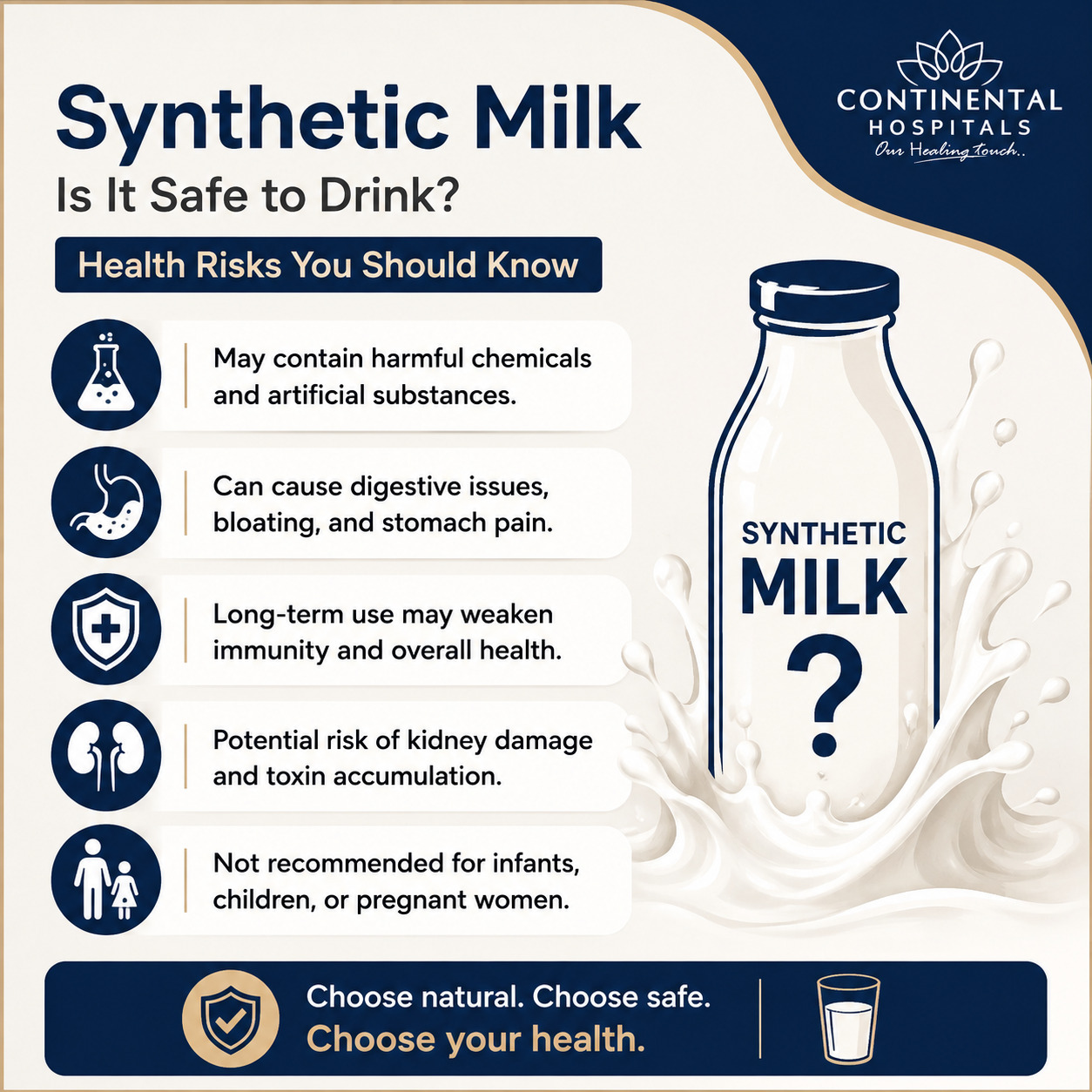
The risks depend on the adulterants present. If harmful chemicals are added, regular or significant exposure may affect the digestive system and other organs.
Possible symptoms may include:
- Nausea or vomiting
- Stomach discomfort or abdominal pain
- Diarrhoea
- Indigestion
- Headache or weakness
- Irritation of the digestive system
- Other symptoms depending on the chemical or contaminant involved
Are synthetic milk dangers the same for everyone?
No. Children, older adults, pregnant women, and people with existing health conditions may require particular care if they consume a suspected unsafe product.
Why Can Synthetic Milk Be Harmful?
Substances such as detergents, soap, urea, boric acid, and certain chemicals are not appropriate substitutes for the natural components of milk. Their presence can introduce unnecessary chemical exposure and may cause health problems.
Is Synthetic Milk Common in India?
Milk adulteration and food quality remain important food safety concerns, but claims that all or most milk available in India is synthetic milk should not be accepted without reliable evidence.
FSSAI's milk testing and surveillance work has examined milk for quality, adulterants, and contaminants. Its findings show that food safety concerns can involve both adulteration and contamination, making proper testing and regulated food production important.
Should consumers believe alarming social media claims about synthetic milk?
No. Health information should be checked against reliable sources before it is shared. WHO India recently clarified that a widely circulated claim about milk adulteration causing cancer in a specified percentage of Indians was false and that WHO had not issued such an advisory.
How Can You Reduce the Risk of Consuming Adulterated Milk?
- Buy milk from reliable and regulated sources.
- Check packaging, labeling, and expiry information.
- Avoid products with damaged or suspicious packaging.
- Follow proper refrigeration and storage instructions.
- Do not rely only on color, smell, or appearance to judge milk quality.
- Avoid unverified homemade claims about testing milk for every possible adulterant.
- Report suspected unsafe food through appropriate food safety channels.
- Seek medical advice if significant symptoms develop after consuming suspected adulterated milk.
Can home tests completely confirm whether milk is safe?
No. Simple home tests may sometimes indicate certain forms of adulteration, but they cannot replace laboratory testing for complete food safety assessment.
When Should You Consult a Doctor After Drinking Suspected Synthetic Milk?
If you develop persistent vomiting, severe abdominal pain, repeated diarrhea, dehydration, unusual weakness, breathing difficulty, confusion, or other significant symptoms after consuming suspected synthetic milk, medical evaluation is advisable.
Should you continue drinking the same milk if you suspect adulteration?
No. Stop consuming the suspected product and keep the packaging or product details if available. This information may help healthcare professionals understand the possible exposure.
Why Choose Continental Hospitals for Expert Medical Care?
Continental Hospitals, Hyderabad, is a multi-specialty tertiary and quaternary care hospital with JCI and NABH accreditations. The hospital provides comprehensive medical services supported by advanced diagnostic facilities and specialist teams.
JCI and NABH accreditation reflect structured standards for healthcare quality, patient safety, and clinical processes. Continental Hospitals also lists additional recognitions and accreditations, including NABL and QAI, in its corporate information.
Which Doctor Should You Consult for Problems After Suspected Milk Adulteration?
If you develop persistent stomach pain, vomiting, diarrhea, indigestion, or other digestive symptoms after consuming suspected synthetic milk, consult our best gastroenterologist in Hyderabad at Continental Hospitals for appropriate evaluation and treatment.
Conclusion
Synthetic milk or milk deliberately adulterated with harmful chemicals should not be consumed. The term "synthetic milk" can refer to different forms of artificial or adulterated products, so it is important to avoid unverified claims and focus on reliable food safety information.
Choosing milk from trustworthy sources, checking product information, storing milk correctly, and seeking medical attention when concerning symptoms occur can help protect your health. If you experience persistent digestive symptoms after consuming suspected adulterated milk, timely consultation with a specialist can help identify the cause and guide appropriate treatment.