

Winter migraines are migraines that tend to occur frequently or be more serious in the colder months of the year. Fluctuations in weather, exposure to cold wind, less sunshine, dehydration, and alterations in everyday schedules can cause migraines in those susceptible to these variables. Winter migraines can impact daily routines, sleeping patterns, focus levels, and the general quality of life.
How does weather affect migraines? Migraines and other neurological diseases might be triggered by climatic variations, according to studies. Although it should be noted that although the winter season doesn’t make anyone develop migraines, those who have migraines might notice changes in the severity and frequency during winter months.
Can Winter Weather Cause Migraines?
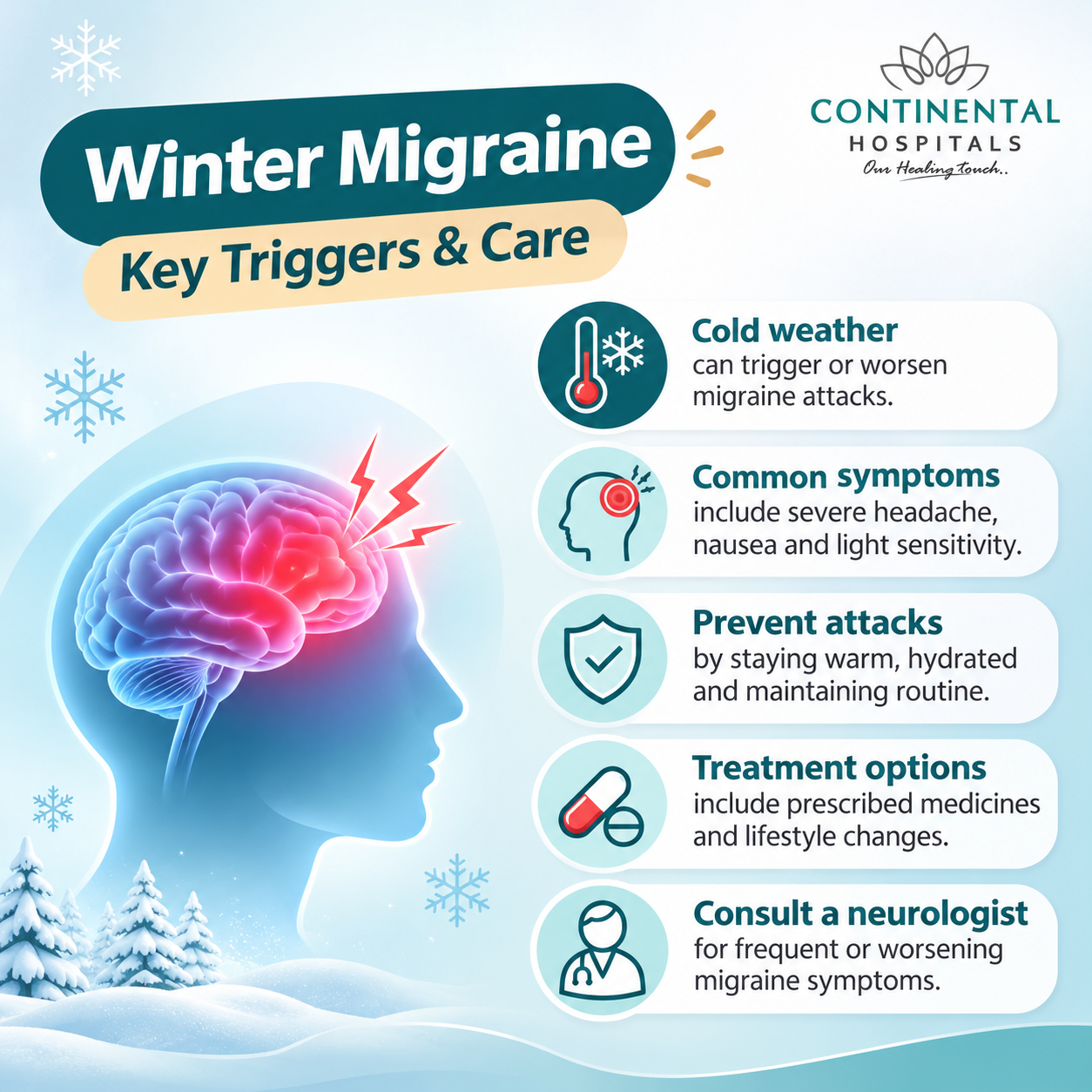
Indeed, there are people who develop migraines because of winter weather conditions. This is because sudden changes in temperature, atmospheric pressure, and cold winds can be factors that contribute to a headache attack.
Some examples of the common winter migraine triggers are the following:
- Sudden temperature changes: Going out from the warmth of the indoors and then being exposed to the cold outdoors can trigger headaches.
- Cold winds: When people become exposed to cold weather, migraines can result.
- Less sunlight: Changes in the length of daylight exposure affect daily activities and sleeping routines.
- Dehydration: Because of the cold weather, some people tend to drink less water, causing headaches.
- Irregular sleep: Any changes in the sleeping patterns of an individual can increase the risk of developing migraines.
- Seasonal illnesses: Such things as colds, flu, and even sinus trouble can cause headaches.
Visit the best neuro doctor Hyderabad at Continental Hospitals, Hyderabad, for expert neurological care and personalised treatment.
Winter Migraine Symptoms
How do you recognize a winter migraine? Migraines have different symptoms in each individual, but their symptoms are usually much more intense than those of a common headache.
Some of the most typical symptoms include:
- Moderate to intense throbbing or pulsing pain in the head.
- Pain that affects one or both sides of the head.
- Sensitivity to bright light and loud noises.
- Nausea or vomiting.
- Dizziness or inability to concentrate.
- Worsening pain when engaging in physical activity.
Distorted vision, such as flashing lights or zigzags, for those experiencing migraine aura.
Migraine attacks may last from several hours up to several days.

Are migraines more severe in winter than in summer?
Is it true that people have worse migraines in winter than in summer? It is subjective; some people suffer from migraines more often in the winter period, while others do not.
The following factors make people vulnerable to migraines in the winter period:
- Increased exposure to cold weather conditions.
- Atmospheric pressure changes.
- Shorter periods of daylight.
- Changes in physical activity.
- Inconsistent eating and drinking.
However, it should be noted that increased temperatures, direct sun rays, and lack of fluids during summer can become the causes of migraines too.
How to Avoid Migraines in the Winter?
Is it possible to avoid winter migraines by adopting healthy habits? It is. The proper regimen can help to protect from triggers and promote brain health.
Consider following these useful tips for prevention:
- Drink plenty of water: Have sufficient amounts of water during the day regardless of whether you are thirsty.
- Protect your head: Wear appropriate winter attire, including a hat or scarf when going outside.
- Adhere to a sleep routine: Go to bed and wake up at the same hours.
- Do not skip meals: Do not skip your meals, as lack of food may be a headache trigger.
- Be active: Do some physical exercises indoors, like walking, stretching, and yoga.
- Reduce stress: Practice breathing techniques, meditation, or any other relaxation methods.
- Eliminate triggers: Try to eliminate the things, food, beverages, or conditions that act as triggers for your headaches.
Keeping a diary of headaches may also prove helpful.
Treatment for Winter Migraine
How can a winter migraine be treated? Different treatment methods vary according to the frequency, intensity, and characteristics of the migraines experienced. The choice of methods is usually determined by the neurologist depending on the individual's medical history.
The following treatment options may be suggested:
- Painkillers: Some types of medications might help alleviate pain caused by migraine.
- Medications targeting migraines: Triptans and other prescribed medications may help control acute migraine attacks.
- Preventive medications: Patients who suffer from recurrent migraines can use medications aimed at reducing the intensity and frequency of the attacks.
- Lifestyle changes: Adequate sleep, proper hydration, balanced nutrition, and stress reduction can assist in treatment.
- Additional diagnostics: Doctors may order additional investigations when symptoms indicate another medical condition.
Avoid using painkillers constantly since such abuse leads to medication-overuse headaches.
When to Visit a Neurologist
When does a headache call for seeing a doctor? It is not wise to ignore recurrent, intense, or changing headaches.
It may be necessary to see a neurologist in the following cases:
- Recurring migraines in winter season.
- Headaches affecting work and normal functioning.
- Frequent nausea or vomiting along with headaches.
- Progressive increase in the intensity and frequency of headaches.
- Unresponsive migraines to medication prescribed by doctors.
Emergency medical care is needed for an abrupt extremely painful headache, weakness, slurred speech, confusion, seizures, and vision loss.
Why Consider Continental Hospitals for Migraine Management?
Why is a specialist consultation necessary for treating winter migraines? Because there could be varied causes and symptoms of migraines, it becomes important to make an appropriate evaluation to diagnose the problem and administer a proper treatment regimen.
The Continental Hospitals in Hyderabad offers a complete neurological care program which is backed by experienced specialists, up-to-date diagnostics and a team of doctors with multidisciplinary expertise. The Continental Hospitals enjoys several healthcare accreditation programs at national and international levels like NABH and JCI accreditation programs.
People who suffer from winter migraines can get themselves evaluated medically and also take suggestions regarding treatment.
Conclusion
Migraine during winters is something that can cause discomfort in your day-to-day activities due to cold weather conditions, dehydration, lack of adequate sleep, and climatic changes. Being aware of your own triggers, keeping yourself hydrated, eating on time, and maintaining proper sleeping patterns are some ways in which you can prevent migraines.
In case you are having migraine attacks due to the winter season and suffering from frequent headaches, severe pain in the head, vomiting sensations, and sensitivity to light and sound, consult our best neurologist in Hyderabad at Continental Hospitals, Hyderabad, for early diagnosis and proper treatment.
Related Blogs: