
post-title

6 Common Myths and Facts About Bariatric Surgery

Written by - Editorial Team
Medically Reviewed by - Dr Kesava Reddy Mannur

Bariatric surgery is a surgery that helps obese individuals lose substantial weight. The weight loss occurs because of the alteration of the size of the stomach or changes in the digestion process, depending on the type of bariatric surgery. For obese individuals who find it hard to shed off weight through dieting, exercising, and use of medications, bariatric surgery might offer an effective solution.

Weight loss surgery is something that most people find interesting. Some people think that bariatric surgery is solely cosmetic. Others think that it is dangerous and interferes with one's normal eating habit permanently. Knowing the facts concerning weight loss surgery will assist in making wise decisions regarding your health. Below are the six myths of bariatric surgery and their facts.

What Are the 6 Common Myths and Facts About Bariatric Surgery?

Myth 1: Is Bariatric Surgery Just for Cosmetic Weight Loss?
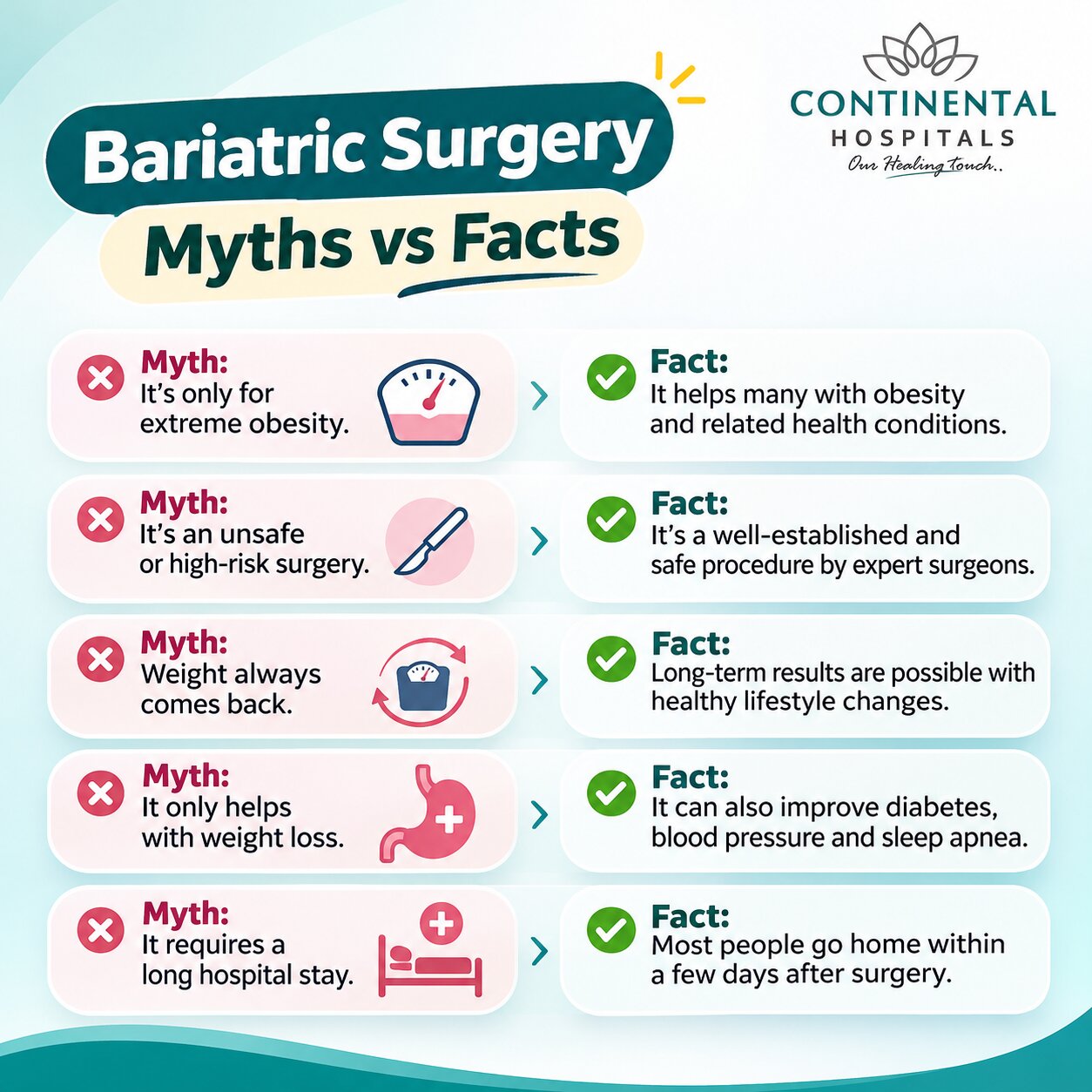
Fact: Bariatric surgery is a medical intervention to treat obesity rather than a purely cosmetic operation. Being overweight or obese increases the chances of developing other diseases such as type 2 diabetes, hypertension, heart disease, and sleep apnea.

Bariatric surgery is a process that helps maintain a healthy weight and treats diseases associated with obesity. It can also help enhance mobility and energy levels.

Myth 2: Is Bariatric Surgery a Convenient Method for Shedding Excess Weight?
Fact: Bariatric surgery is not a convenient way of losing weight since it involves following certain rules after surgery along with healthy eating practices.

Those rules include the following:

  • Following proper nutritional advice
  • Adhering to portion sizes of food
  • Staying physically active
  • Consuming necessary vitamins and supplements

Attending follow-ups with your physician.

It is important to note the long-term commitment in order to be successful in maintaining weight loss.

Visit the Bariatric Surgery Department at Continental Hospitals, Hyderabad, to explore suitable weight management and surgical treatment options.

Second Opinion

Myth 3: Is Bariatric Surgery Dangerous?
Fact: Any type of surgery bears certain risks. Still, there were great improvements made in the sphere of bariatric surgery due to the advancement of techniques and anesthesia used.

The risks vary according to the person's general state, medical history, and the procedure itself. This information can be provided by the physician through the process of detailed medical examination.

Surgical procedures such as sleeve gastrectomy or gastric bypass are common nowadays. They are usually conducted with the use of minimal invasive technique.
Myth 4: Will you be unable to eat normally after the operation?
Fact: There is an ability to consume various types of food after undergoing bariatric surgery, however, the eating pattern will have to change.

At first, patients should adhere to the diet progression plan proposed by health care professionals, which involves:

1. Consumption of clear liquids in the postoperative period.
2. Consumption of full liquids as required.
3. Soft foods.
4. Introduction of solid foods gradually.
5. Consuming balanced food in smaller portions for life.
It is essential to eat slowly and chew well to avoid overeating.

Need an Appointment?

Myth 5: Is it true that nutrition deficiencies occur after the operation?
Fact: Deficiency of nutrients occurs after bariatric surgery if patients fail to adhere to the prescribed diet and take additional nutritional supplements because some operations can affect the absorption process.

Health care professionals usually prescribe patients' regular monitoring of nutrient levels and additional supplements as needed by each particular case individually.

Nutrients that can be controlled:

Myth 6: Does Bariatric Surgery Involve People Who Are Morbidly Obese Only?
Fact: Bariatric surgery does not apply to patients who are morbidly obese. It involves certain criteria, which include BMI, presence of health problems associated with obesity, other methods of losing weight, and health condition of the patient.

Those suffering from diseases like type 2 diabetes, hypertension, and sleep apnea may be evaluated. The surgery is performed only after evaluating its pros and cons by specialists.

What Are the Benefits of Bariatric Surgery?

What are the benefits of bariatric surgery that help improve the state of health? In addition to providing the opportunity to lose weight, it can help to treat certain obesity-related diseases.

Possible benefits include:

  • Better regulation of blood glucose in patients with type 2 diabetes.
  • Better blood pressure regulation.
  • Relief from symptoms of obstructive sleep apnea.
  • Improving mobility and physical activity.
  • Reducing the load on the joints.
  • Overall improvement of the quality of life.

The outcomes depend on each particular case.

Why choose Continental Hospitals for bariatric surgery?

Why would you consider an experienced medical team when it comes to weight loss surgery? Bariatric surgery needs proper selection of the patients, experience of surgeons, nutritionists, and follow-up process for the rest of the life of the patients.

Continental Hospitals in Hyderabad has all the above-mentioned features in order to provide excellent care for the patients who need obesity and bariatric treatment. The hospital has got international and national accreditations, such as the Joint Commission International (JCI) and the National Accreditation Board for Hospitals and Healthcare Providers (NABH).

The patients get the individual treatment, which includes medical examination, planning the procedure, nutrition consultation, and follow-up after the surgery.

Conclusion

It is necessary to be aware of myths and realities of bariatric surgery before opting for any weight loss procedure. Bariatric surgery does not mean a cosmetic procedure; rather, it is a treatment method that can benefit those individuals who are qualified for undergoing bariatric surgery and have obesity with certain accompanying disorders.

In case you have problems with obesity, overweight, or even certain disorders such as diabetes, high blood pressure, or sleep apnea associated with obesity, consult our best bariatric surgeon in Hyderabad Continental Hospitals, Hyderabad. Proper medical consultation will help you realize what treatment options to choose.

Related Blogs:

  1. Life After Bariatric Surgery: Diet, Exercise, and Recovery
  2. Key Innovations in Bariatric Surgery

Frequently Asked Questions

Bariatric surgery is generally considered safe for eligible patients when performed by an experienced surgical team. Like every major surgery, it carries certain risks and possible complications. These may include bleeding, infection, blood clots and reactions to anaesthesia. The level of risk depends on the patient's overall health and medical history. Modern surgical techniques, including laparoscopic procedures, have improved surgical safety. Patients undergo medical assessments before the procedure. Doctors evaluate existing health conditions and obesity-related complications. The surgical team also explains the benefits and possible risks. Following dietary instructions before surgery is important. Regular follow-up appointments help monitor recovery. Patients must follow recommended nutrition and lifestyle changes. Bariatric surgery can offer significant health benefits for appropriately selected individuals. A consultation with a bariatric surgeon helps determine whether the procedure is suitable.
Bariatric surgery is primarily performed to help people with obesity achieve significant and sustained weight loss. However, its benefits extend beyond reducing body weight. It can improve several obesity-related health conditions. These may include type 2 diabetes, high blood pressure and sleep apnea. Some patients may experience improvements in cholesterol levels. Weight reduction can also reduce stress on the joints. It may improve mobility and physical activity. Many patients experience better quality of life after surgery. The procedure can also support improvements in metabolic health. However, results vary from person to person. Surgery works best when combined with healthy eating and regular physical activity. Long-term medical follow-up remains important. Bariatric surgery is therefore a treatment for obesity and related health problems, not simply a cosmetic weight-loss procedure.
Yes, some weight regain can occur after bariatric surgery. The procedure helps reduce stomach capacity or change digestion, depending on the surgical method. However, it does not automatically prevent future weight gain. Eating large portions regularly can affect long-term results. Frequent consumption of high-calorie foods and sugary drinks may also contribute to weight regain. Lack of physical activity can influence weight management. Hormonal and metabolic changes may also play a role. Following the recommended dietary plan is important after surgery. Regular exercise supports healthy weight maintenance. Patients should attend scheduled follow-up consultations. Nutritional guidance can help identify deficiencies and unhealthy eating patterns. If significant weight regain occurs, doctors can evaluate the underlying reasons. Long-term lifestyle changes are essential for maintaining the benefits of bariatric surgery.
Patients can eat a variety of foods after recovering from bariatric surgery. However, their eating habits and portion sizes will change. Immediately after surgery, patients follow a carefully planned liquid diet. Soft foods are gradually introduced as healing progresses. Solid foods are added according to the surgeon's instructions. Smaller portions become necessary because the stomach capacity is reduced. Eating slowly and chewing food thoroughly helps prevent discomfort. Drinking enough water throughout the day is also important. Some foods may cause discomfort or be difficult to tolerate. Sugary and highly processed foods should generally be limited. Protein-rich foods are important for recovery and muscle maintenance. Patients may need vitamin and mineral supplements. A dietitian helps develop a balanced and suitable long-term eating plan.
Bariatric surgery can provide long-term weight loss benefits for many patients. However, it should not be considered an automatic or guaranteed permanent solution. The procedure changes the digestive system to support weight management. Long-term success depends on maintaining healthy lifestyle habits. Patients need to follow recommended dietary guidelines. Regular physical activity supports better weight management. Medical follow-ups help monitor progress and nutritional health. Some patients may experience weight regain over time. Hormonal changes and eating habits can influence outcomes. Certain patients may require additional medical support. Nutritional deficiencies should also be monitored. Psychological support can help patients adjust to lifestyle changes. Consistent follow-up with the bariatric care team is important. With proper care and commitment, many patients achieve sustained improvements in their weight and overall health.
Nutritional deficiencies can occur after bariatric surgery, but they can often be managed with proper care. Certain procedures change food intake or nutrient absorption. This may affect the body's ability to obtain essential vitamins and minerals. Common deficiencies include iron, vitamin B12, vitamin D and calcium. Protein intake may also become inadequate if dietary recommendations are not followed. Patients need a balanced diet after surgery. Doctors may recommend daily vitamin and mineral supplements. Regular blood tests help identify nutritional deficiencies early. A dietitian can guide patients on suitable food choices. Protein-rich foods are particularly important during recovery. Patients should not stop prescribed supplements without medical advice. Long-term nutritional monitoring is necessary after bariatric surgery. Following professional guidance helps maintain overall health and prevent complications.
Bariatric surgery may be recommended for individuals living with obesity who have not achieved sufficient results through other weight-management approaches. Eligibility depends on body mass index, medical history and obesity-related health conditions. People with type 2 diabetes, high blood pressure or sleep apnea may benefit from evaluation. Doctors also consider previous weight-loss attempts. Age and overall physical health are important factors. International guidelines and Indian clinical criteria may differ. The surgical team evaluates each patient individually. A comprehensive assessment may include blood tests and other medical investigations. Nutritional and psychological evaluations may also be required. Patients should understand the lifestyle changes needed after surgery. A bariatric surgeon explains the available surgical options. Not everyone with excess body weight requires surgery. A specialist consultation helps determine the most appropriate treatment approach.
Recovery after bariatric surgery varies depending on the procedure and the patient's health. Many patients stay in the hospital for a few days after surgery. Minimally invasive techniques may support a quicker recovery in suitable patients. Light walking is usually encouraged soon after the procedure. Patients should initially avoid heavy lifting and strenuous activities. The doctor provides instructions about returning to daily routines. Dietary progression usually happens in stages. Patients begin with liquids before gradually introducing soft and solid foods. Pain and mild discomfort may occur during the initial recovery period. Proper wound care helps reduce the risk of infection. Follow-up appointments are important for monitoring healing. Patients should report severe pain, persistent vomiting, fever or other concerning symptoms. Following the surgeon's instructions supports a smoother recovery.
Disclaimer: The information provided in this blog is intended for general knowledge and informational purposes only, and does not constitute medical advice. Always consult with a qualified healthcare professional for any medical concerns or before making any decisions about your health.

Get in Touch With Us

Whether you are from India or abroad, we are here to help you with your medical queries. Please fill out the form below and our team will connect with you shortly.

  • ✔ Quick response from our medical experts
  • ✔ Secure data handling & privacy
  • ✔ Easy upload for reports & documents
banner_image

Chat with our medical experts on WhatsApp for quick assistance and hassle-free appointment booking

Recent Posts