.webp)
Air conditioning has become a part of everyday life, especially in cities with hot weather. Offices, homes, shopping malls, and even cars depend on AC systems to keep indoor spaces comfortable. While air conditioning improves comfort, constant exposure to AC can quietly affect your skin health.
Many people notice dryness, dullness, or irritation after spending long hours in air-conditioned rooms. These problems are often ignored until they become persistent skin concerns. Understanding the AC effects on skin can help you protect your skin and maintain a healthy glow.
Does AC Damage Skin?
Yes, long exposure to AC can damage the skin if proper care is not taken.
Air conditioners work by removing humidity from indoor air. While this process cools the environment, it also reduces the moisture level in the air. When the surrounding air becomes dry, your skin loses its natural moisture.
The result is dry, tight, and irritated skin.
People who spend long hours in offices or sleep with AC running all night often experience air conditioner dry skin without realizing the cause.
Over time, dry skin from air conditioning can weaken the skin barrier, making the skin more sensitive to environmental damage.
Visit the Dermatology Department at Continental Hospitals, Hyderabad for expert diagnosis and personalized treatment from our best dermatologists to restore healthy, radiant skin.

How Air Conditioning Affects Your Skin
Air conditioning and skin problems are closely connected. Continuous exposure to dry indoor air can disrupt the skin's natural hydration balance.
Here are some of the major AC side effects on skin.
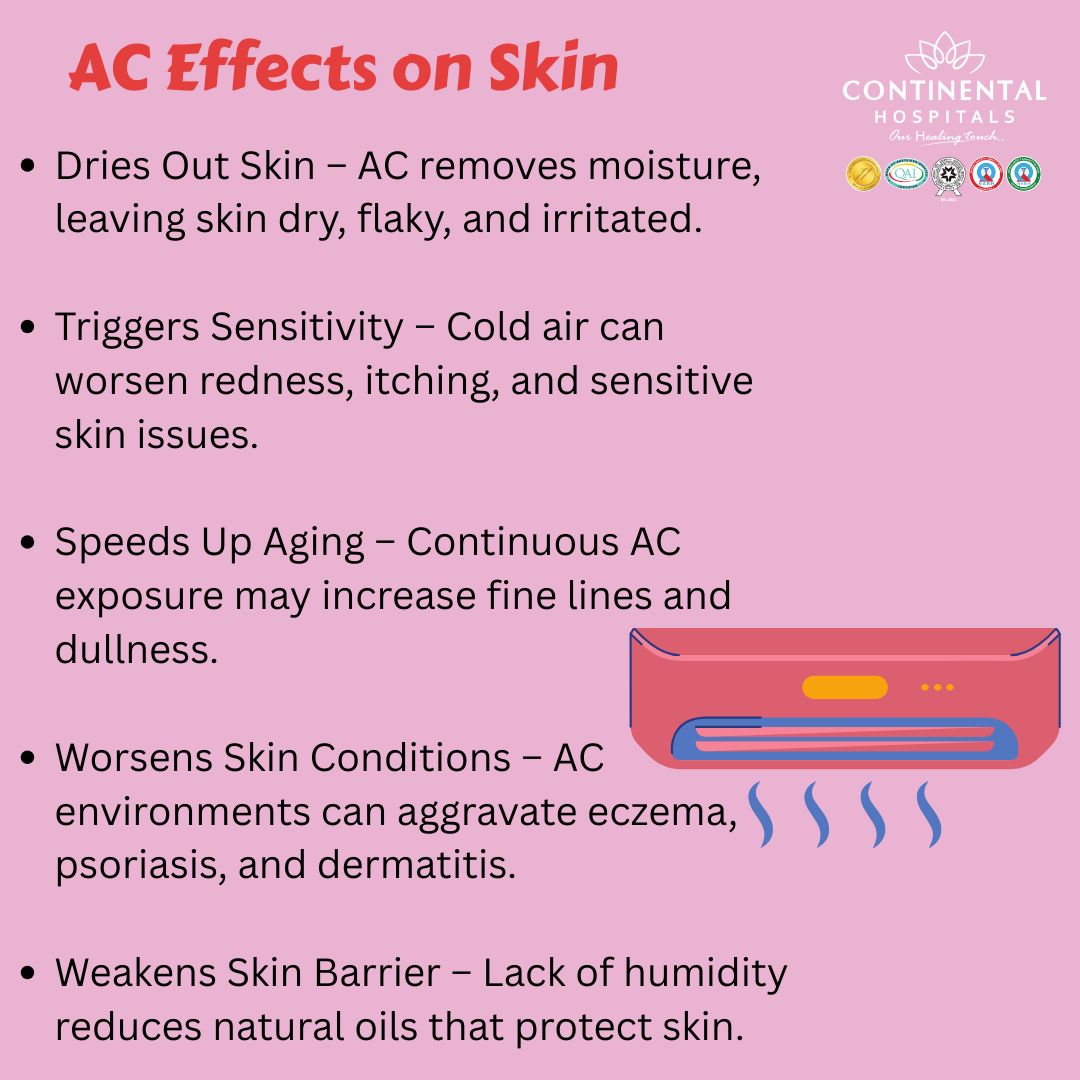
Moisture Loss
One of the most common AC effects on skin is dehydration. Air conditioners remove humidity from the air, which leads to moisture evaporation from the skin surface.
When the skin loses water, it becomes rough, tight, and flaky.
Skin Barrier Damage
The outer layer of the skin acts as a protective barrier. Constant exposure to dry air can weaken this layer. When the barrier becomes damaged, the skin becomes vulnerable to irritation, redness, and infections.
Increased Skin Sensitivity
People with sensitive skin may notice itching, redness, or irritation after spending time in air conditioned environments. The dry air can aggravate conditions such as eczema and dermatitis.
Premature Skin Aging
Dry skin from air conditioning can accelerate signs of aging. Lack of hydration reduces skin elasticity and can lead to fine lines, wrinkles, and dull appearance.
Worsening of Existing Skin Conditions
Air conditioning and skin problems can become more noticeable in people who already have skin concerns such as psoriasis, eczema, or rosacea. Dry air may worsen inflammation and itching.
Common Skin Problems Caused by AC
Many skin complaints seen by dermatologists are linked to prolonged exposure to AC environments.
Some common issues include
- Dry and flaky skin
- Itchy or irritated skin
- Red patches or inflammation
- Chapped lips
- Dull and tired looking skin
- Worsening eczema symptoms
- Increased skin sensitivity
If these symptoms continue for weeks, it may indicate significant AC side effects on skin that require medical attention.
Who Is Most Affected by AC Exposure?
While anyone can experience air conditioner dry skin, some people are more vulnerable.
- People who spend long hours in air conditioned offices
- Individuals with naturally dry skin
- People with sensitive skin conditions
- Older adults whose skin loses moisture easily
- People who frequently travel in air conditioned environments
Recognizing these risk factors can help prevent long term dry skin from air conditioning.
Signs That AC Is Affecting Your Skin?
Many people do not connect their skin problems with indoor cooling systems. However, there are some clear signs.
- Your skin feels tight after sitting in AC rooms for hours?
- You notice dryness even after using moisturizer?
- Your skin becomes dull or flaky during office hours?
- You experience irritation or itching indoors?
These symptoms suggest that AC effects on skin may be impacting your skin health.
How to Protect Your Skin from AC Damage
Fortunately, simple skin care habits can reduce air conditioning and skin problems.
Here are effective ways to protect your skin.
Stay Hydrated
Drink enough water throughout the day. Hydration helps the skin maintain moisture even in dry indoor environments.
Use a Good Moisturizer
Apply a hydrating moisturizer at least twice a day. Choose products that help strengthen the skin barrier and lock in moisture.
Use a Humidifier
A humidifier adds moisture back into indoor air. This helps prevent excessive dryness caused by AC systems.
Avoid Harsh Skin Products
Strong soaps, alcohol based toners, and harsh exfoliants can worsen dry skin from air conditioning. Use gentle skin care products instead.
Protect Your Lips
Lips are very sensitive to dry air. Use a moisturizing lip balm regularly to prevent chapping.
Maintain a Healthy Diet
Foods rich in vitamins, antioxidants, and healthy fats help support skin hydration and repair.
Take Short Breaks from AC
Whenever possible, step outside or spend time in naturally ventilated spaces to give your skin a break from dry indoor air.
When Should You See a Dermatologist?
If dryness, irritation, or inflammation does not improve despite basic skin care, professional evaluation may be necessary.
Consult a dermatologist if you experience
- Persistent itching or redness
- Cracked or bleeding skin
- Severe dryness that does not improve with moisturizers
- Worsening eczema or psoriasis
- Frequent skin irritation in AC environments
Early diagnosis helps prevent long term skin damage.
Why Choose Continental Hospitals for Skin Care?
When dealing with air conditioning and skin problems, expert dermatological care can make a significant difference.
Continental Hospitals in Hyderabad is widely recognized as one of the best hospitals in Hyderabad for comprehensive medical care. The hospital is known for advanced infrastructure, patient focused care, and a multidisciplinary approach to treatment.
Continental Hospitals is accredited by the Joint Commission International and the National Accreditation Board for Hospitals and Healthcare Providers. These prestigious accreditations reflect the hospital's commitment to global healthcare standards, patient safety, and clinical excellence.
The dermatology department at Continental Hospitals offers
- Expert consultation with experienced dermatologists
- Advanced diagnostic technologies
- Personalized skin care treatment plans
- Evidence based medical treatments
- Comprehensive care for chronic skin conditions
Patients receive holistic care that focuses on long term skin health and prevention.
Conclusion
Air conditioning offers comfort during hot weather, but prolonged exposure can affect skin health. The AC effects on skin often appear as dryness, irritation, and increased sensitivity. Over time, dry indoor air can weaken the skin barrier and contribute to premature aging.
Understanding how air conditioning impacts your skin allows you to take preventive steps such as proper hydration, regular moisturizing, and balanced skin care routines.
If skin problems persist despite these measures, consulting a dermatologist is important for accurate diagnosis and treatment.
If you are experiencing dry skin from air conditioning, irritation, or other skin concerns, it is important to seek expert medical advice.
Consult our best dermatologist at Continental Hospitals, the best hospital in Hyderabad, where our experienced dermatologists provide advanced diagnosis and personalized treatment to restore healthy and radiant skin. Early care can help prevent long term damage and protect your skin from AC related problems.
Related Blog Topics: