post-title

Acne Triggers: Facts Every Teen and Adult Should Know

Written by - Editorial Team
Medically Reviewed by - Dr Preethi Sunki

Both teenagers and adults suffer from acne, which is one of the most popular skin problems. There is a common misconception that acne only appears when a person is a teenager. In reality, it can occur anytime during one’s life. The first step towards achieving clear skin and preventing acne is learning Acne Triggers. By knowing the causes of acne breakout, an individual can make better choices about treatments and lifestyle.

When people ask how to eliminate acne, they need to understand that acne treatment starts with identifying the reasons for acne. People have various Acne Triggers, such as hormones, stress, food, skin care practices, and the environment.

What Is Acne?

Acne is a condition that occurs when the pores of the hair follicles get blocked due to the accumulation of dirt, dead skin, oil from skin, and bacteria. This blockage causes pimples and cysts, the painful lumps that may occur as a consequence. The most common places on the body where acne appears are the chin, chest, back, and shoulders.

Though acne is not dangerous, it can affect a person’s self-esteem, and when not treated properly, it can lead to permanent skin scars.

If you're struggling with acne, don't ignore the signs. Visit the Dermatology Department at Continental Hospitals for expert care.

What are the most common sparkles?

There are several factors that can trigger acne. Knowing the following acne triggers will let you minimize the number of breakouts.

Hormone spikes
Hormones are a large cause of acne problems. Most teenagers have to deal with acne at some point in their life because puberty is the time when hormones become active. Adults may also suffer from this problem during pregnancy, menstruation, menopause, or even because of diseases.

People suffering from hormonal acne should consult their dermatologists for help.

Production of too much oil
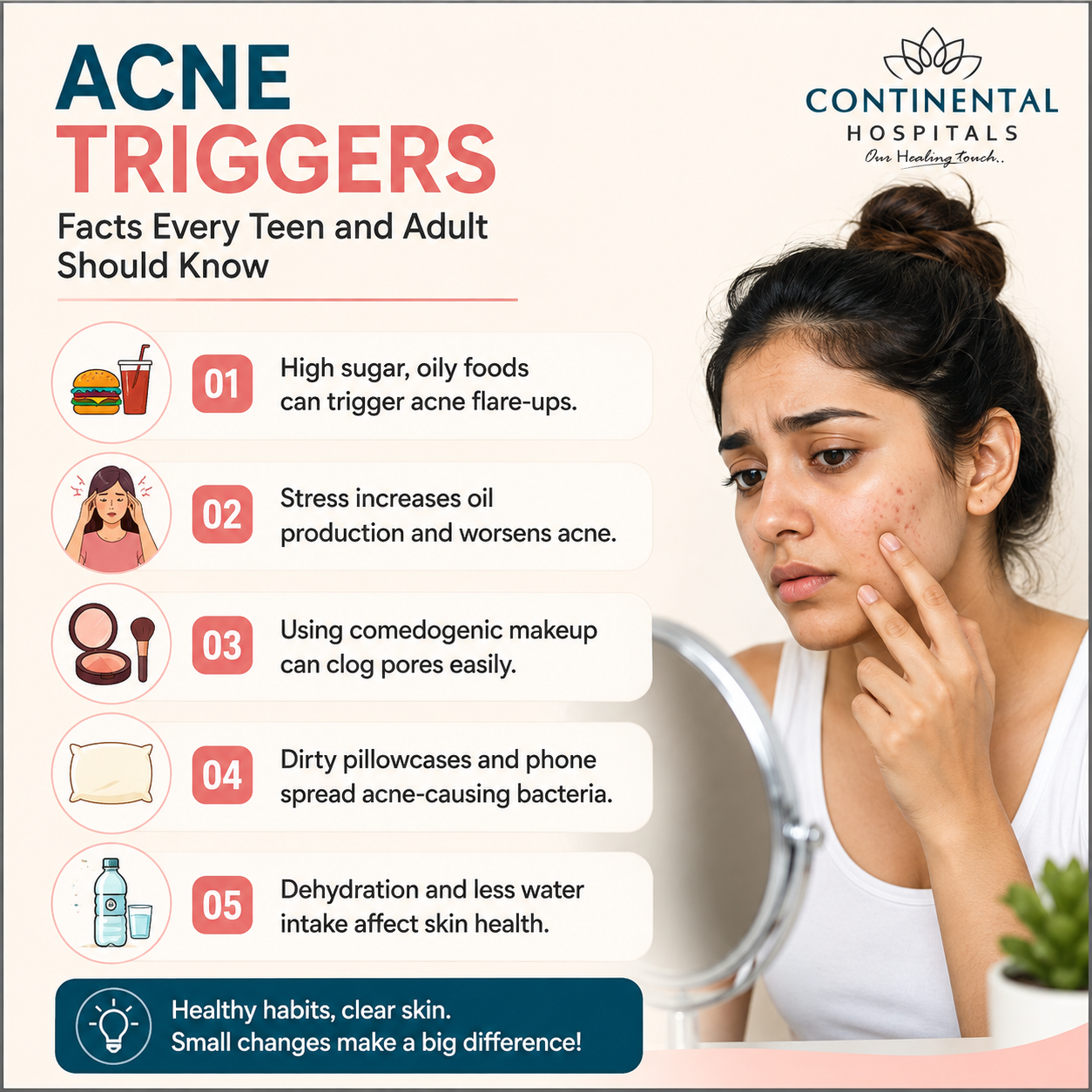
Our skin produces oil to keep healthy, but if there is too much oil, it might clog the pores and help bacteria multiply.

Second Opinion

Stress
Stress itself does not cause acne, but it might aggravate symptoms of acne.

Food Choices  

Some research implies that those individuals who eat sugary snacks and processed carbs suffer more severely from acne. A well-balanced diet filled with fruit, vegetables, whole grains, and lean proteins may be good for the skin.  

Environmental Issues 

Contaminated air, humidity, perspiration, and dust pollution can clog the skin pores and lead to breakouts. After perspiring, it might be useful to wash your face.  
Who Is Prone to Acne?  

Even though everyone can suffer from acne, some individuals are more likely to undergo this problem.  

Need an Appointment?

Potential risk factors are:  

  • Young people entering the puberty phase of life
  •  Adult people experiencing hormonal changes
  •  People with the genetics of acne  
  • People with excessive oil secretion from the skin
  • People using cosmetics that clog pores  
  • People who suffer from prolonged stress  
  • Individuals taking some medications

How Can You Stop Acne from Forming?

To stop acne from forming, you must adopt certain daily habits and a good skin care routine.

Some acne-fighting habits are the following:

  • Clean your face twice a day with mild soap.
  • Avoid touching and squeezing your pimples.
  • Use oil-free and non-comedogenic creams and lotions.
  • Remove make-up before going to sleep.
  • Drink plenty of water every day.
  • Eat a healthy and balanced diet.
  • Reduce stress by exercising regularly and relaxing.
  • Keep your pillow covers and towels clean.
  • Use sunscreen suitable for your skin type.

These healthy habits will not only help you prevent acne from forming but also improve the quality of your skin.

How to Remove Acne?

A lot of individuals ask how to remove acne quickly. The answer will depend on the classification and severity of acne.

Mild acne may improve after using topical solutions that you can buy without a prescription, containing salicylic acid or benzoyl peroxide. Moderate or severe acne usually requires prescription treatment, skin creams, antibiotics, or a hormonal treatment for acne. The dermatologist will advise you about the most appropriate treatment according to your type of skin and your health condition.

Never attempt to use more than one remedy at the same time, as it may affect your skin badly.

When Should You Approach a Dermatologist?

You ought to consult a dermatologist in case the following occur:

  • Acne is painful or serious.
  • Home remedies do not yield positive results.
  • Acne leaves scars and/or dark spots.
  • Acne is persistent even when you reach adulthood.
  • Cysts appear often.
  • Your acne problem affects your self-esteem or emotional state.

Getting medical help at the earliest will increase the positive effect of treatment and prevent scarring.

What Causes Acne That People Usually Fail to Recognize?

Several lesser-known causes of acne are frequently neglected.

Less obvious acne stimulators could be the following:

  • Dirty mobile phones
  • Tight hats or helmets
  • Oils from hair product hitting the forehead
  • Frequent face touching
  • Dirty brushes for makeup
  • Not enough sleep
  • Medications
  • Over-exfoliating the skin

Awareness of such acne stimulators can aid in controlling outbreaks.

Why Choose Continental Hospitals for Acne Treatment?

At Continental Hospitals, which is among the best hospitals in Hyderabad, dermatology services are available, which are comprehensive in nature and offered at the hands of qualified professionals. The best part of the hospitals is the experienced and knowledgeable dermatology team that assesses individual triggers for acne and gives individualized treatments and skincare regimens accordingly.

Continental Hospitals has the accreditation of JCI, NABH, and QAI, and hence there are international standards maintained with respect to patient safety, treatment quality, and effectiveness of healthcare services.

Conclusion

Understanding acne triggers is essential for achieving healthier skin. Acne is influenced by many factors, including hormones, stress, lifestyle, skincare habits, and environmental conditions. Identifying your personal triggers allows you to take the right steps toward effective acne prevention and successful acne treatment. If breakouts persist despite proper skincare, consulting a dermatologist is the best way to protect your skin and prevent long-term complications.

If you are struggling with persistent acne, recurring breakouts, acne scars, or hormonal skin concerns, consult our best dermatologist in Hyderabad at Continental Hospitals. Our experienced dermatologists provide comprehensive evaluation, personalized treatment plans, advanced hormonal acne treatment, and expert skincare guidance to help you achieve healthier, clearer skin with lasting results.

Related Blogs:

  1. Acne Scars: What Are the Best Treatment Options?
  2. Hormonal Acne Diet: What to Eat to Help Breakouts
  3. Best Acne Treatments for Clear Skin: What Really Works?

Frequently Asked Questions

Acne develops when hair follicles become blocked with excess oil, dead skin cells, and bacteria. Hormonal changes, especially during puberty, increase oil production and make acne more likely. Genetics also play an important role, meaning acne often runs in families. Stress, certain medications, and cosmetic products that clog pores can worsen breakouts. Friction from helmets, masks, or tight clothing may also contribute to acne. Contrary to common belief, acne is not caused by poor hygiene alone. Washing your face too often can actually irritate the skin and make acne worse. Following a gentle skincare routine and identifying individual triggers can help control acne. Early treatment reduces the risk of long-term scarring. Consulting a dermatologist is recommended if acne is persistent or severe.
Certain foods may trigger acne in some individuals, although diet affects everyone differently. High-glycemic foods such as white bread, sugary drinks, sweets, and processed snacks can increase insulin levels, leading to more oil production. Some studies also suggest that excessive dairy consumption, especially skim milk, may worsen acne in susceptible people. Eating a balanced diet rich in fruits, vegetables, whole grains, lean proteins, and healthy fats supports healthier skin. Drinking enough water also contributes to overall skin health. Keeping a food diary may help identify personal triggers. Avoid eliminating entire food groups without medical advice. Healthy eating works best when combined with proper skincare and medical treatment. A dermatologist can guide you on managing acne through both lifestyle and medical approaches.
Yes, stress can worsen existing acne by increasing the release of hormones such as cortisol, which stimulates oil production in the skin. While stress may not directly cause acne, it often leads to more frequent or severe breakouts. During stressful periods, people may also neglect skincare routines or pick at pimples, increasing inflammation and the risk of scarring. Poor sleep associated with stress can further affect skin health. Practicing stress management through exercise, meditation, yoga, or relaxation techniques may help reduce flare-ups. Maintaining a healthy lifestyle supports better skin recovery. If stress-related acne becomes persistent, professional treatment may be necessary. Combining stress management with dermatologist-recommended treatments offers the best results.
Hormonal changes are one of the most common causes of acne in both teenagers and adults. Increased androgen hormones stimulate the sebaceous glands to produce more oil, which can clog pores and promote bacterial growth. Teenagers commonly experience hormonal acne during puberty, while adults may develop acne during menstruation, pregnancy, menopause, or conditions such as polycystic ovary syndrome (PCOS). Hormonal acne often appears along the jawline, chin, and lower face. Proper diagnosis helps determine whether hormones are contributing to breakouts. Prescription medications or hormonal therapies may be recommended when appropriate. Avoid self-medicating without professional guidance. A dermatologist can recommend the most suitable treatment based on your condition and overall health.
Yes, some skincare and cosmetic products can contribute to acne if they contain ingredients that clog pores. Heavy creams, oily makeup, and certain sunscreens may trigger breakouts in acne-prone individuals. Choosing products labeled 'non-comedogenic' and 'oil-free' reduces this risk. Removing makeup before bedtime is essential to prevent pore blockage. Harsh scrubs and excessive cleansing can damage the skin barrier, causing irritation and worsening acne. Introducing too many new skincare products at once can also lead to skin reactions. A simple, gentle skincare routine is often more effective than using multiple products. If breakouts continue despite changing products, consult a dermatologist for personalized recommendations.
Popping pimples is strongly discouraged because it pushes bacteria and inflammation deeper into the skin. This can increase redness, swelling, pain, and the risk of permanent acne scars. Squeezing pimples may also spread bacteria to nearby pores, leading to additional breakouts. Instead of picking at acne, use dermatologist-recommended topical treatments containing ingredients such as benzoyl peroxide or salicylic acid. Applying warm compresses may help certain pimples drain naturally. Professional extraction performed by trained healthcare providers is much safer than attempting it at home. Allowing acne to heal properly reduces complications. Consistent treatment and patience provide better long-term results than squeezing pimples.
Yes, acne is common in adults and can affect people well beyond their teenage years. Adult acne is particularly common among women due to hormonal fluctuations related to menstruation, pregnancy, menopause, or PCOS. Stress, certain medications, cosmetics, and genetics also contribute to adult breakouts. Adult acne often appears on the cheeks, chin, and jawline. It may require different treatment approaches than teenage acne because adult skin is often more sensitive. Delaying treatment can increase the risk of pigmentation and permanent scarring. Early evaluation by a dermatologist helps identify the underlying cause. With the right treatment plan, most adults can successfully control acne and improve skin health.
You should consult a dermatologist if your acne is painful, widespread, leaves scars, or does not improve with over-the-counter treatments after several weeks. Frequent breakouts, deep cysts, or acne affecting your confidence also deserve medical attention. Early treatment helps prevent permanent scarring and dark spots. Dermatologists can identify the specific type of acne and recommend personalized treatments such as prescription creams, oral medications, hormonal therapy, or advanced procedures. Every person's skin responds differently, making individualized care important. Avoid trying multiple home remedies without professional advice, as some may worsen the condition. Timely medical care can significantly improve both skin appearance and quality of life.
Disclaimer: The information provided in this blog is intended for general knowledge and informational purposes only, and does not constitute medical advice. Always consult with a qualified healthcare professional for any medical concerns or before making any decisions about your health.

Get in Touch With Us

Whether you are from India or abroad, we are here to help you with your medical queries. Please fill out the form below and our team will connect with you shortly.

  • ✔ Quick response from our medical experts
  • ✔ Secure data handling & privacy
  • ✔ Easy upload for reports & documents
banner_image

Chat with our medical experts on WhatsApp for quick assistance and hassle-free appointment booking

Recent Posts