.webp)


Appendicitis is one of the most common abdominal emergencies seen in both adults and children. The key to preventing complications is early detection. When you understand where appendicitis pain starts, how it moves, and what symptoms follow, you can act quickly and seek medical help before the appendix bursts. This detailed guide helps you identify the early signs of appendicitis, understand the seriousness of the condition, and know when to see a doctor at Continental Hospitals, one of the best hospitals in Hyderabad.
What Is Appendicitis?
Appendicitis is an inflammation of the appendix, a small fingerlike pouch attached to the large intestine. When this pouch gets blocked by stool, swelling, or infection, it becomes inflamed. If not treated on time, it can burst and spread infection throughout the abdomen. Recognising symptoms early is the safest way to prevent complications.
Where Does Appendicitis Pain Start?
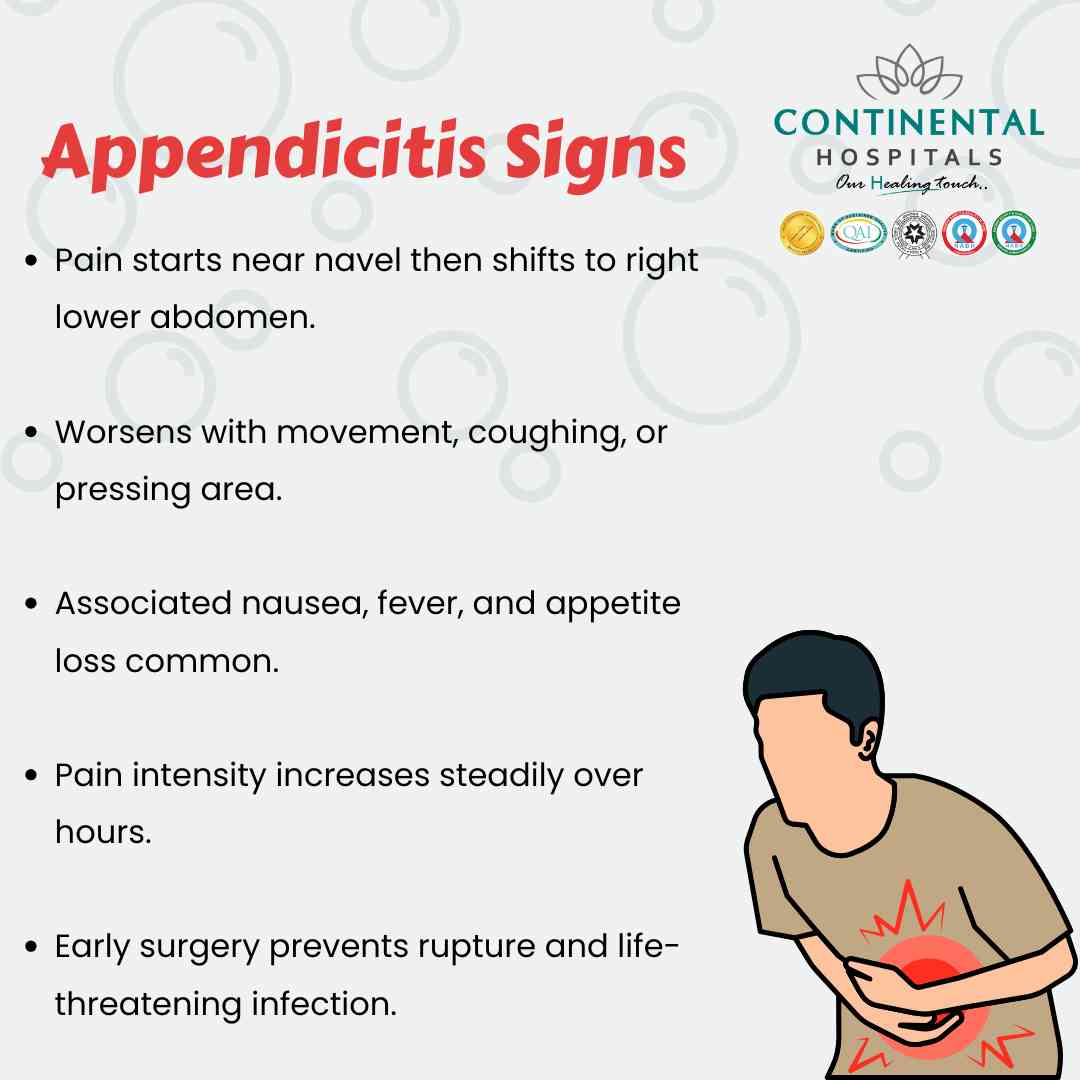
Many people think appendicitis pain begins on the right side of the abdomen. But early pain usually starts around the navel. It then slowly shifts to the lower right side within a few hours. This shift is one of the key indicators that doctors look for to identify appendicitis.
How the Pain Progresses
- Early pain starts near the belly button.
- It slowly moves toward the lower right abdomen.
- The pain becomes sharp and more intense with time.
- Walking, coughing, or moving can make the pain worse.
- The area becomes tender to touch.
If you feel pain that follows this pattern, it is important not to ignore it.
Key Symptoms of Appendicitis
Along with abdominal pain, several other symptoms appear as the appendix becomes more inflamed. These symptoms help in early diagnosis.
Common Symptoms
- Loss of appetite
- Nausea or vomiting
- Mild fever
- Bloating
- Constipation or diarrhoea
- Pain that increases within hours
- Inability to pass gas
- Abdominal swelling
Many people mistake appendicitis symptoms for food poisoning or a stomach infection. But the shifting pain to the lower right abdomen is a strong indicator that you should seek immediate medical attention.

How to Identify Appendicitis Pain at Home?
While only a doctor can confirm appendicitis, you can look for key signs at home.
Important Checks
- Notice if the pain began near the belly button.
- Check if the pain has moved to the lower right side.
- Try walking and see if the pain worsens.
- Press gently on the painful area and release. If the pain increases after releasing, it may be a sign of inflammation.
- Monitor if you have nausea, vomiting, or fever along with the pain.
If these signs are present, do not wait for the symptoms to settle. Immediate diagnosis can prevent serious complications.
What Causes Appendicitis?
Appendicitis can occur due to blockage in the appendix. Blockage can be caused by stool, infection, enlarged lymph nodes, or swelling inside the intestine. When blocked, bacteria multiply quickly inside the appendix which leads to infection and swelling.
Who Is at Higher Risk?
Anyone can get appendicitis, but some groups may be more likely to develop it.
Risk Factors
- Teenagers and young adults
- People with family history of appendicitis
- People with low fibre diet
- Individuals prone to gastrointestinal infections
While risk factors may increase the chances, appendicitis can happen to anyone at any age.
Why Early Detection Matters?
If appendicitis is not diagnosed on time, it can lead to a ruptured appendix. This causes infection to spread inside the abdomen which can be life threatening. Early detection ensures safe treatment and quick recovery. The faster the diagnosis, the better the outcome.
How Doctors Diagnose Appendicitis?
Doctors perform a physical examination and may order tests to confirm inflammation.
Diagnostic Methods
- Blood tests to detect infection
- Urine tests to rule out urinary problems
- Ultrasound imaging
- CT scan for clear abdominal view
- Physical pressure tests to check tenderness
These tools help specialists make an accurate diagnosis and decide the right treatment approach.
Treatment Options for Appendicitis
Once appendicitis is confirmed, the most common treatment is surgery to remove the inflamed appendix. Removal of the appendix does not cause long term problems. Early surgery helps prevent rupture and ensures fast recovery.
Treatment Approaches
- Laparoscopic appendectomy which involves minimal cuts
- Open appendectomy for complicated cases
- Antibiotics to control infection
- Post surgery monitoring and care
Most patients recover quickly after surgery and return to normal activities within a short period.
Food and Lifestyle During Appendicitis
If appendicitis is suspected, avoid self treatment at home.
What to Avoid
- Do not take painkillers without medical advice
- Avoid heating pads on the abdomen
- Avoid heavy meals
- Do not try home remedies
- Do not wait for pain to settle on its own
Self treatment can worsen the condition and delay proper diagnosis.
Why Choose Continental Hospitals for Appendicitis Care?
Continental Hospitals is one of the best hospitals in Hyderabad known for advanced emergency care, modern surgical facilities, and expert gastrointestinal specialists. The hospital follows strict safety protocols and offers patient centred care backed by international standards.
Highlights of Continental Hospitals
- Experienced gastroenterologists and surgeons
- 24x7 emergency and trauma support
- Advanced diagnostic imaging technology
- Minimally invasive surgery options
- Infection controlled operation theatres
- JCI accredited hospital known for global quality standards
- Multidisciplinary team for complete care
- Fast emergency response and seamless treatment
Patients receive expert care from diagnosis to recovery with dedicated nursing and post operative support.
Conclusion
Appendicitis is a serious condition but early detection can prevent complications. Understanding the pain pattern and associated symptoms helps you act quickly. If you or your loved one experiences persistent lower right abdominal pain, especially with nausea and fever, consult a specialist without delay.
If you suffer from severe abdominal pain or suspect appendicitis, consult our best Gastroenterology specialists at Continental Hospitals for timely and accurate treatment.