.webp)


Sitting for long periods has become a standard part of modern work life. While desks and computers are essential tools, they often come with a physical cost. Many people find that after a few hours of focused work, a dull ache begins to develop in the lumbar region. This discomfort is often a direct result of prolonged inactivity and poor posture. Understanding why this happens and how to counteract it with specific movements can significantly improve your daily comfort and long-term spinal health.
Why Sitting Causes Back Pain
When you sit for extended periods, the muscles in your hips and legs can become tight. Specifically, the hip flexors shorten, which pulls on the pelvis and increases the curve in the lower spine. Simultaneously, the muscles in the upper back and neck often overstretch as we lean toward screens. This imbalance creates tension that manifests as back pain.
Gravity also plays a role. When standing, the spine naturally distributes weight. When sitting, especially if slouching, the pressure on the spinal discs increases. Over time, this pressure can lead to chronic back pain from sitting and may even contribute to more serious disc issues if not addressed through movement and proper ergonomics.
If you have chronic spinal discomfort, visit our neurology department at Continental Hospitals for evaluation and advanced care.
Essential Stretches for Back Pain Relief
Incorporating short movement breaks into your schedule is the most effective way to manage back pain. You do not need expensive equipment to find back pain relief. These stretches are designed to be performed in an office setting or at home to target the specific areas affected by sitting all day back pain.
1. The Seated Figure-Four Stretch
This move targets the piriformis muscle and the hips, which often tighten during long sessions at a desk.
- Sit upright in your chair with both feet flat on the floor.
- Cross your right ankle over your left knee.
- Gently lean forward while keeping your back straight.
- Hold for thirty seconds and repeat on the other side.
2. Standing Cat-Cow
While usually done on the floor, a standing version is excellent for lower back pain relief during a quick work break.
- Stand with your feet hip-width apart and knees slightly bent.
- Place your hands on your thighs.
- Inhale and arch your back, looking slightly upward.
- Exhale and round your spine, tucking your chin toward your chest.
- Repeat this five to ten times to improve spinal mobility.
3. The Doorway Chest Stretch
Forward slouching causes the chest muscles to tighten, pulling the shoulders forward and straining the back.
- Stand in a doorway and place your forearms on the doorframe.
- Step one foot forward until you feel a gentle stretch across your chest.
- This helps reset your posture and reduces the strain that leads to lower back pain.
4. Hip Flexor Lunge
Tight hip flexors are a primary culprit for back pain.

- Step one foot forward into a lunge position.
- Drop your back knee toward the floor (or keep it elevated for a milder stretch).
- Tuck your pelvis forward until you feel a stretch in the front of your hip.
- This move is vital for anyone experiencing sitting all day back pain.
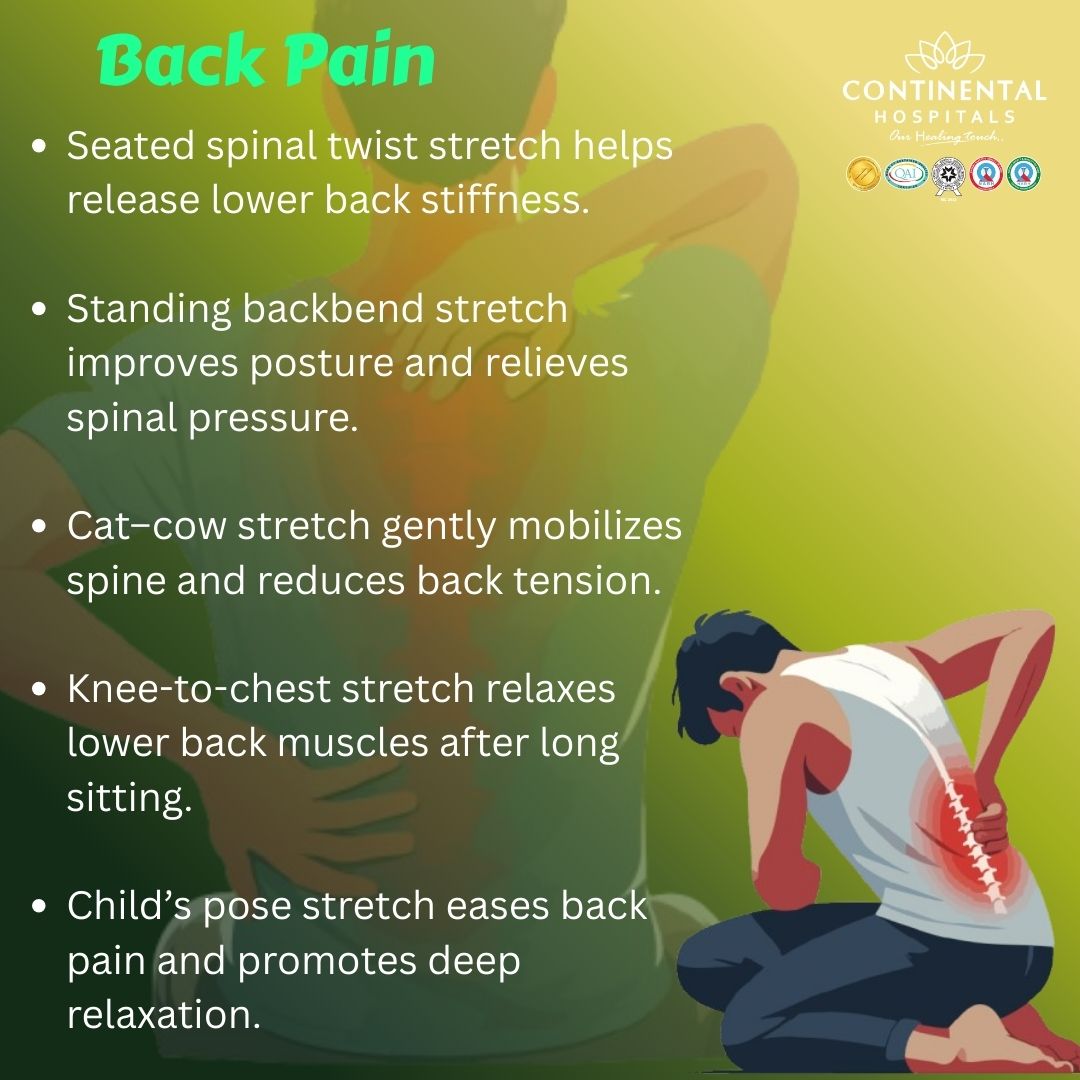
Lower Back Pain Exercises for Long-Term Strength
While stretching provides immediate back pain relief, building strength is necessary to prevent the pain from returning. Incorporating these simple exercises into your weekly routine can support your spine.
Bird-Dog: Start on all fours. Extend your right arm forward and your left leg back simultaneously. This improves core stability.
Plank: Holding a neutral spine position strengthens the deep abdominal muscles that support the lower back.
Glute Bridges: Lie on your back with knees bent and lift your hips toward the ceiling. Strong glutes take the pressure off the lower spine.
Creating an Ergonomic Workspace
Even with the best stretches for back pain relief, a poor desk setup will continue to cause issues. Consider these adjustments to reduce back pain:
Monitor Height: Your screen should be at eye level so you are not looking down.
Chair Support: Use a chair that supports the natural curve of your spine. If your chair is flat, a small rolled-up towel behind the lower back can help.
Foot Placement: Keep your feet flat on the floor. Avoid crossing your legs, as this tilts the pelvis and contributes to lower back pain.
Why Choose Continental Hospitals for Spine Care?
When self-care and stretching are not enough to manage your back pain, seeking professional medical advice is the next step. Continental Hospitals stands as a premier destination for orthopedic and neurosurgical care.
Clinical Excellence and Accreditations
Choosing the right healthcare provider is essential for effective recovery. Continental Hospitals is recognized as the best hospital in Hyderabad due to its commitment to international standards. The facility holds prestigious accreditations, including JCI (Joint Commission International) and NABH (National Accreditation Board for Hospitals & Healthcare Providers). These certifications ensure that patients receive care that meets global benchmarks for safety and quality.
Advanced Diagnostic Tools
Proper treatment for back pain starts with an accurate diagnosis. The hospital utilizes advanced imaging technology to identify the root cause of discomfort, whether it is muscle strain, disc herniation, or nerve compression. This precision allows for targeted treatment plans that prioritize the fastest possible recovery for the patient.
Multidisciplinary Approach
At Continental Hospitals, back pain relief is approached through a collaboration of experts. The team includes orthopedic surgeons, neurologists, and physical therapists who work together to provide comprehensive care. This holistic method ensures that every aspect of the patient's spinal health is addressed.
When to See a Specialist
If you find that back pain is a constant presence in your life, it may be time to consult a professional. You should seek medical attention if:
- The pain radiates down your legs.
- You experience numbness or tingling in your extremities.
- The pain does not improve after two weeks of consistent stretching.
- Your sleep is frequently interrupted by discomfort.
Early intervention is key to preventing acute back pain from becoming a chronic condition. Professional guidance can help you develop a personalized plan involving physical therapy, posture correction, and advanced medical treatments if necessary.
Conclusion
Managing back pain from sitting requires a proactive approach. By integrating stretches for back pain relief into your daily routine and optimizing your workspace, you can significantly reduce the physical strain on your body. Remember that movement is medicine for the spine. Stay consistent with your lower back pain exercises and take frequent breaks to stand and stretch.
If you continue to struggle with persistent discomfort, expert help is available. Continental Hospitals provides world-class facilities and specialized care to help you return to a pain-free life.
If you suffer from chronic spinal discomfort, consult our best neurologist in Hyderabad at Continental Hospitals for a comprehensive evaluation.
Related Blog Topics: