.webp)
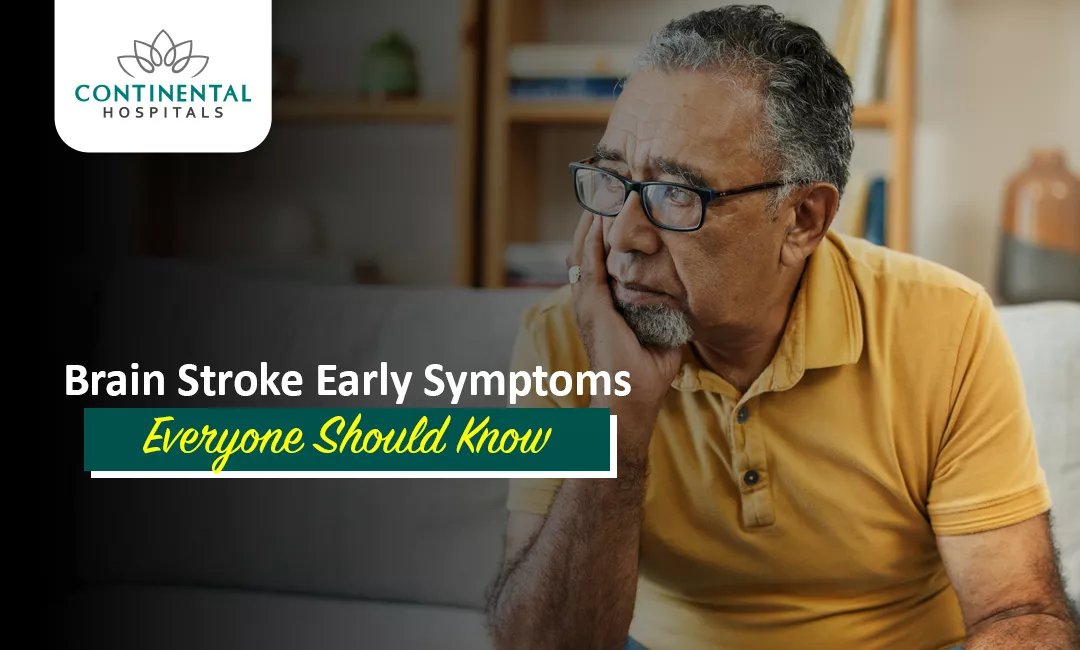
When a medical emergency occurs, time is the most critical factor. This is especially true for a brain stroke, where every second counts. A stroke occurs when the blood supply to part of your brain is interrupted or reduced, preventing brain tissue from getting oxygen and nutrients. Within minutes, brain cells begin to die. Recognizing the brain stroke early symptoms can be the difference between a full recovery and permanent disability.
At Continental Hospitals, the best hospital in Hyderabad, we prioritize rapid intervention and advanced neurological care. Understanding the warning signs is the first step in protecting yourself and your loved ones.
What is a brain stroke?
A brain stroke is often referred to as a brain attack. Just as a heart attack occurs when blood flow to the heart is blocked, a brain stroke happens when the brain’s blood vessels are either blocked by a clot or they burst.
Types of Brain Stroke
- Ischemic Stroke: This is the most common type, occurring when a blood clot blocks an artery leading to the brain.
- Hemorrhagic Stroke: This occurs when a blood vessel in the brain leaks or ruptures, causing bleeding into the brain.
- Transient Ischemic Attack (TIA): Often called a mini-stroke, this is a temporary blockage that serves as a serious warning sign for a future brain stroke.
If you or a family member suffer from sudden weakness, slurred speech, or any other signs of a brain stroke, seek emergency medical attention immediately. Consult our best neuro doctor hyderabad at Continental Hospitals today for a comprehensive stroke risk assessment.
What are the early symptoms of a brain stroke?
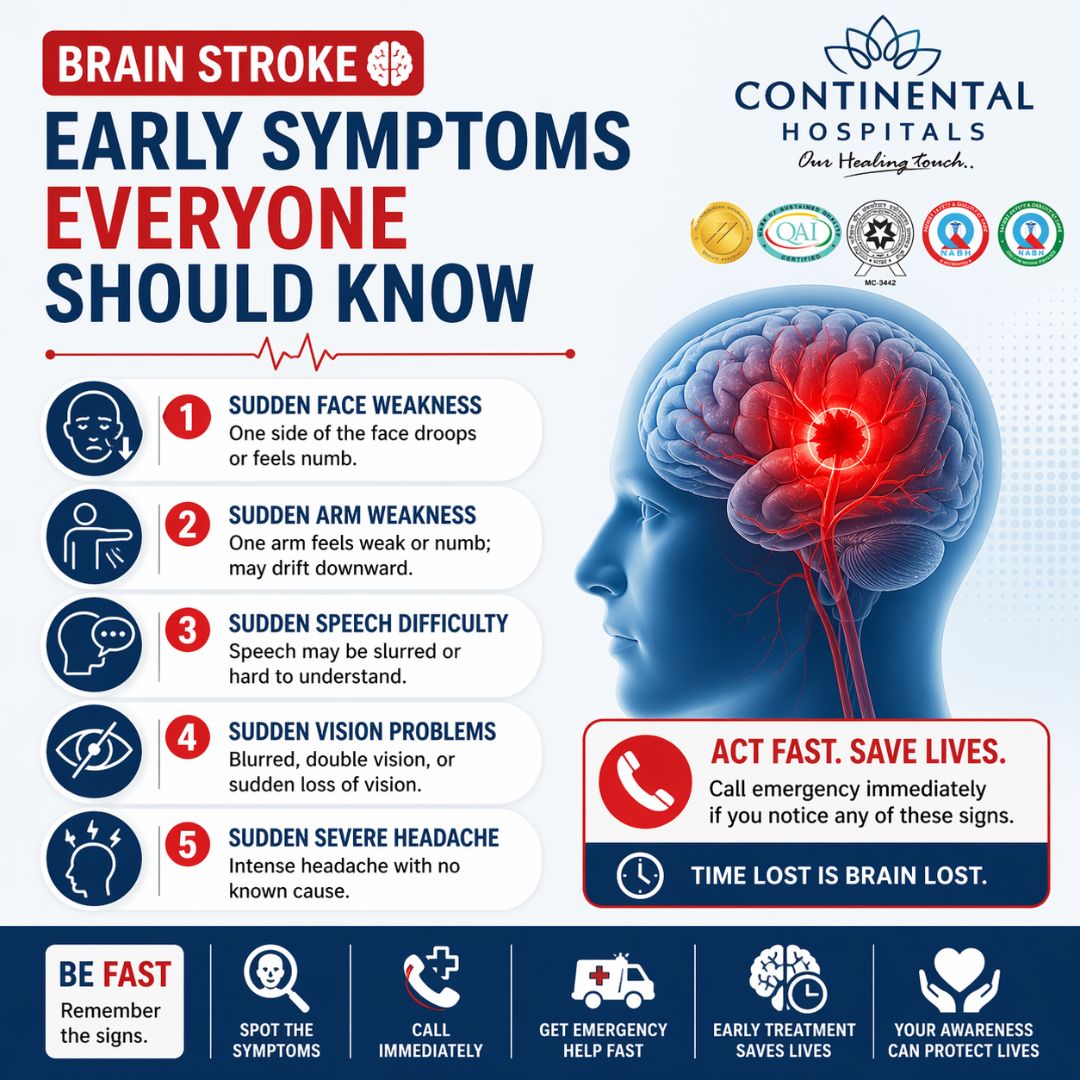
The symptoms of a brain stroke often appear suddenly. If you or someone around you experiences these signs, you must act immediately. A simple way to remember the primary symptoms of brain stroke is the BE FAST acronym.
The BE FAST Method for Stroke Symptoms Recognition
- Balance: Is the person experiencing a sudden loss of balance or coordination? Are they stumbling or feeling dizzy?
- Eyes: Is there sudden blurring, loss of vision, or double vision in one or both eyes?
- Face: Ask the person to smile. Does one side of the face droop?
- Arms: Ask the person to raise both arms. Does one arm drift downward? Is there numbness or weakness in one limb?
- Speech: Is their speech slurred or strange? Can they repeat a simple sentence?
- Time: If any of these early signs of stroke are present, it is time to call emergency services immediately.
What are the other common warning signs of a brain stroke?
Beyond the BE FAST criteria, there are other physical indicators that a brain stroke may be occurring. These include:
- Sudden Confusion: Trouble understanding what others are saying or difficulty formulating thoughts into words.
- Numbness or Weakness: This typically happens on one side of the body. You might feel a sudden "pins and needles" sensation in your leg or arm.
- Severe Headache: A sudden, excruciating headache with no known cause, often described as the worst headache of one's life, can indicate a hemorrhagic brain stroke.
- Trouble Walking: Sudden dizziness, loss of balance, or loss of coordination can make walking nearly impossible.
Why is immediate action important during a brain stroke?
The phrase Time is Brain is a standard in neurology. When a brain stroke occurs, approximately 1.9 million neurons die every minute. The faster a patient reaches a specialized facility like Continental Hospitals, the better the chances of reversing the damage.

Early medical intervention can involve clot-busting medications or emergency procedures to stop bleeding. However, these treatments are most effective when administered within the first few hours of the onset of brain stroke symptoms.
What are the risk factors for a brain stroke?
While anyone can experience a stroke, certain factors increase the likelihood. Managing these risks is essential for prevention.
- High Blood Pressure: This is the leading cause of brain stroke.
- Diabetes: High blood sugar levels can damage blood vessels over time.
- Heart Disease: Conditions like atrial fibrillation can lead to blood clots that travel to the brain.
- Lifestyle Factors: Smoking, excessive alcohol consumption, and a sedentary lifestyle significantly raise risk levels.
- Age and Genetics: Risk increases with age, and a family history of stroke can play a role.
Why Choose Continental Hospitals for Stroke Care?
When dealing with a brain stroke, the quality of the medical institution matters. Continental Hospitals is widely recognized as the best hospital in Hyderabad for neurological emergencies and long-term care.
World-Class Accreditations
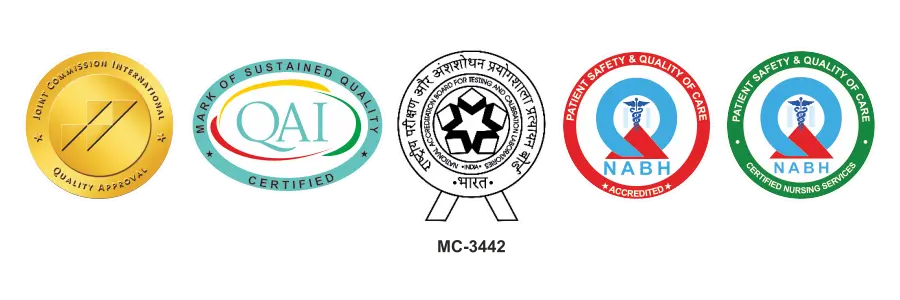
Continental Hospitals holds prestigious accreditations, including JCI (Joint Commission International) and NABH (National Accreditation Board for Hospitals & Healthcare Providers). These certifications ensure that our clinical protocols, patient safety measures, and infrastructure meet global standards. Our commitment to excellence means patients receive the highest quality of evidence-based medical care during a brain stroke crisis.
Advanced Infrastructure
Our facility is equipped with a dedicated stroke unit and 24/7 neuro-imaging capabilities, including high-speed CT scans and MRI. This allows our specialists to diagnose the type of brain stroke within minutes of a patient’s arrival.
Multi-Disciplinary Expert Team
We house a team of highly experienced neurologists, neurosurgeons, and interventional radiologists. Our approach is holistic, moving from emergency life-saving procedures to comprehensive neuro-rehabilitation to help patients regain their independence.
How long does it take to recover from a brain stroke?
Recovery from a brain stroke is a journey that requires patience and specialized support. The brain has a remarkable ability called neuroplasticity, which allows it to reorganize itself after an injury.
- Physical Therapy: To help regain motor skills and strength.
- Speech Therapy: To assist those who have difficulty speaking or swallowing.
- Occupational Therapy: To help patients return to daily activities like dressing and eating.
- Psychological Support: To manage the emotional impact that often follows a major health event.
At Continental Hospitals, our rehabilitation programs are tailored to the specific needs of each survivor, ensuring a focused path toward recovery.
Conclusion
A brain stroke is a life-altering event, but it is often preventable and treatable if caught early. By memorizing the brain stroke early symptoms and understanding the importance of the BE FAST acronym, you can save a life. Do not wait for symptoms to disappear; even if they are temporary, they could be the warning signs of a massive brain stroke.
For residents in and around the city, knowing that the best hospital in Hyderabad is equipped with JCI and NABH accreditations provides peace of mind. Our experts are ready to provide immediate, world-class intervention at a moment's notice.
If you or a family member suffer from sudden weakness, slurred speech, or any other signs of a brain stroke, seek emergency medical attention immediately. Consult our best neurologist in Hyderabad at Continental Hospitals today for a comprehensive stroke risk assessment.
Related Blog Topics:
Preventing Brain Strokes: Lifestyle Changes and Risk Factors