.webp)

A dog lick may seem harmless. Many people allow their pets to lick their hands or even their faces without concern. But can a dog lick cause sepsis? The answer is yes, in rare cases it can. While most interactions with pets are safe, dog saliva carries bacteria that may lead to serious infection in certain individuals.
What Is Sepsis?
Sepsis is a life threatening condition. It happens when the body responds aggressively to an infection. Instead of fighting the infection normally, the immune system damages healthy tissues and organs. If not treated quickly, sepsis can lead to organ failure or even death.
Sepsis can begin from any infection, including a dog saliva infection. Early diagnosis and treatment are very important.
Visit our Infectious Disease Specialists Department at Continental Hospitals, Hyderabad, for expert diagnosis and advanced care for sepsis and complex infections.
Can a Dog Lick Really Cause Sepsis?
Yes, a dog lick can cause sepsis in rare situations. Dogs naturally carry bacteria in their mouths. Most of the time, these bacteria do not harm healthy people. However, if dog saliva enters an open wound, cut, or weak area of skin, infection can develop.
Some bacteria found in dog saliva bacteria include:
• Capnocytophaga species
• Pasteurella
• Staphylococcus
• Streptococcus
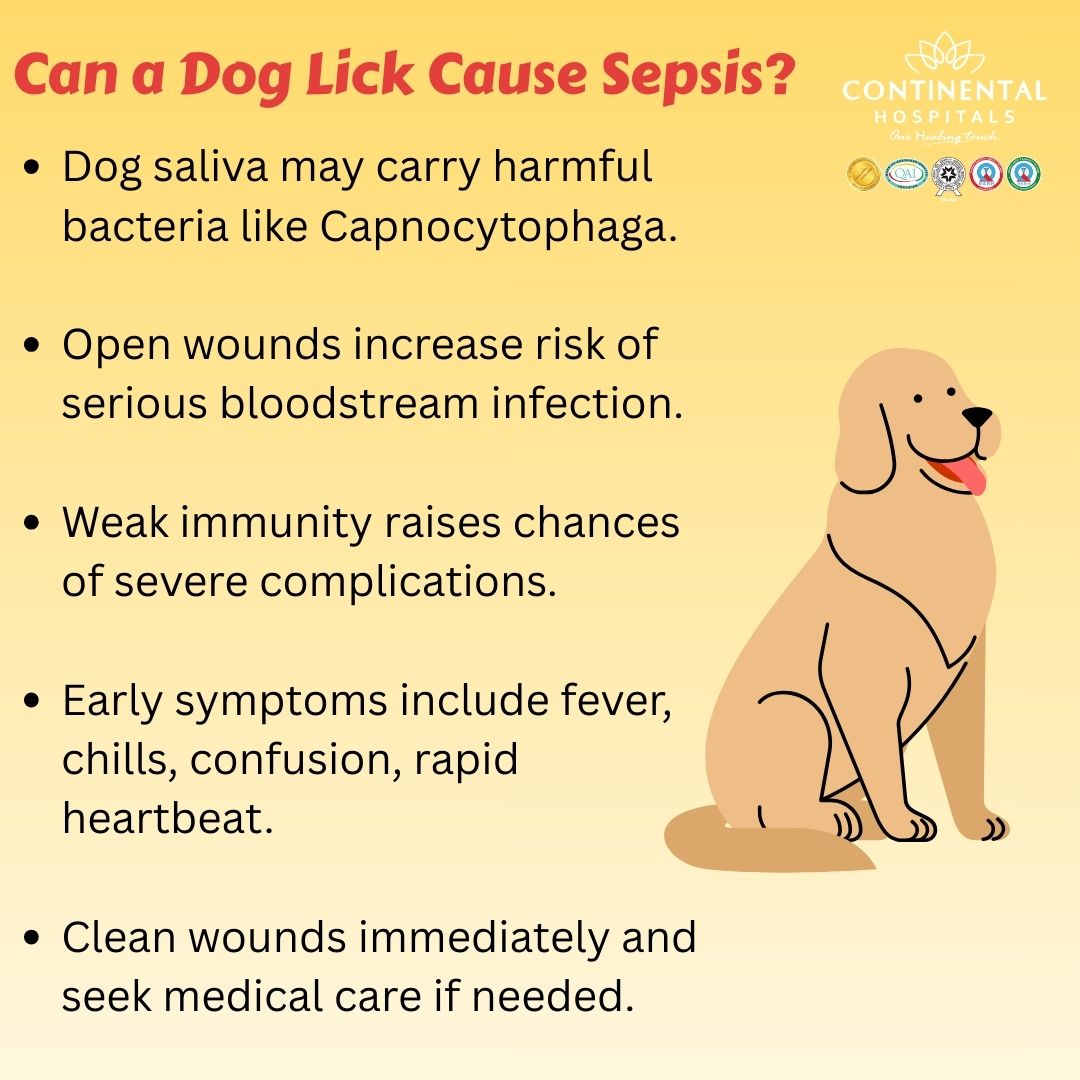
In people with weak immunity, these bacteria can spread quickly through the bloodstream. This may result in sepsis.

How Does a Dog Lick Lead to Infection?
A dog lick becomes dangerous mainly in the following situations:
• Licking an open wound
• Licking cracked or broken skin
• Licking surgical stitches
• Licking the face near the eyes, nose, or mouth
• Licking a person with diabetes or low immunity
When dog saliva infection enters the bloodstream, symptoms may appear within hours or days. In rare cases, severe infection has led to complications like dog lick amputation due to tissue damage.
Who Is at Higher Risk?
Not everyone who receives a dog lick will develop infection. However, some groups are more vulnerable.
People at higher risk include:
• Individuals with diabetes
• Cancer patients undergoing treatment
• Organ transplant recipients
• People with liver disease
• Elderly individuals
• People without a functioning spleen
• Those taking long term steroid medications
For these individuals, even a small dog lick on broken skin may pose a risk.
Warning Signs After a Dog Lick
If you notice any unusual symptoms after a dog lick, do not ignore them. Early signs of infection may include:
• Redness or swelling at the site
• Pain around the wound
• Warmth around the skin
• Pus or discharge
Signs that infection may be spreading include:
• Fever
• Chills
• Rapid heartbeat
• Confusion
• Low blood pressure
• Extreme weakness
These symptoms may indicate sepsis and require urgent medical attention.
What Is Dog Lick Amputation?
In very rare and severe cases, untreated dog saliva infection can cause tissue death. When infection damages blood vessels and reduces blood flow, tissues may die. If this happens, doctors may need to perform amputation to prevent further spread.
Dog lick amputation cases are extremely rare but highlight the importance of early medical care. Prompt antibiotics and hospital treatment can prevent such serious outcomes.
How to Prevent Infection From a Dog Lick?
Prevention is simple and practical. Follow these safety measures:
• Avoid letting dogs lick open wounds
• Wash hands after contact with dog saliva
• Clean any licked area with soap and water
• Cover cuts and scratches properly
• Keep your pet vaccinated and healthy
• Seek medical advice if you are immunocompromised
Good hygiene reduces the risk of dog saliva bacteria entering the body.
When Should You See a Doctor?
You should consult a doctor if:
• A dog lick touched an open wound
• You have underlying medical conditions
• Redness or swelling is increasing
• You develop fever or weakness
• The wound does not heal
Early treatment with antibiotics can prevent serious complications.
Diagnosis and Treatment
Doctors evaluate symptoms, medical history, and examine the affected area. Blood tests may be performed to check for infection or sepsis.
Treatment may include:
• Antibiotics
• Intravenous fluids
• Monitoring blood pressure
• Intensive care in severe cases
Quick treatment significantly improves recovery chances.
Why Choose Continental Hospitals?
If you are concerned about infection or sepsis after a dog lick, expert care matters. Continental Hospitals is recognized as the best hospital in Hyderabad for advanced emergency and critical care services.
Key strengths include:
• NABH and JCI accredited hospital ensuring global standards
• Advanced intensive care units with 24 hour monitoring
• Experienced team of Internal Medicine specialists
• Infectious Disease experts for complex infections
• State of the art diagnostic laboratories
• Multidisciplinary approach for sepsis management
Accreditations such as NABH and JCI reflect commitment to patient safety, quality protocols, and evidence based treatment.
At Continental Hospitals, early recognition and rapid response teams are trained to manage sepsis efficiently. This improves survival rates and reduces complications.
Important Points to Remember
• A dog lick is usually safe for healthy individuals
• Dog saliva bacteria can cause infection in rare cases
• People with weak immunity are at higher risk
• Clean any wound exposed to dog saliva immediately
• Watch for fever, swelling, or weakness
• Seek medical care if symptoms appear
Understanding the risks helps you take simple precautions.
Frequently Asked Questions
Can a dog lick cause sepsis in healthy people?
It is very rare but possible if bacteria enter a deep wound.
Is dog saliva always dangerous?
No. Most of the time it does not cause harm. Risk increases with open wounds or weak immunity.
Should I panic if my dog licks me?
No. Simply wash the area and monitor for symptoms.
How quickly can sepsis develop?
It can develop within hours to a few days depending on the infection.
Conclusion
A dog lick is usually a sign of affection. For most healthy people, it is harmless. However, dog saliva infection can occur if bacteria enter broken skin. In rare cases, this infection may progress to sepsis. Recognizing symptoms early and seeking timely medical care can prevent serious complications.
If you or your loved one experience fever, swelling, confusion, or signs of infection after a dog lick, consult a specialist immediately.
Consult our infectious disease specialists, who are equipped to diagnose and treat complex infections, including sepsis. If you suffer from symptoms after exposure to dog saliva or any unexplained infection, visit the best hospital in Hyderabad for expert evaluation and advanced care.
Your safety starts with awareness. Prompt action saves lives.
Related Blog Topics: