.webp)


When summer arrives, so does the fragrance of fresh mangoes. With fruits, a king can not only describe the tropical fruit because of its sweet taste but also its splendid flavor. However, each year at this time of the year, patients with diabetes are increasingly reluctant to enjoy the sweet fruit. The question that comes up this time of the year is, can the natural sugar of this sweet fruit fit into a medically supervised diet?
Diabetes is a disease that requires delicate balance between blood glucose levels and seasonal produce, and the conclusion is not about whether you can eat mangoes or not. Many people think that a diagnosis of diabetes means you must stop eating sweet fruits forever. In fact, diabetes control today focuses on portion control and maintaining a balanced diet, preserving your quality of life while ensuring metabolic health.
We do not have to give up all the joys of eating seasonal food. With a better understanding of nutrition, you can make the best decision at the dinner table. Take this article as a guide to learn about the evidence-based explanation about diabetes and mangoes.
Is Mango Good for Diabetes?
When considering a fruit to recommend to diabetic patients, practitioners consider its glycemic index and nutrition facts. The glycemic index refers to the rate at which a food raises blood glucose. On the index scale, mango is rated in the middle range, which means that it will not spike your blood sugar in the same way refined sugar or processed candy does.
Mango is also rich in many essential vitamins, minerals, and even dietary fiber. The importance of fiber is in its ability to slow down the absorption of sugar in the bloodstream, which means that when eaten in moderation, mango for diabetes can provide antioxidants and nutrients without messing with your health goals.
If you are experiencing fluctuating blood sugar levels, hormonal imbalances, or thyroid disorders or need a personalized nutrition and diabetes management plan, visit our Endocrinology Department at Continental Hospitals.
What is the relationship between mango and blood sugar?
Everything you eat has an effect on your metabolism. Since mango contains natural fructose, eating mango in large portions will hurt your blood sugar. The issue of avoiding a spike in blood sugar is known as your glycemic load, which is a function of the proportion of the food being eaten.
To fully balance mango and blood sugar, it all starts with how you eat it. Eating mango as a snack on its own can cause a faster rise in sugar. Eating it alongside healthy fats or protein can drastically change the way your body reacts to the natural sugar and change the potassium load.
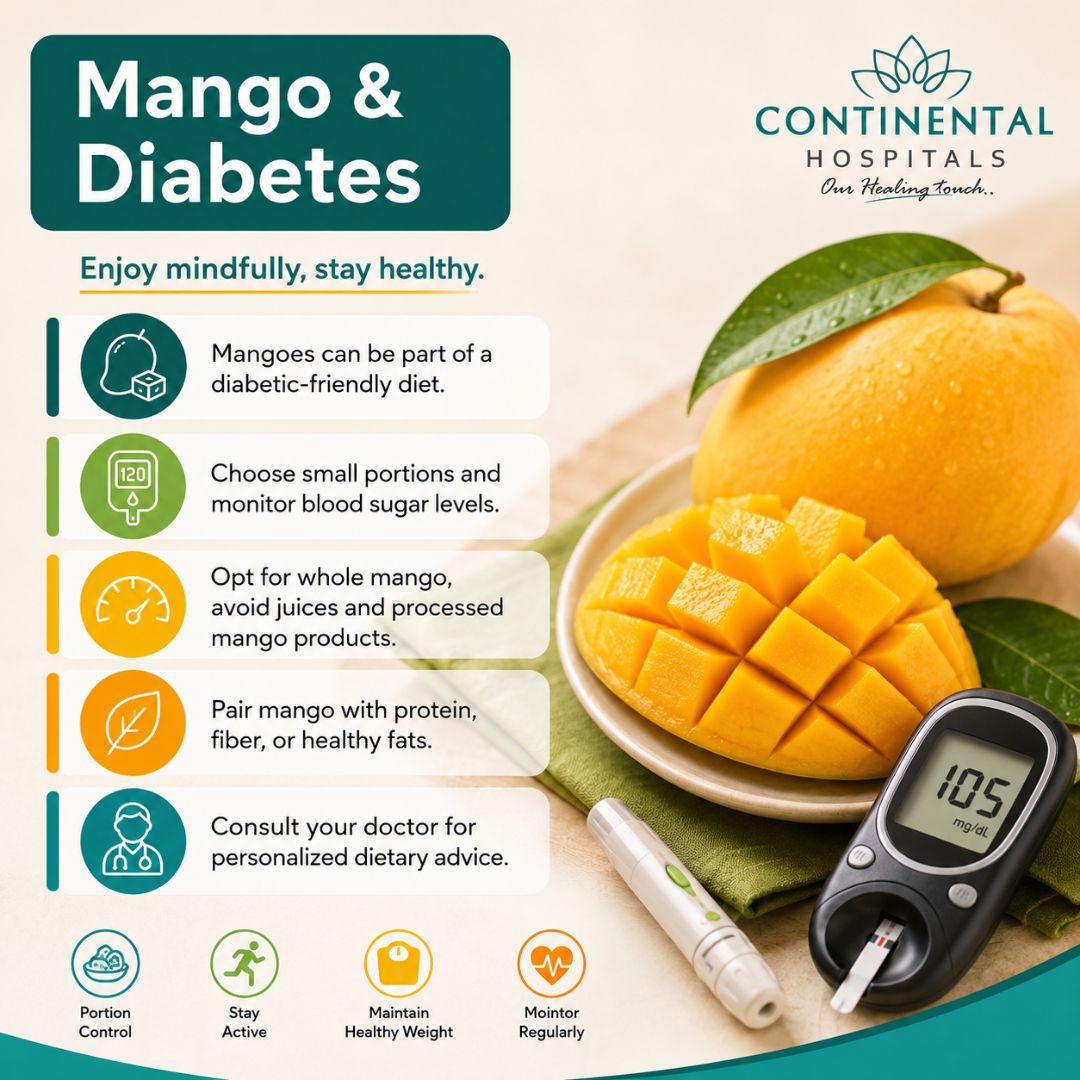

What Is the Right Portion for a Diabetic Diet Mango Plan?
The best rule to follow when you want to include sweet fruits in your daily diet is portion control. A standard mango serving could be half a cup of sliced fruit. If you adhere to the suggested prevention limit, the fruit’s health benefits will be much more convenient for you without over-consuming your carbohydrate amount.
Besides the raw fruit amount, it is helpful to take into account the total amount of carbs you will eat for the day. If you want to consume a small serving of mango in the afternoon, you could then modify your lunch or dinner carbohydrate content to match the fruit that you’ll get. Your nutrient intake for the whole day will be balanced out.
Can Diabetics Consume Mango Every Day?
The fruit can be eaten every day depending on your blood sugar stability and your health situation. If your HbA1c results are quite precise within your goal range you can consume a small portion a few times a week, and it would be safe and healthy.
If your blood glucose levels are unstable and not so precise, it is a good idea to stop eating the fruit until your metabolism is more stabilized. It would be a great idea for you to monitor your blood sugar levels before and after eating mango fruit to assess your response to natural sugar.
What Are the Best Ways to Eat Mangoes Safely?
- Add a handful of nuts, like almonds or walnuts, to provide healthy fats and help slow sugar absorption.
- Choose to eat the fruit raw and sliced rather than in juice or a smoothie. It lacks fiber and induces glucose spikes quicker.
- Try diced mango in a fresh salad, together with greens and a protein source like paneer or grilled chicken.
- Try not to eat the fruit late in the evening when exercise and other physical activity levels are low and, therefore, the body may not process sugars as efficiently.
Why Manage Diabetes at Continental Hospitals?
Managing a metabolic condition requires continuous care from a trusted medical specialist, and Continental Hospitals is the best place in town for diabetes management. Recognized as the best hospital in Hyderabad, Continental offers an unrivaled experience that combines world-class medical care with a comprehensive lifestyle management program.
We are proud to be accredited by eminent national and international award bodies, such as the National Accreditation Board for Hospitals and Healthcare Providers. This rigorous accreditation is a testament to our unparalleled commitment to the best in patient safety, impeccable clinical care, and state-of-the-art medical infrastructure. Every treatment protocol is designed to the highest standards of medical care.
We at Continental understand that managing diabetes is a lifelong process, and therefore our experienced clinical dietitians work closely with our expert team to develop custom meal plans that suit your medical needs and personal taste. Our goal is to equip you with the knowledge and tools you need to take control of your health and live the life you love.
Conclusion
Living with diabetes has nothing to do with denying the pleasures of the season; it is all about education, moderate consumption, and consulting a professional. With the right combination of portion control and the best pairing of foods, you can really enjoy the season without losing track of your health.
If you suffer from fluctuating blood sugar levels or need a personalized nutrition plan, consult our best endocrinologist in Hyderabad at Continental Hospitals.
Related Blog Topics: