.webp)


Salt is a fundamental ingredient in kitchens worldwide. It enhances flavor, preserves food, and plays a vital role in our biological functions. However, the modern diet often includes far more sodium than the human body requires. Understanding the relationship between salt and health is essential for maintaining long-term wellness and preventing chronic conditions. By choosing to reduce salt for health, individuals can make one of the most impactful changes to their daily routine.
Understanding Salt and Your Body
Salt is primarily composed of sodium and chloride. Sodium is an essential mineral that helps maintain the balance of fluids in the body, aids in nerve impulse transmission, and influences the contraction and relaxation of muscles. Despite its necessity, the amount required is remarkably small. Most adults need less than 2,300 milligrams of sodium per day, which is roughly equivalent to a single teaspoon of table salt.
When consumption exceeds these limits, the body retains extra water to dilute the excess sodium in the bloodstream. This increases the total volume of blood, putting additional pressure on the heart and blood vessels. Over time, this consistent pressure can lead to significant health complications.
Consult experts at Continental Hospitals—advanced diagnostics & nutrition care. Visit our cardiology department for heart & BP concerns.
The Risks of Too Much Salt
Consuming high levels of sodium is closely linked to several medical conditions. The most prominent risk is hypertension, or high blood pressure. Because high blood pressure often presents no visible symptoms, it is frequently referred to as a silent killer. If left unmanaged, it can damage the arteries and lead to:
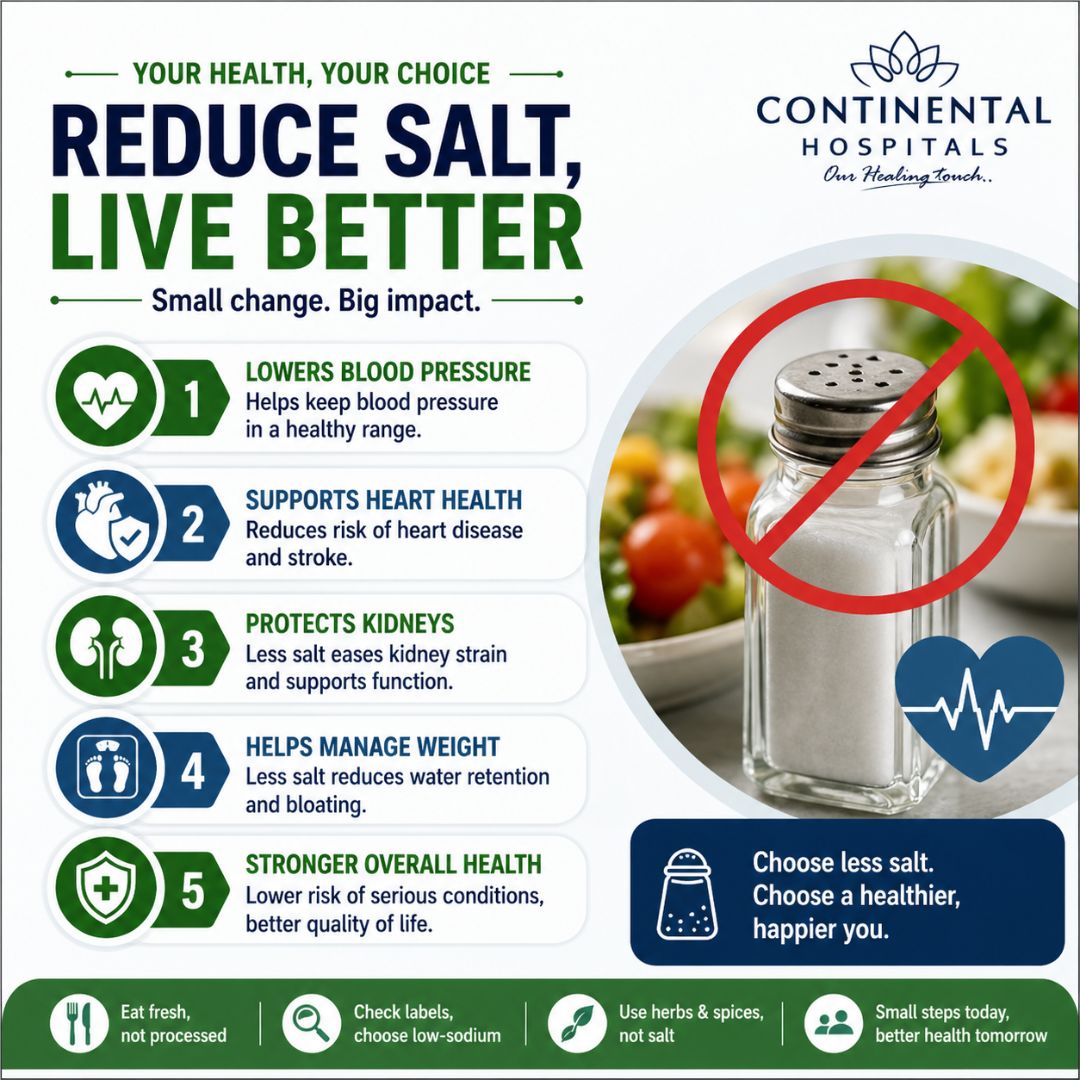
Heart Disease: The heart must work harder to pump blood against higher pressure, which can lead to heart failure or enlarged heart muscles.
Stroke: Increased pressure can cause blood vessels in the brain to burst or become clogged.
Kidney Damage: The kidneys are responsible for filtering excess sodium. Constant high levels can strain these organs, leading to chronic kidney disease.
Edema: Excessive salt intake often causes the body to hold onto water, resulting in swelling in the hands, legs, and ankles.

How to Reduce Salt for Health
Transitioning to a lower-sodium diet does not mean food has to be bland. It requires a shift in how we approach seasoning and food selection. Here are practical ways to decrease your intake:
Read Food Labels Carefully
A significant portion of daily sodium comes from processed and packaged foods rather than the salt shaker on the table. When shopping, look for labels that indicate "low sodium," sodium-free, or no salt added. Comparing different brands of the same product can reveal surprising differences in salt content.
Focus on Fresh Produce
Fresh fruits and vegetables are naturally low in sodium. They also provide potassium, a mineral that helps counteract the effects of sodium on blood pressure. Incorporating a variety of colorful produce into every meal provides a natural way to balance your internal chemistry.
Use Herbs and Spices
Instead of reaching for the salt, experiment with garlic, ginger, lemon juice, vinegar, and fresh herbs like coriander or basil. These ingredients add depth and complexity to dishes without the health risks associated with excess sodium.
Rinse Canned Goods
If you use canned beans or vegetables, rinsing them under cold water can remove a substantial amount of the salt used during the preservation process. Better yet, opt for frozen vegetables, which are often flash-frozen without added seasonings.
The Immediate Benefits of Lower Sodium Intake
When you begin to reduce salt for health, the body responds relatively quickly. Within weeks, many people notice a decrease in bloating and water retention. More importantly, clinical studies show that reducing sodium intake can lead to a measurable drop in blood pressure, significantly lowering the risk of cardiovascular events.
Consistent adherence to a low-salt diet helps protect the delicate lining of the blood vessels. This ensures that oxygen and nutrients are delivered efficiently to every part of the body, improving overall energy levels and vitality.
Why Choose Continental Hospitals for Your Wellness Journey?
Maintaining a heart-healthy lifestyle requires expert guidance and a supportive environment. Continental Hospitals is recognized as the best hospital in Hyderabad for comprehensive cardiac care and preventive medicine. Our facility is designed to provide patient-centric care supported by the latest medical technology and international safety standards.
Accreditations and Excellence
Continental Hospitals holds prestigious accreditations that reflect our commitment to quality. We are Joint Commission International (JCI) accredited, ensuring that our clinical protocols meet global benchmarks for safety and excellence. Additionally, our National Accreditation Board for Hospitals & Healthcare Providers (NABH) accreditation highlights our dedication to providing high-quality patient care and efficient hospital management. These recognitions make us a trusted leader in the healthcare landscape of India.
Comprehensive Healthcare Services
Our multidisciplinary team includes expert cardiologists, nutritionists, and internal medicine specialists who work together to create personalized wellness plans. We believe in treating the root cause of health issues rather than just the symptoms. Whether it is managing hypertension or providing advanced surgical interventions, we offer a full spectrum of services under one roof.
Practical Steps to a Salt-Aware Lifestyle
Changing habits takes time, but the long-term rewards are invaluable. You can start by making small, manageable adjustments to your daily routine:
Gradual Reduction: Slowly reduce the amount of salt you add to your cooking. Your taste buds will eventually adjust to appreciate the natural flavors of the food.
Smart Dining Out: When eating at restaurants, ask for your meal to be prepared with less salt and request sauces or dressings on the side.
Healthy Snacking: Replace salty snacks like chips and pretzels with unsalted nuts, seeds, or fresh fruit.
Monitor Your Progress: Keep track of your blood pressure readings to see the direct impact of your dietary changes.
Conclusion
The decision to reduce salt for health is a powerful step toward a longer, more vibrant life. While salt is a necessary part of our diet, balance is the key to ensuring it does not become a threat to our well-being. By staying informed, choosing fresh ingredients, and seeking professional medical advice when necessary, you can protect your heart and kidneys from the dangers of excess sodium.
If you suffer from persistent high blood pressure, frequent swelling, or have concerns about your cardiovascular health, do not wait for symptoms to worsen. Early intervention is the most effective way to manage and reverse the effects of a high-sodium lifestyle.
Contact Continental Hospitals today to consult with our specialists. Our team is here to provide the diagnostic tools and nutritional counseling you need to take control of your health. Consult our best cardiologist in Hyderabad if you suffer from hypertension or heart-related concerns.
Related Blog Topics: