.webp)


As temperatures climb across Hyderabad, the risk of heat-related illnesses becomes a primary concern for residents. While most people view thirst as a minor inconvenience, the biological reality of summer dehydration is far more complex. When the body loses more fluid than it takes in, it disrupts the fundamental balance of minerals and electrolytes required for organs to function. If left unaddressed, what starts as a dry mouth can rapidly escalate into a medical emergency.
Understanding the mechanics of hydration is essential for staying safe during the peak heat months. This guide explores the physiological impact of heat, the progression of symptoms, and why professional medical intervention is sometimes the only way to reverse the damage.
The Science of Heat and Dehydration
The human body is an incredible machine designed to maintain a core temperature of approximately 37°C. When external temperatures rise, the brain signals the sweat glands to release moisture. As this sweat evaporates from the skin, it carries heat away, effectively cooling the body.
However, this cooling mechanism comes at a cost. Sweat is not just water; it contains essential salts like sodium and potassium. During intense heat, a person can lose several liters of fluid in just a few hours. When these fluids are not replenished, the blood volume begins to decrease. Thicker blood is harder for the heart to pump, leading to increased cardiovascular strain and a rapid decline in physical and cognitive performance. This is the foundation of summer dehydration risks.
Experiencing severe dehydration or heat exhaustion? Visit our internal medicine department at Continental Hospitals for expert care today. Stay safe this summer!
Why Dehydration is Dangerous for Your Organs
The dangers of summer dehydration extend deep into the body’s internal systems. Every cell requires water to transport nutrients and flush out toxins. When water levels drop, the following systems are the first to suffer:
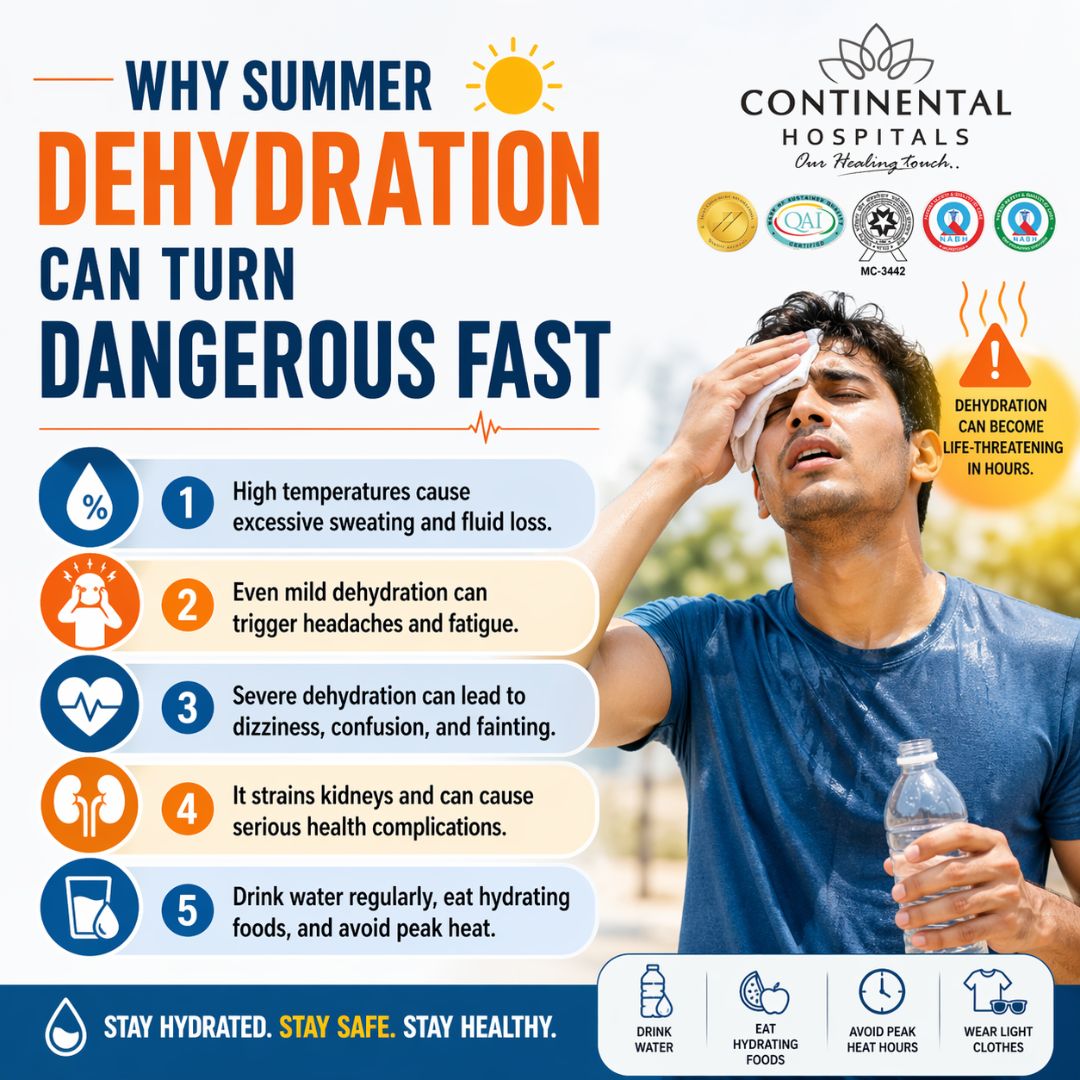
The Kidneys: These organs act as filters for the blood. Without enough water, the kidneys cannot effectively remove waste, leading to a buildup of toxins and an increased risk of kidney stones or acute renal failure.
The Brain: The brain is composed of roughly 75% water. Even mild fluid loss can lead to brain tissue shrinkage, resulting in headaches, confusion, and irritability.
The Heart: As blood volume drops, the heart must beat faster to maintain blood pressure. This can lead to palpitations and, in extreme cases, cardiovascular collapse.

Recognizing Severe Dehydration Symptoms
One of the biggest dehydration dangers in summer is that the initial signs are often subtle. By the time you feel thirsty, you may already be mildly dehydrated. It is vital to monitor your body for the following severe dehydration symptoms:
- Extreme Lethargy: Feeling unusually tired or weak despite not performing heavy physical labor.
- Dark Urine: Monitoring the color of your urine is the easiest way to check hydration. Dark yellow or amber-colored urine is a clear indicator that the body is holding onto fluids.
- Dizziness and Fainting: A drop in blood pressure caused by low fluid levels can lead to lightheadedness, especially when standing up quickly.
- Sunken Eyes and Dry Skin: When the body is deprived of water, it pulls moisture from the skin and tissues to protect vital organs.
- Rapid Heartbeat and Breathing: These are signs that the body is struggling to maintain its cooling and circulatory functions.
If you or someone around you experiences confusion, inability to sweat despite the heat, or a loss of consciousness, seek emergency medical care immediately. These are hallmarks of heatstroke, a condition where the body’s internal temperature rises to life-threatening levels.
Vulnerable Groups: Who is at Most Risk?
While summer dehydration can affect anyone, certain populations are more susceptible to the heat and dehydration cycle:
- Children and Infants: Their smaller body mass means they lose fluids more quickly than adults, and they may not be able to communicate their thirst effectively.
- The Elderly: The sensation of thirst naturally diminishes with age. Additionally, older adults are more likely to have underlying health conditions or take medications that affect fluid balance.
- Outdoor Workers: Construction workers, delivery personnel, and athletes are in a high-risk category due to prolonged exposure and physical exertion.
- Individuals with Chronic Illnesses: Conditions like diabetes or kidney disease can alter the way the body handles fluids and electrolytes.
Practical Strategies for Prevention
Staying hydrated involves more than just drinking water when you feel like it. It requires a proactive approach to fluid management.
- Drink regularly: Do not wait for thirst. Sip water throughout the day.
- Eat Hydrating Foods: Watermelons, cucumbers, oranges, and strawberries have high water content and provide natural electrolytes.
- Avoid Diuretics: Excessive caffeine and sugary drinks can actually increase fluid loss through urination.
- Time Your Outings: If possible, stay indoors during the peak sun hours, typically between 11:00 AM and 4:00 PM.
- Wear Appropriate Clothing: Light-colored, loose-fitting cotton fabrics allow the skin to breathe and facilitate sweat evaporation.
Why Choose Continental Hospitals for Summer Wellness?
When dehydration becomes severe, home remedies like water or oral rehydration salts may not be enough. In such cases, clinical intervention is required to restore balance safely. Continental Hospitals is recognized as the best hospital in Hyderabad for comprehensive emergency and multispecialty care.
World-Class Accreditations
Quality and safety are the pillars of our healthcare delivery. Continental Hospitals holds prestigious accreditations, including JCI (Joint Commission International) and NABH (National Accreditation Board for Hospitals & Healthcare Providers). These certifications ensure that our protocols for treating heat-related emergencies and electrolyte imbalances meet the highest global standards.
Specialized Emergency Care
Our emergency department is equipped with advanced monitoring systems and staffed by experts trained in rapid fluid resuscitation. We understand that in cases of heatstroke or severe dehydration, every minute counts. Our diagnostic facilities allow for immediate blood testing to check electrolyte levels and kidney function, ensuring a precise treatment plan.
Holistic Treatment Approach
At Continental Hospitals, we don’t just treat the symptoms. Our team of internal medicine specialists and nutritionists work together to educate patients on long-term wellness. From customized hydration plans to managing underlying conditions that contribute to heat sensitivity, we provide end-to-end support.
Conclusion
The transition from mild thirst to dangerous exhaustion can happen in a surprisingly short amount of time. Understanding the summer dehydration risks is the first step toward a safe season. By staying mindful of your fluid intake and recognizing the early warning signs of trouble, you can protect yourself and your family from the harsh effects of the sun.
If you find yourself struggling with persistent fatigue, dizziness, or signs of heat exhaustion, do not ignore them. Professional medical guidance can prevent a temporary setback from becoming a long-term health issue.
Are you suffering from symptoms of severe dehydration or heat exhaustion? Consult our best internal medicine specialist in Hyderabad at Continental Hospitals today. Our dedicated team is here to provide the care you need to stay healthy and hydrated all summer long.
Related Blog Topics: