.webp)

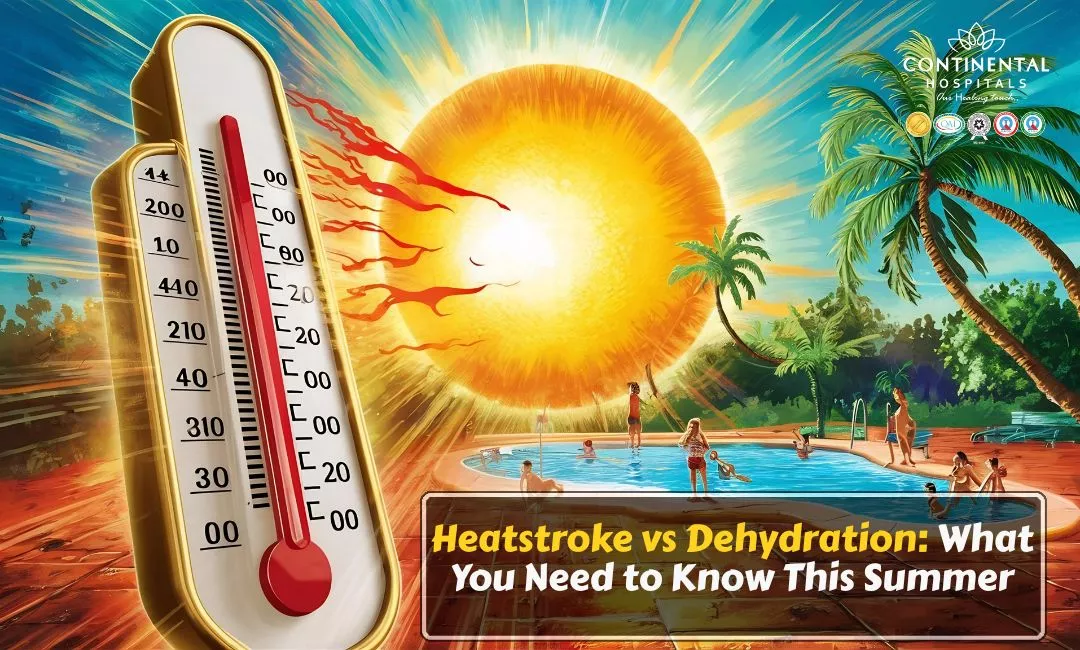
Summer in Hyderabad brings intense temperatures that can push the human body to its limits. While enjoying the season, it is vital to understand how rising mercury levels affect your health. Two of the most common yet misunderstood conditions during this period are heatstroke and dehydration. While they often occur together, they are distinct medical issues that require different approaches for prevention and treatment.
Understanding the difference between heatstroke and dehydration can be life-saving. This guide explores the symptoms, risks, and recovery strategies to help you stay safe during the peak summer months.
Understanding the Basics of Heat Illness
When the environment becomes excessively hot, your body struggles to maintain its internal temperature. The primary mechanism for cooling down is sweating. However, when you lose more fluids than you take in, or when the external heat overwhelms your body’s ability to cool itself, complications arise.
Dehydration occurs when your body lacks the necessary water and electrolytes to function correctly. It is often the first step toward more severe heat-related illnesses.
Heatstroke is a far more serious condition. It is a medical emergency that happens when the body’s core temperature rises above 40°C (104°F). At this stage, the body’s internal cooling system fails completely, which can lead to organ damage or worse if not treated immediately.
Persistent dizziness, fatigue, or high fever this summer? Visit our internal medicine department at Continental Hospitals, Hyderabad. Your health matters.
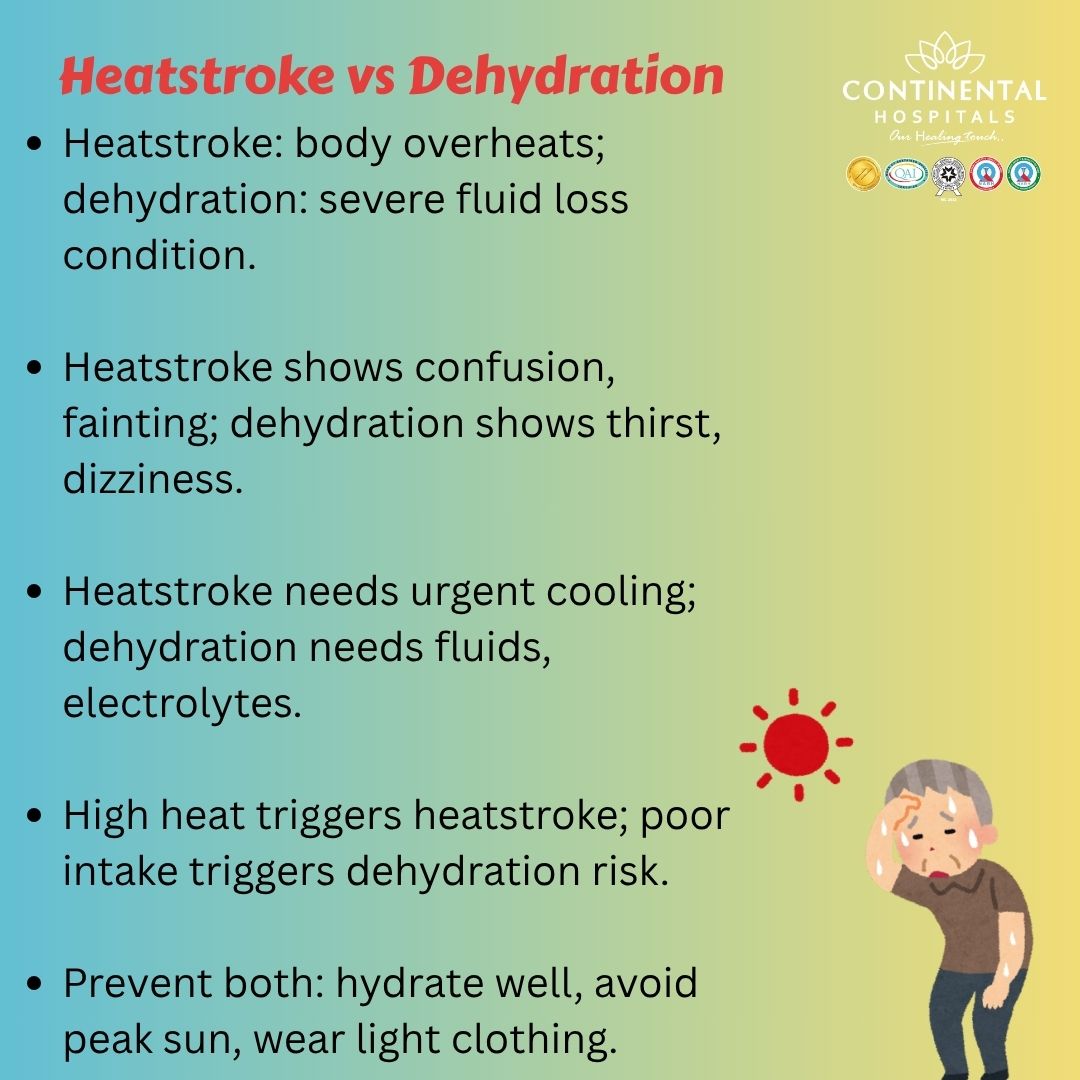
Heatstroke vs Dehydration: Key Differences
It is easy to confuse these two conditions because they share a common cause: extreme heat. However, the physiological impact is different.
Dehydration is a fluid deficit. It affects your blood volume and the ability of your cells to perform basic tasks. You might feel thirsty, tired, or dizzy.
Heatstroke is a failure of thermoregulation. It is characterized by neurological changes such as confusion, seizures, or loss of consciousness.

One of the most telling signs of the transition from heat exhaustion or dehydration to heatstroke is the state of your skin. A dehydrated person may sweat profusely. A person suffering from heatstroke may stop sweating entirely, leaving their skin hot and dry.
Recognizing the Symptoms
Identifying symptoms early is the best way to prevent a trip to the emergency room. Here are the signs to watch for:
Symptoms of Dehydration
- Extreme thirst and dry mouth
- Dark-colored urine or decreased urination
- Fatigue and general weakness
- Dizziness or lightheadedness
- Headaches
Symptoms of Heatstroke
- High body temperature (40°C or higher)
- Altered mental state or confusion
- Nausea and vomiting
- Rapid pulse and shallow breathing
- Flushed, red skin
- Severe, throbbing headache
The Middle Ground: Heat Exhaustion
Before a person reaches the stage of heatstroke, they often experience heat exhaustion. This is the body’s warning shot. If you feel clammy, nauseous, or have a weak pulse while spending time in the sun, you must move to a cooler environment immediately and rehydrate. Ignoring heat exhaustion is the most common path to developing life-threatening heatstroke.
Who Is at Risk?
While the summer heat affects everyone, certain individuals are more vulnerable to summer heat health risks:
Infants and Children: Their bodies have a harder time regulating temperature and they depend on others to stay hydrated.
The Elderly: Age-related changes in the central nervous system make the body less able to cope with extreme temperature shifts.
Athletes and Outdoor Workers: Those who engage in strenuous physical activity in the sun are at the highest risk for exertional heatstroke.
People with Chronic Conditions: Individuals with heart disease, lung disease, or obesity may have limited circulation, making it harder to shed heat.
Essential Tips for Summer Safety
Prevention is always better than cure. To maintain your health during a Hyderabad summer, follow these practical steps:
- Hydrate Constantly: Do not wait until you are thirsty to drink water. Thirst is already a sign that you are mildly dehydrated.
- Avoid Peak Sun Hours: If possible, stay indoors between 11:00 AM and 4:00 PM when the sun is at its strongest.
- Wear Appropriate Clothing: Choose lightweight, light-colored, and loose-fitting clothes. Dark colors absorb heat, while tight clothes prevent sweat from evaporating.
- Monitor Your Urine: A simple way to check your hydration level is the color of your urine. Clear or pale yellow indicates good hydration, while dark yellow suggests you need more fluids.
- Eat Water-Rich Foods: Incorporate cucumbers, watermelon, and oranges into your diet to supplement your fluid intake.
First Aid for Heat Emergencies
If you suspect someone is suffering from heatstroke, call for emergency medical help immediately. While waiting for the ambulance, take these steps:
- Move the person to a shaded or air-conditioned area.
- Remove excess clothing.
- Cool the person down using whatever means available. This could include a cool shower, a garden hose, or placing ice packs on the neck, armpits, and groin.
- If the person is conscious, offer cool water or an electrolyte drink. Do not give them caffeinated or alcoholic beverages.
Why Choose Continental Hospitals for Heat-Related Care?
When dealing with severe conditions like heatstroke, every second counts. Continental Hospitals is recognized as the best hospital in Hyderabad for emergency and multispecialty care. Our facility is designed to provide rapid intervention for heat-related emergencies and long-term management of any resulting complications.
Accreditations and Excellence
Continental Hospitals maintains the highest standards of clinical excellence. We are proud to hold prestigious accreditations, including Joint Commission International (JCI) and National Accreditation Board for Hospitals & Healthcare Providers (NABH). These certifications ensure that our patients receive international-quality care, utilizing the latest medical protocols and advanced technology.
Comprehensive Healthcare Infrastructure
Our emergency department is equipped with state-of-the-art cooling technology and monitoring systems to stabilize patients suffering from severe heatstroke. With a team of highly experienced doctors, nurses, and support staff, we provide a holistic approach to recovery, ensuring that your vital organs are protected and your electrolyte balance is restored efficiently.
Expert Medical Team
Our specialists in Internal Medicine and Critical Care are experts in managing the complexities of heat-induced illnesses. We don't just treat the symptoms? we look at the overall health of the patient to prevent future occurrences.
Conclusion
The summer heat in Hyderabad is more than just an inconvenience. it is a significant health risk. By understanding the difference between heatstroke and dehydration, you can take the necessary precautions to protect yourself and your loved ones. Stay hydrated, stay cool, and listen to your body’s signals.
If you or someone you know is experiencing symptoms of severe dehydration or heatstroke, do not delay seeking professional help. Continental Hospitals is here to provide the expert care you need to recover safely and quickly.
If you suffer from persistent dizziness, extreme fatigue, or high fever during the summer months, please consult our best internal medicine specialist in Hyderabad at Continental Hospitals, Hyderabad immediately. Your health is our priority.
Related Blog Topics: