.webp)


Refined flour, popularly known as maida, has become an inseparable part of modern diets. From the morning toast and biscuits to evening snacks like samosas and pizzas, it is everywhere. While it offers a soft texture and a long shelf life to processed foods, its impact on the human body is a subject of significant medical concern. If you are considering quitting maida to improve your well-being, even a short duration like 14 days can initiate noticeable internal changes.
Understanding Maida and Its Impact on the Body
Maida is produced by milling wheat and removing the germ and the bran. This process strips away the essential fiber, vitamins, and minerals, leaving behind only the starchy endosperm. To achieve its characteristic white color and smooth texture, it often undergoes bleaching with chemical agents.
When you consume maida, the body breaks it down very quickly. Because it lacks fiber, it has a high glycemic index. This leads to a rapid spike in blood sugar levels, followed by a sharp crash. Over time, frequent consumption of refined flour can lead to insulin resistance, weight gain, and chronic digestive issues.
Facing digestive issues, weight changes, or fatigue? Visit our Nutrition Department at Continental Hospitals for expert care and personalized guidance today.
The 14 Day Transformation: What Happens When You Stop Consuming Maida?
Choosing the path of quitting maida for two weeks acts as a reset button for your metabolic system. Here is a breakdown of what happens inside your body during this period:
Better Digestion and Gut Health
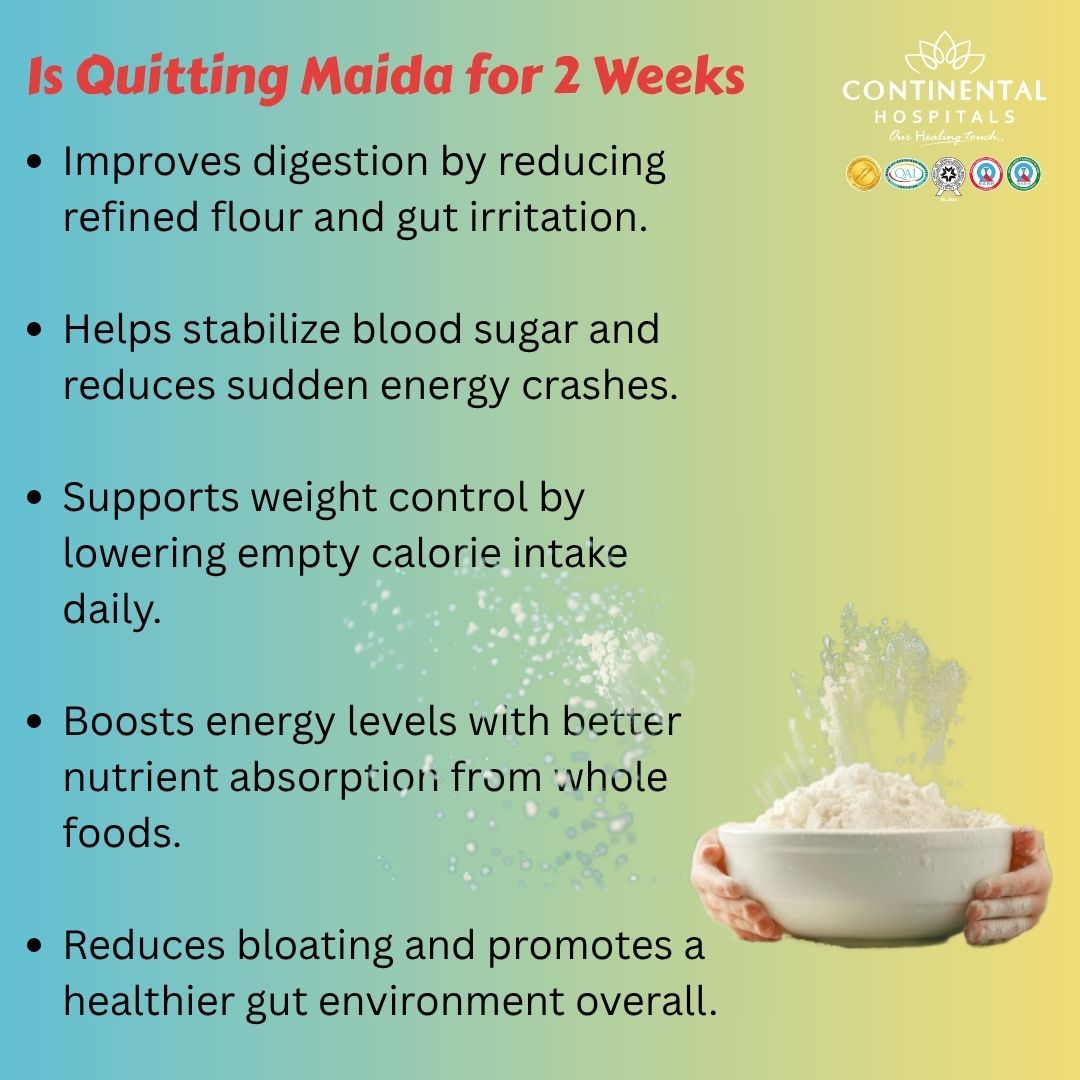
Maida is often referred to as "glue" for the digestive system. Due to the lack of fiber, it moves slowly through the intestines, often leading to constipation and bloating. Within the first week of quitting maida, many individuals report a lighter feeling in the stomach. As you replace refined flour with whole grains or fiber-rich vegetables, your bowel movements become more regular, and the gut microbiome begins to balance itself.
Stable Energy Levels
One of the most immediate benefits of quitting maida is the end of the energy roller coaster. Instead of the "sugar highs" and subsequent lethargy experienced after eating a maida-based meal, your blood sugar levels remain stable. This results in consistent energy throughout the day, improved focus, and a reduction in mid-day fatigue.
Weight Management and Reduced Inflammation
Maida is calorie-dense but nutrient-poor. It promotes the storage of visceral fat, especially around the abdomen. By quitting maida, you naturally reduce your intake of empty calories. Furthermore, refined flour is known to be pro-inflammatory. Reducing its consumption helps lower systemic inflammation, which can lead to clearer skin and reduced joint discomfort.

Key Benefits of Quitting Maida
If you are looking for reasons to start your journey of quitting maida today, consider these primary health advantages:
Improved Heart Health: High consumption of refined carbs is linked to increased levels of LDL (bad) cholesterol and triglycerides. Avoiding maida helps in maintaining a healthier lipid profile.
Regulated Blood Pressure: Processed foods containing maida are usually high in sodium. Removing these from your diet helps in better blood pressure management.
Enhanced Metabolic Rate: Whole food alternatives require more energy to digest, which can slightly boost your thermic effect of food and overall metabolism.
Reduced Cravings: Maida triggers the reward centers in the brain, leading to food addiction. Quitting maida helps break this cycle, reducing the urge to overeat.
Why Maida Is Often Called a Silent Killer
The long-term effects of a diet high in refined flour are extensive. It is not just about weight; it is about cellular health. Frequent consumption is a leading contributor to Type 2 Diabetes and metabolic syndrome. Because it lacks fiber, it does not provide satiety, leading people to consume larger portions than necessary. This overconsumption is a primary driver of the obesity epidemic seen in urban populations today.
Alternatives to Refined Flour
Quitting maida does not mean giving up on your favorite textures. You can substitute it with healthier, nutrient-dense options:
Whole Wheat Flour (Atta): Retains the bran and germ, providing essential fiber.
Millets: Options like Ragi, Jowar, and Bajra are gluten-free or low-gluten alternatives rich in minerals.
Oat Flour: Great for baking and high in beta-glucan fiber.
Almond or Coconut Flour: Excellent for those looking for low-carb alternatives.
Why Choose Continental Hospitals for Your Wellness Journey?
When making significant dietary changes or addressing the health effects caused by years of poor nutrition, expert medical guidance is essential. Continental Hospitals stands as a beacon of healthcare excellence in Hyderabad.
Continental Hospitals is widely recognized as the best hospital in Hyderabad due to its commitment to patient-centric care and advanced medical technology. We believe in preventive healthcare, helping patients transition to healthier lifestyles before chronic conditions take hold.
Accreditations and Standards
The quality of care at Continental Hospitals is backed by prestigious international and national benchmarks. We hold the JCI (Joint Commission International) accreditation, which is the gold standard for global healthcare. Additionally, our NABH (National Accreditation Board for Hospitals & Healthcare Providers) accreditation ensures that we adhere to the highest safety and quality protocols in India. These certifications reflect our dedication to providing error-free medical services and maintaining the highest clinical outcomes for every patient.
Managing the Side Effects of Refined Flour
If you have spent years consuming a diet high in maida, you may already be experiencing some side effects such as chronic acidity, irregular blood sugar, or persistent weight gain. At Continental Hospitals, our clinical nutritionists and internal medicine specialists work together to create personalized detoxification and nutrition plans. We help you navigate the process of quitting maida by suggesting scientifically backed meal plans that ensure you do not miss out on vital nutrients.
Visual Snippets for a Healthier You
Day 1 to 3: You might feel slight cravings as the body adjusts. Drink plenty of water.
Day 4 to 7: Digestion improves. Bloating reduces significantly.
Day 8 to 14: Skin appears clearer, energy levels stabilize, and you may notice a slight drop in water weight.
Conclusion
Taking the step of quitting maida for two weeks is a powerful experiment in self-care. It allows you to witness firsthand how much your diet influences your mood, energy, and physical comfort. While 14 days is a great start, the ultimate goal should be a long-term reduction in refined flour to protect your heart, gut, and metabolic health.
If you suffer from chronic digestive issues, sudden weight changes, or persistent lethargy, it is advisable to seek professional medical advice to rule out underlying metabolic conditions. At Continental Hospitals, we are dedicated to helping you achieve your health goals with the best medical expertise available in the region. Consult our best nutritionist in Hyderabad today at Continental Hospitals.