.webp)


Starting a family is a dream for many young couples. However, in recent years, the path to parenthood has become increasingly complex. What used to be considered a concern for older individuals is now frequently affecting adults in their 20s and 30s. Understanding the root causes of fertility issues is the first step toward finding a solution.
At Continental Hospitals, we believe that knowledge is the foundation of health. By exploring the medical, environmental, and lifestyle factors involved, we can better equip young couples to navigate their reproductive health journey.
The Modern Landscape of Reproductive Health
Infertility is defined as the inability to conceive after one year of regular, unprotected intercourse. While it was once a hushed topic, the rising infertility rates globally have brought this conversation to the forefront of modern medicine. Today, nearly one in six couples faces challenges with pregnancy. The shift is not due to a single reason but rather a combination of biological changes and modern living conditions.
1. The Impact of Lifestyle Choices
The way we live today differs significantly from previous generations. Our bodies are sensitive to the rhythms of our daily habits.
Sedentary Habits: Lack of physical activity can lead to hormonal imbalances. In women, this may disrupt ovulation, while in men, it can lead to a low sperm count.
Nutritional Gaps: Diets high in processed sugars and unhealthy fats can lead to inflammation. This affects the quality of eggs and sperm.
Chronic Stress: High cortisol levels from professional pressure can shut down the reproductive system’s signals, as the body perceives stress as a time when it is unsafe to support a pregnancy.
2. Environmental Toxins and Fertility
We are constantly exposed to chemicals that were not present decades ago. These are often called endocrine disruptors. They mimic hormones in the body and interfere with the delicate balance required for conception.
Plastic Exposure: Chemicals like Bisphenol A (BPA) found in some containers can affect reproductive health.

Pollution: Air quality and heavy metals in the environment have been linked to declining sperm quality in young men.
Pesticides: Regular exposure to certain chemicals in food can impact the maturation of healthy eggs.
3. Delayed Parenthood
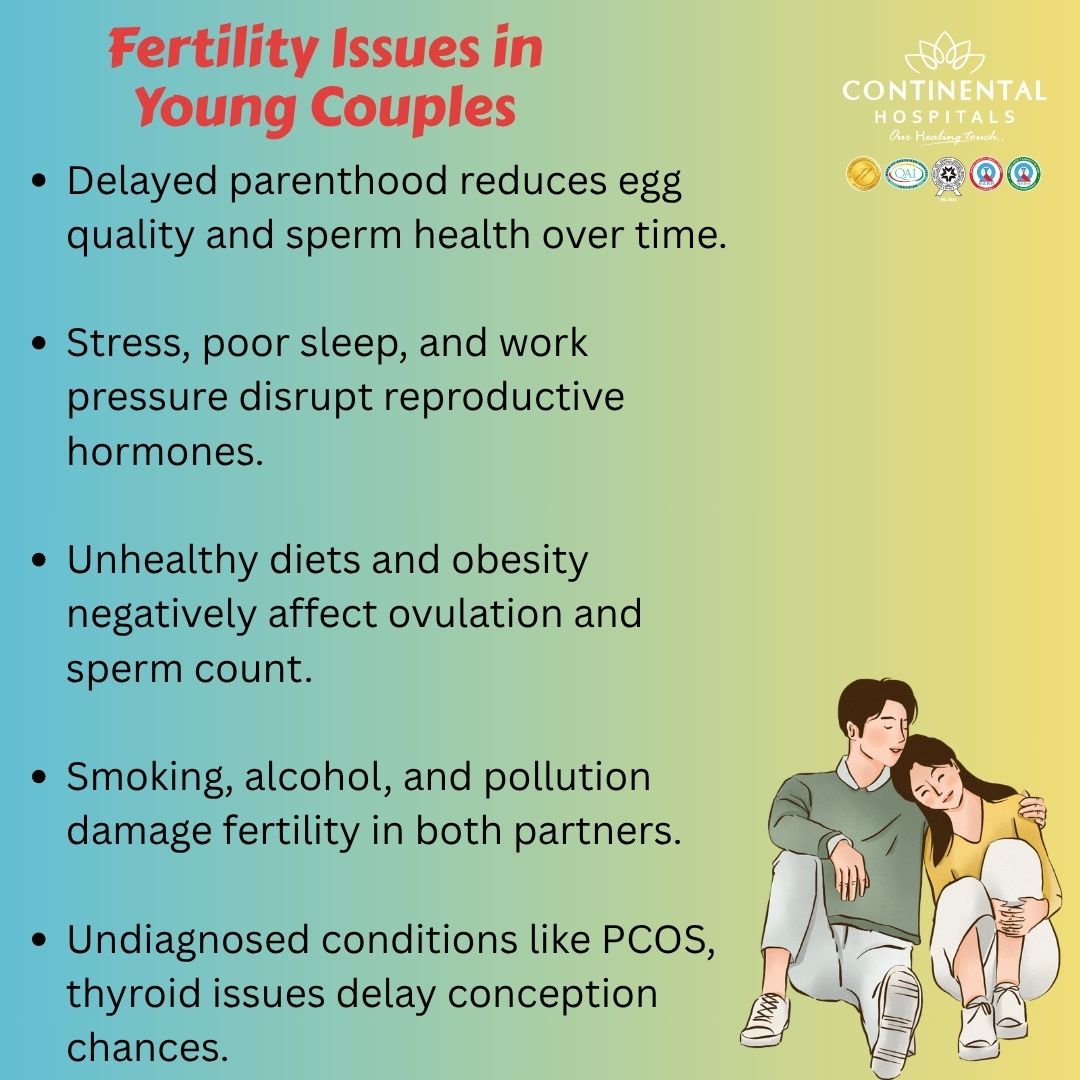
Many young adults are choosing to prioritize education and career goals. While this is a positive societal shift, it is important to recognize the biological reality of the "fertility window." Even in your early 30s, the quantity and quality of a woman's eggs begin to decline. For men, though they produce sperm throughout life, the genetic integrity of that sperm can decrease with age, leading to fertility issues in young couples who wait longer to start their journey.
Common Causes of Infertility in Young Adults
When a couple visits Continental Hospitals, our specialists look at both partners. Infertility is a shared journey, and the causes are distributed almost equally between male and female factors, along with cases of unexplained infertility.
Female Infertility Factors
Polycystic Ovary Syndrome (PCOS): This is one of the most common reasons why fertility is declining among young women. It causes hormonal imbalances that prevent regular ovulation.
Endometriosis: A condition where tissue similar to the lining of the uterus grows outside it, often leading to blockages or inflammation.
Pelvic Inflammatory Disease: Past infections can sometimes leave scarring in the fallopian tubes, preventing the egg and sperm from meeting.
Male Infertility Factors
Low Sperm Count: This is a primary driver of male infertility. Factors like heat exposure, smoking, and certain medications can lower the concentration of sperm.
Morphology and Motility: Even if the count is high, the sperm must be shaped correctly and move efficiently to reach the egg.
Varicocele: An enlargement of the veins within the scrotum can raise the temperature of the testes, harming sperm production.
Why Is Fertility Declining? The Role of Modern Health Issues
The rise in metabolic disorders is a significant contributor to the current trend. Obesity, diabetes, and thyroid malfunctions are more prevalent in young adults today than they were twenty years ago. These conditions directly impact the endocrine system, which is responsible for the hormones that trigger pregnancy.
Furthermore, the prevalence of smoking, vaping, and alcohol consumption among young adults has a direct toxic effect on reproductive cells. Even secondhand smoke can decrease the chances of successful implantation during the conception process.
Navigating the Path to Parenthood
If you are facing fertility issues, it is essential to remember that medical science has advanced significantly. Early intervention is key. If you are under 35 and have been trying for a year, or over 35 and have been trying for six months, it is time to seek professional guidance.
Steps to Improve Reproductive Health
Maintain a Balanced Weight: Even a 5% to 10% weight loss in individuals with a high BMI can significantly improve the chances of ovulation.
Monitor Your Cycle: Understanding your fertile window helps in timing intercourse correctly.
Limit Toxin Exposure: Switch to glass containers and organic produce where possible to reduce chemical intake.
Regular Screenings: Annual checkups can catch issues like thyroid dysfunction or infections early.
Why Choose Continental Hospitals for Fertility Care?
When searching for the best hospital in Hyderabad, Continental Hospitals stands out as a leader in comprehensive reproductive care. We provide a blend of advanced technology and compassionate support tailored to the unique needs of young couples.
World-Class Accreditations
Continental Hospitals is recognized for its commitment to international standards of safety and quality. We hold prestigious accreditations, including the Joint Commission International (JCI) and National Accreditation Board for Hospitals & Healthcare Providers (NABH). These certifications ensure that our patients receive care that meets global benchmarks for clinical excellence and patient safety.
Comprehensive Diagnostic Facilities
Our facility is equipped with state-of-the-art laboratories that allow for precise testing. From advanced semen analysis to high-resolution imaging for uterine health, we ensure that every diagnosis is backed by accurate data.
Multi-Disciplinary Approach
Fertility is not just about the reproductive organs. It involves your heart, your nutrition, and your mental well-being. At Continental Hospitals, our fertility specialists work alongside dieticians, endocrinologists, and counselors to provide a holistic treatment plan.
Advanced Treatment Options
We offer a wide range of solutions, including:
- Hormonal therapy and ovulation induction.
- Minimally invasive laparoscopic surgeries.
- Advanced Assisted Reproductive Technologies (ART).
- Guidance on lifestyle modification and stress management.
Conclusion
The rise in fertility issues among young couples is a multifaceted challenge, but it is one that can be managed with the right help. By addressing lifestyle factors, being mindful of environmental impacts, and seeking early medical advice, the dream of having a child is within reach.
Do not let silence or hesitation delay your joy. Every couple's journey is unique, and sometimes a little bit of expert guidance is all that is needed to overcome the hurdles of infertility.
If you suffer from any concerns regarding your reproductive health or have been unable to conceive, we are here to help. At Continental Hospitals, we combine clinical expertise with a deep understanding of the emotional journey of parenthood. Consult our best fertility center in Hyderabad at Continental Hospitals.
Related Blog Topics: