.webp)


Infertility affects millions of couples globally, and India is no exception. Despite growing awareness, misconceptions surrounding fertility continue to cause confusion, stress, and delayed treatment. Understanding infertility myths and facts is essential to make informed decisions, seek timely medical guidance, and explore effective infertility treatment options. This article clarifies common infertility myths, shares scientifically backed infertility facts vs myths, and highlights when to see a fertility doctor for expert care.
Facing fertility concerns, hormonal imbalance, or male infertility? visit our continental fertility centre at Continental Hospitals, Hyderabad for expert treatment and compassionate care.
Infertility is always a woman’s problem
Male infertility contributes to nearly half of infertility cases. Low sperm count, poor motility, or hormonal imbalance infertility are common male-related causes.
Stress alone causes infertility
While stress may affect hormonal balance, it is rarely the sole cause. Infertility causes in men and women are often medical or physiological.
Age does not affect fertility
Fertility declines with age, especially in women after 35. Male fertility also decreases gradually over time.
IVF guarantees pregnancy
IVF is a highly effective treatment but does not guarantee success. IVF myths and facts must be distinguished to set realistic expectations.
Infertility is uncommon in India
Infertility affects a significant number of couples in India, making infertility awareness in India increasingly important.
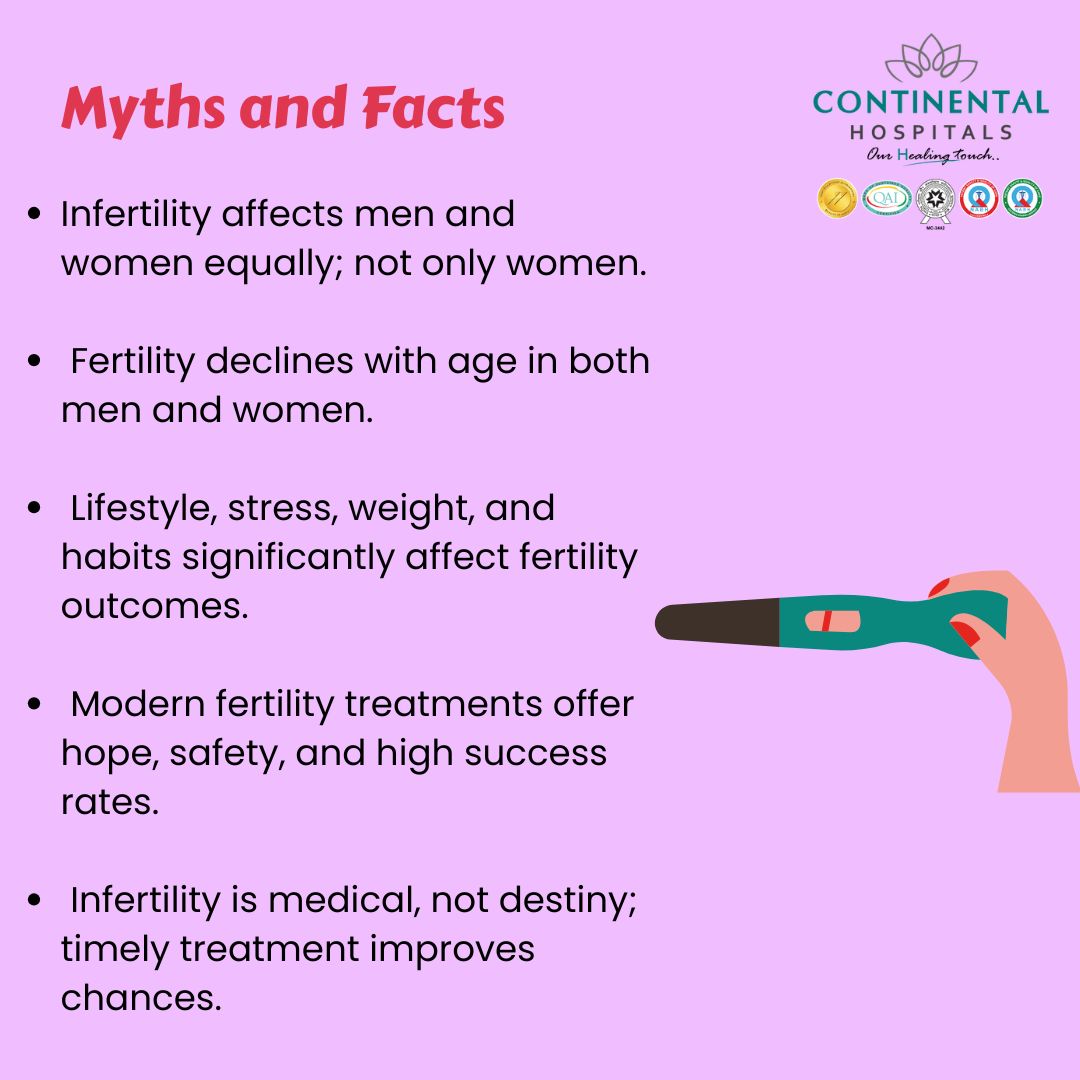
Infertility Facts vs Myths
Understanding infertility facts vs myths helps couples make informed decisions about treatment and lifestyle changes.

- Fact: Both men and women contribute equally to infertility.
- Fact: Hormonal imbalance infertility and ovulation disorders are treatable.
- Fact: Early evaluation improves chances of successful infertility treatment options.
- Fact: Lifestyle changes, including diet, exercise, and avoiding smoking, can improve fertility naturally.
Male and Female Infertility Myths
Male infertility myths:
- Myth: Low sperm count is rare.
- Myth: Sexual performance issues always indicate infertility.
- Fact: Many men with low sperm count can conceive with medical help.
Female infertility myths:
- Myth: Infertility only occurs after a certain age.
- Myth: Irregular periods always mean infertility.
- Fact: Many ovulation disorders and hormonal issues are treatable with proper care.
Signs of Infertility
Recognizing early signs of infertility in women and men can encourage timely consultation.
Signs of infertility in women:
- Irregular or absent periods
- Severe menstrual pain
- Hormonal imbalance symptoms such as acne or hair growth
- Difficulty conceiving after one year of trying
Signs of infertility in men:
- Low sperm count or abnormal semen analysis
- Hormonal imbalance
- Difficulty in ejaculation or erectile dysfunction
- History of infections affecting reproductive organs
Infertility Causes in Men and Women
Infertility causes in men and women include medical conditions, lifestyle factors, and age-related changes.
- Ovulation disorders and hormonal imbalance infertility in women
- Low sperm count causes, motility issues, and structural problems in men
- Environmental exposures and chronic illnesses affecting fertility
- Lifestyle factors including obesity, smoking, and alcohol use
Natural Ways to Improve Fertility
Natural ways to improve fertility complement medical interventions. Couples can enhance reproductive health through:
- Balanced diet rich in essential nutrients
- Maintaining healthy body weight
- Reducing stress through mindfulness and counseling
- Avoiding smoking and excessive alcohol
- Regular moderate exercise
Infertility Treatment Options
Infertility treatment options depend on individual diagnosis and underlying causes. Continental Hospitals provides a comprehensive range of treatments, including:
- Medications for hormonal imbalance infertility
- Ovulation induction for ovulation disorders and infertility
- Assisted reproductive technologies such as IVF treatment for infertility
- Surgical interventions for structural reproductive issues
- Counseling and support services for emotional well-being
IVF Myths and Facts
IVF myths and facts need clarification to ensure realistic expectations:
- Myth: IVF is unnatural or unsafe.
- Fact: IVF uses advanced technology to fertilize eggs safely outside the body.
- Myth: IVF success rate is the same for everyone.
- Fact: Success depends on age, fertility condition, and lab quality.
When to See a Fertility Doctor
Early consultation can improve outcomes. Couples should consider seeing a fertility doctor if:
- Pregnancy has not occurred after one year of regular attempts
- Irregular menstrual cycles or reproductive issues are present
- Male fertility concerns such as low sperm count are detected
- Prior fertility treatments were unsuccessful
A reproductive medicine specialist can provide a detailed evaluation, recommend the best treatment plan, and guide couples through personalized infertility treatment options.
Why Choose Continental Hospitals for Infertility Treatment in Hyderabad?
Continental Hospitals is recognized as one of the best hospitals in Hyderabad for fertility care. Key reasons to choose Continental Hospitals include:
- Experienced reproductive medicine specialists and IVF doctors
- Advanced IVF lab facilities and modern technology
- Comprehensive infertility diagnosis and treatment options
- Personalized patient care including counseling and support
- Accredited hospital standards ensuring safety, quality, and ethical practices
The hospital’s accreditations reflect adherence to national and international healthcare guidelines, providing patients with confidence in both treatment quality and safety.
Conclusion
Infertility myths and facts influence perceptions and decisions regarding fertility treatment. Understanding the truth behind common infertility myths, recognizing signs of infertility in women and men, and exploring effective treatment options can improve outcomes and reduce stress.
If you suffer from fertility concerns, hormonal imbalance, ovulation disorders, or male infertility, consult our best Reproductive Medicine Specialist at Continental Hospitals, Hyderabad. Expert guidance, advanced infertility treatment, and compassionate care can help you take confident steps toward achieving your dream of parenthood.
Related Blog Topics