.webp)

Infertility is a growing health concern affecting many couples across India. It is defined as the inability to conceive after one year of regular, unprotected intercourse. Both men and women can face fertility challenges, and in many cases, the cause is treatable with timely medical care. Understanding infertility causes in men and women, recognizing early signs, and knowing when to seek expert help can make a significant difference in outcomes.
Facing fertility concerns, hormonal imbalance, ovulation disorders, or male infertility? visit our Continental Fertility centre at Continental Hospitals for advanced, compassionate care.
What Is Infertility?
Infertility can affect individuals emotionally and physically. It is not limited to women alone. Medical research shows that male infertility and female infertility contribute almost equally. Sometimes, infertility occurs due to combined factors or remains unexplained even after evaluation.
Early awareness and proper infertility diagnosis tests help couples move forward with confidence and clarity.
Infertility Causes in Men and Women
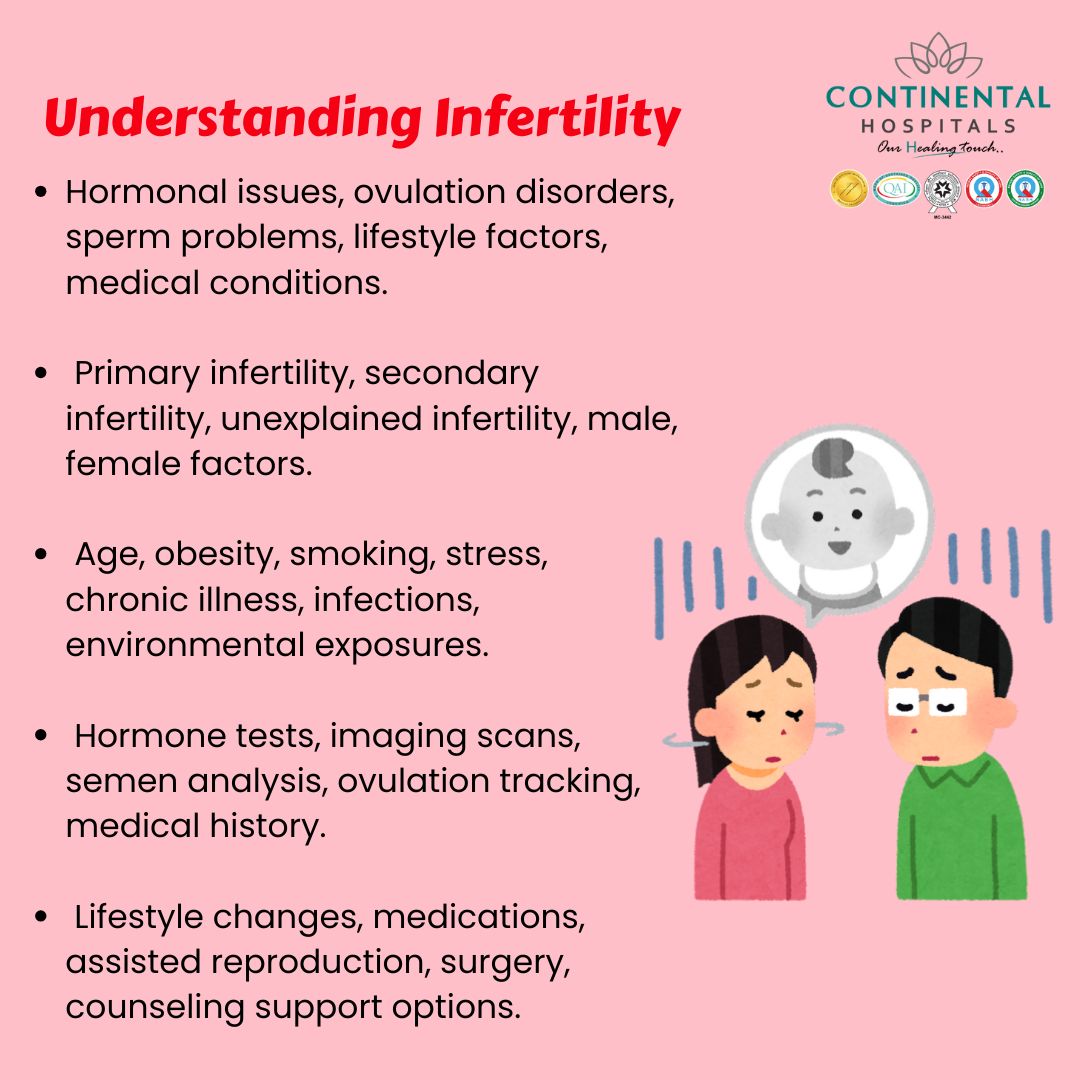
Infertility causes in men and women vary widely and often require detailed evaluation.
Male infertility causes
- Low sperm count causes such as hormonal imbalance or genetic conditions
- Poor sperm movement or abnormal sperm shape
- Varicocele or blocked sperm ducts
- Infections affecting reproductive organs
- Lifestyle factors like smoking, alcohol use, obesity, and stress
Male infertility causes and treatment depend on identifying the exact problem and correcting it through medication, lifestyle changes, or procedures.
Female infertility causes

- Ovulation disorders and infertility due to hormonal imbalance
- Polycystic ovary syndrome and thyroid disorders
- Blocked or damaged fallopian tubes
- Endometriosis
- Age related decline in egg quality
Female infertility causes and treatment focus on restoring ovulation, correcting hormonal imbalance infertility, or using assisted reproductive techniques when needed.
Types of Infertility
Understanding the types of infertility helps in planning treatment.
Primary infertility: Pregnancy has never occurred
Secondary infertility: Difficulty conceiving after a previous pregnancy
Male factor infertility: Infertility due to sperm related issues
Female factor infertility: Infertility caused by ovulation or reproductive organ problems
Unexplained infertility: No clear cause found after testing
Unexplained infertility treatment often involves advanced fertility therapies with close monitoring.
Risk Factors for Infertility
Certain factors increase the risk of infertility in both men and women.
- Increasing age
- Obesity or being underweight
- Smoking and alcohol consumption
- Chronic medical conditions such as diabetes
- Exposure to environmental toxins
- High stress levels and irregular sleep patterns
Managing risk factors for infertility early can improve natural fertility and treatment success.
Signs and Symptoms of Infertility
Some individuals may not notice obvious symptoms. However, common signs and symptoms of infertility include:
- Irregular or absent menstrual cycles
- Painful periods or pelvic pain
- Hormonal changes such as acne or hair growth
- Erectile dysfunction or ejaculation problems in men
- Difficulty conceiving after one year of trying
When should you seek help? If these symptoms persist, it is important to consult a fertility specialist without delay.
Infertility Diagnosis Tests
Accurate diagnosis is the foundation of effective treatment. Infertility diagnosis tests are personalized based on medical history.
Common tests include:
- Hormone tests to check ovulation and reproductive hormones
- Semen analysis to assess sperm count and quality
- Ultrasound and imaging scans of reproductive organs
- Ovulation tracking methods
- Genetic or advanced blood tests when required
Early testing reduces uncertainty and helps doctors create a focused treatment plan.
Infertility Treatment Options
Infertility treatment options depend on the cause, age, and overall health.
Treatment approaches include:
- Lifestyle modifications to improve fertility naturally
- Medications to correct hormonal imbalance infertility
- Ovulation induction for ovulation disorders and infertility
- Surgical procedures for structural problems
- Assisted reproductive technologies such as IVF treatment for infertility
Each treatment plan is tailored to individual needs and monitored carefully by fertility experts.
IVF Treatment for Infertility
IVF treatment for infertility is one of the most advanced and effective assisted reproductive techniques. It involves fertilizing an egg with sperm in a controlled laboratory environment and transferring the embryo into the uterus.
IVF may be recommended for:
- Low sperm count causes that do not improve with medication
- Blocked fallopian tubes
- Severe endometriosis
- Failed previous fertility treatments
- Unexplained infertility
With expert guidance and modern technology, IVF outcomes have significantly improved.
When to See a Fertility Specialist?
Many couples delay consultation due to fear or uncertainty. Knowing when to see a fertility specialist can save valuable time.
You should seek expert advice if:
- Pregnancy does not occur after one year of trying
- The woman is above a certain age and trying for several months
- There are known reproductive or hormonal issues
- Periods are irregular or absent
- There is a history of medical or surgical conditions affecting fertility
Early consultation increases treatment choices and success rates.
Why Choose Continental Hospitals for Infertility Treatment in Hyderabad?
Continental Hospitals is recognized as one of the best hospitals in Hyderabad for advanced fertility care. The hospital combines clinical excellence with patient focused care.
Key reasons to choose Continental Hospitals:
- Experienced fertility specialists, gynecologists, and urologists
- Advanced diagnostic laboratories and imaging facilities
- Comprehensive infertility treatment options under one roof
- Internationally accredited hospital standards ensuring patient safety
- Ethical, transparent, and evidence based medical practices
- Multidisciplinary approach involving reproductive medicine, endocrinology, and counseling
Continental Hospitals follows global quality protocols and holds reputed healthcare accreditations, reflecting its commitment to excellence and patient trust.
Conclusion
Infertility is a medical condition, not a personal failure. With the right knowledge, timely diagnosis, and expert care, many couples successfully achieve parenthood. Understanding infertility causes in men and women, recognizing early signs, and exploring appropriate infertility treatment options can restore hope and confidence.
If you or your partner are facing difficulty conceiving, do not delay seeking professional help. Early evaluation opens the door to effective solutions and emotional reassurance.Facing fertility concerns, hormonal imbalance, ovulation disorders, or male infertility? Consult our best Reproductive medicine expert at Continental Hospitals for advanced, compassionate care.
Related Blog Topics