.webp)

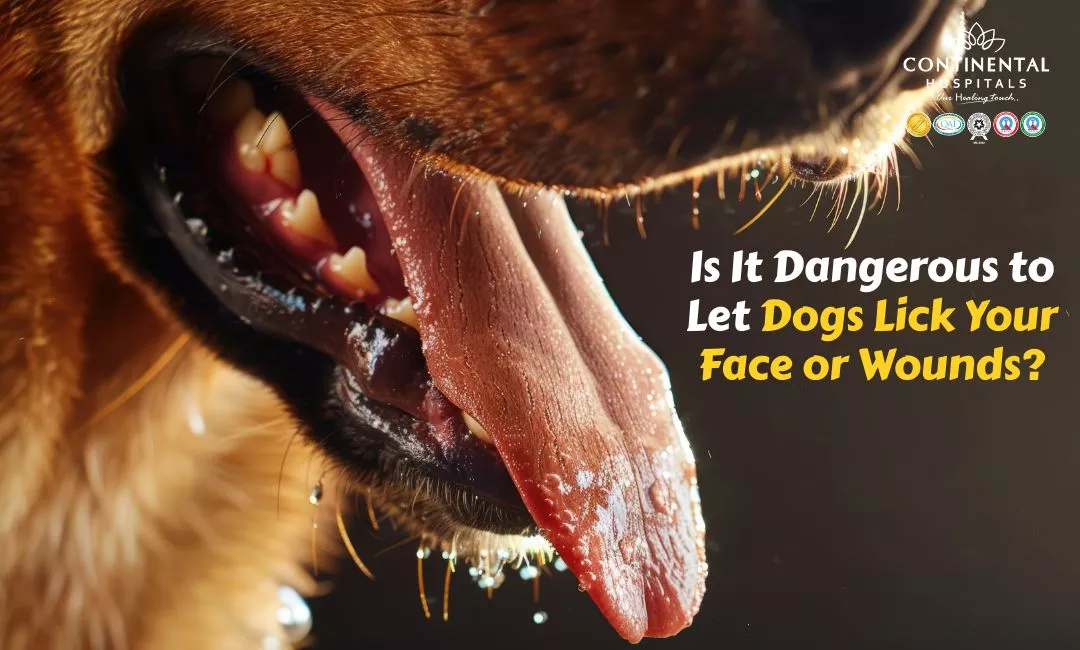
Dogs are loving, loyal companions. Many pet owners see dog licking as a sign of affection and bonding. A gentle lick on the face may feel harmless or even sweet. But have you ever wondered, is dog saliva harmful? Can dog licking cause infections or health problems?
Understanding the risks behind dog licking helps you protect yourself and your family while still enjoying your pet’s company.
Why Do Dogs Lick Your Face?
Before we discuss health risks, it is important to understand why dogs lick.
Common reasons include:
• Showing affection and bonding
• Seeking attention
• Exploring smells and tastes
• Expressing excitement or submission
• Grooming behavior
Many people believe dog saliva is clean. However, this is a myth. While dogs do not usually get sick from their own saliva, humans may react differently.
If you notice signs of infection after a dog lick, don’t delay care. Visit our Infectious Disease Specialists Department at Continental Hospitals for expert diagnosis and advanced treatment.
Is Dog Saliva Harmful?
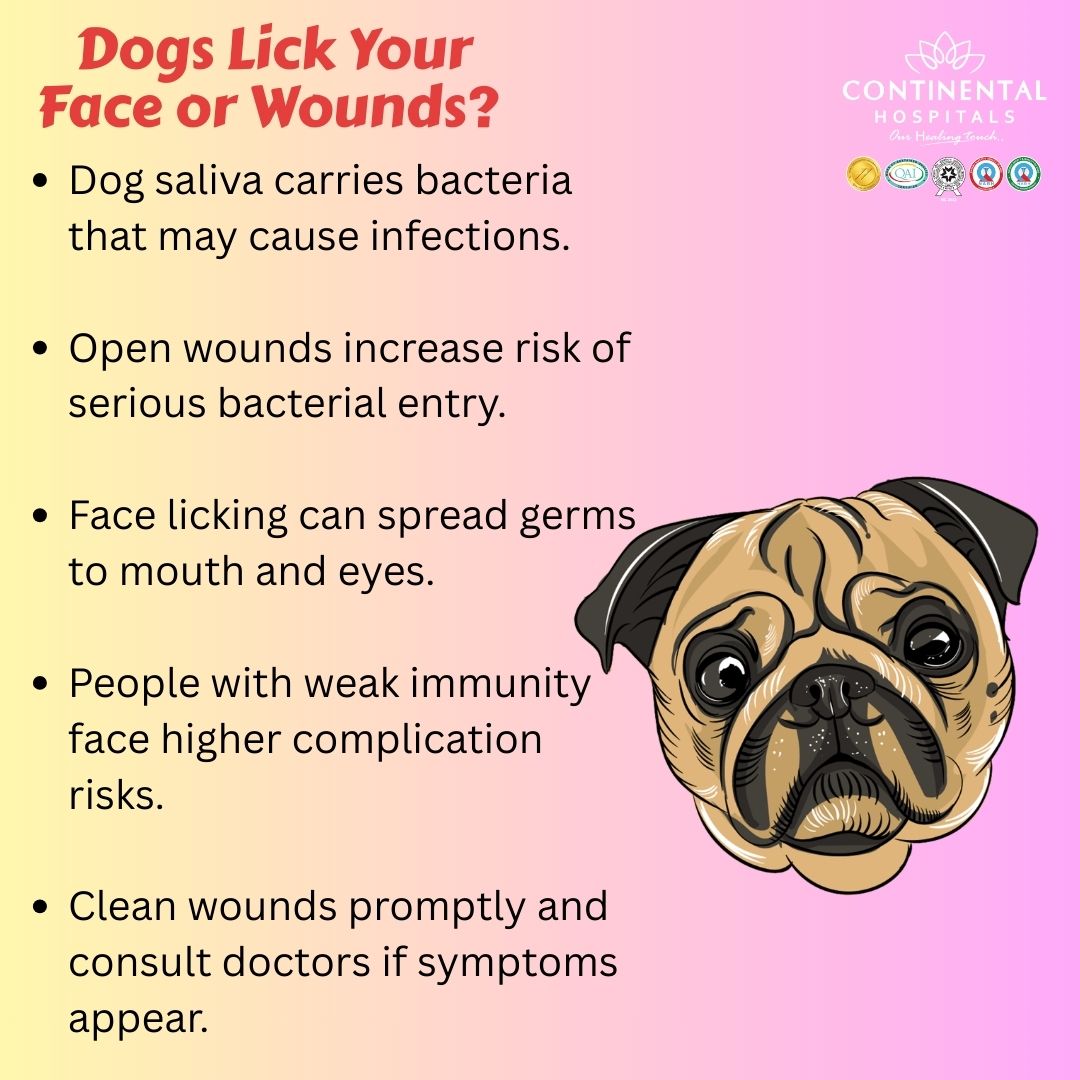
Dog saliva contains bacteria. This does not mean every lick leads to infection. In healthy individuals with strong immunity, casual dog licking on intact skin usually does not cause serious harm.
But problems can occur when:

• The lick touches open wounds
• The person has a weak immune system
• The lick reaches the eyes, nose, or mouth
• The dog has oral infections
The bacteria in dog saliva can sometimes enter the bloodstream through cuts or sores. This increases the dog lick infection risk.
Bacteria in Dog Saliva: What You Should Know
Dogs naturally carry different types of bacteria in their mouths. Some of the commonly found bacteria in dog saliva include:
• Capnocytophaga
• Pasteurella
• Staphylococcus
• Streptococcus
In most cases, these bacteria do not harm healthy people. However, in rare situations, they can cause serious infections, especially in elderly individuals, diabetics, cancer patients, or people with weakened immunity.
Understanding dog licking wounds danger is especially important. When a dog licks an open cut, bacteria can directly enter the tissue.
Dog Licking Face Risks
Dog licking face risks are higher than many people realize. The face has sensitive areas like:
• Eyes
• Nose
• Lips
• Small invisible cracks in the skin
When dog saliva comes into contact with these areas, germs can spread easily. Children are more vulnerable because they often have close contact with pets and may not wash their faces immediately.
Possible risks include:
• Skin infections
• Eye infections
• Gastrointestinal infections if saliva enters the mouth
• Allergic reactions
Although severe cases are rare, prevention is always better than treatment.
Dog Licking Wounds Danger
One of the biggest concerns is dog licking wounds danger. Some people believe that dog saliva helps wounds heal. This belief is not medically proven.
In fact, letting a dog lick an open wound may:
• Delay wound healing
• Introduce harmful bacteria
• Increase redness and swelling
• Cause pus formation
• Lead to bloodstream infections in severe cases
If you have stitches, surgical wounds, ulcers, or cuts, avoid allowing dog licking on that area.
Who Is at Higher Risk?
While dog licking may not cause harm in many cases, some groups must be extra careful:
• People with diabetes
• Cancer patients undergoing treatment
• Organ transplant recipients
• Individuals with liver disease
• Elderly adults
• Infants and young children
For these individuals, even minor exposure can lead to complications.
Signs of Infection After Dog Licking
If you experience any of the following after dog licking contact, consult a doctor immediately:
• Redness or swelling around the area
• Pain that increases over time
• Fever
• Fatigue
• Pus discharge
• Skin warmth
• Vomiting or diarrhea
Early treatment prevents serious complications.
Can Dog Licking Ever Be Safe?
Dog licking on healthy, unbroken skin carries low risk for most people. However, maintaining good hygiene is essential.
Follow these precautions:
• Wash your face or skin after contact
• Do not allow dog licking on wounds
• Keep your dog’s vaccinations updated
• Maintain your dog’s oral hygiene
• Avoid letting dogs lick near your mouth or eyes
• Teach children safe pet interaction
These simple steps significantly reduce the dog lick infection risk.
Common Myths About Dog Licking
Let us clear up some facts about dogs and saliva.
Myth: Dog saliva is antiseptic
Fact: Dog saliva contains bacteria and is not sterile
Myth: Dogs licking wounds helps healing
Fact: Medical research does not support this practice
Myth: If the dog looks healthy, the saliva is harmless
Fact: Healthy dogs can still carry bacteria in dog saliva
Knowing facts about dogs helps you make informed decisions.
When Should You See a Doctor?
You should consult a medical professional if:
• A dog licks a deep wound
• You have a compromised immune system
• Symptoms of infection appear
• A child is exposed and shows discomfort
Prompt evaluation ensures timely treatment and prevents complications.
How Continental Hospitals Can Help
At Continental Hospitals, recognized as one of the best hospitals in Hyderabad, we provide advanced care for infections, wound management, and immune related complications.
Our team includes:
• Infectious disease specialists
• General physicians
• Dermatologists
• Emergency care experts
We follow strict international standards and evidence based protocols. Continental Hospitals is accredited by globally recognized healthcare bodies, ensuring patient safety, clinical excellence, and quality care.
Our hospital infrastructure includes advanced laboratories for infection testing, modern emergency facilities, and expert wound care services. We prioritize hygiene, patient comfort, and accurate diagnosis.
Why choose Continental Hospitals?
• International accreditations and quality certifications
• Experienced specialists across departments
• Advanced diagnostic technology
• Comprehensive infection management
• Multidisciplinary approach for complex cases
• Patient focused and compassionate care
If you experience symptoms after dog licking or suspect an infection, consult our Infectious Diseases Department or General Medicine specialists immediately. Early diagnosis ensures faster recovery and prevents complications.
Conclusion
Dog licking is often a natural sign of affection. For healthy individuals, occasional contact on intact skin may not cause harm. However, allowing dog licking on the face or open wounds increases infection risk.
Understanding dog licking face risks and dog licking wounds danger helps you stay informed and safe. Dog saliva contains bacteria, and although severe infections are rare, they can occur in vulnerable individuals.
Practice good hygiene, avoid exposure to open wounds, and monitor symptoms carefully.
If you or a family member notice signs of infection after dog licking, seek medical care without delay. At Continental Hospitals, consult our best infectious disease specialists, who are here to provide comprehensive diagnosis and advanced treatment.
Related Blog Topics: