.webp)

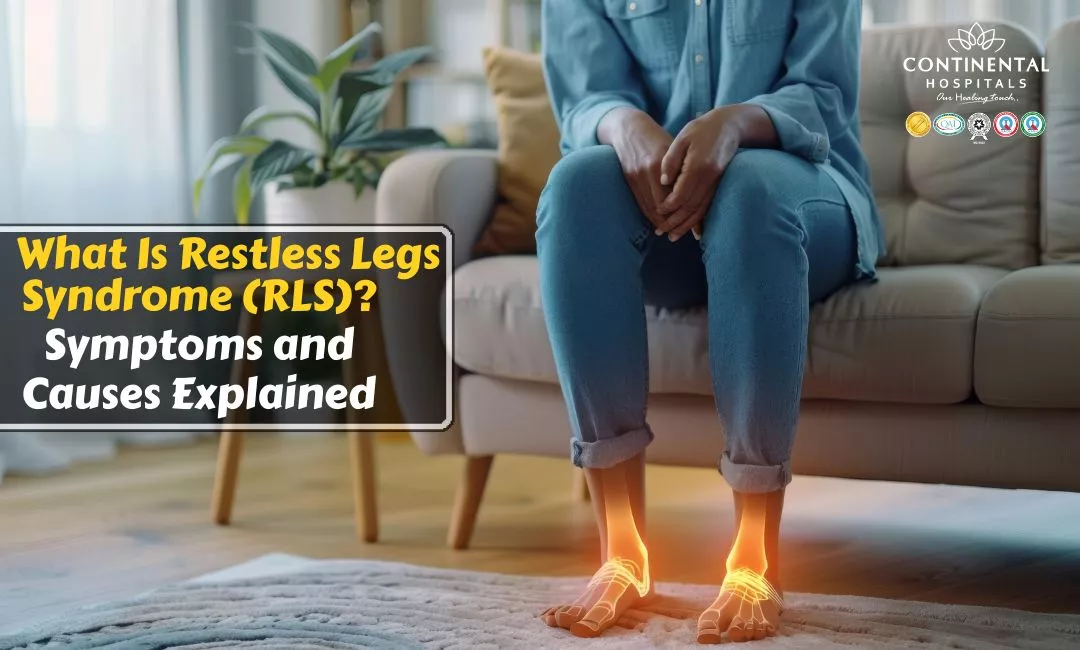
Do you feel an uncomfortable urge to move your legs when you lie down to rest? Does this strange sensation disturb your sleep night after night? You may be experiencing restless leg syndrome, a common but often misunderstood neurological condition.
What Is Restless Legs Syndrome?
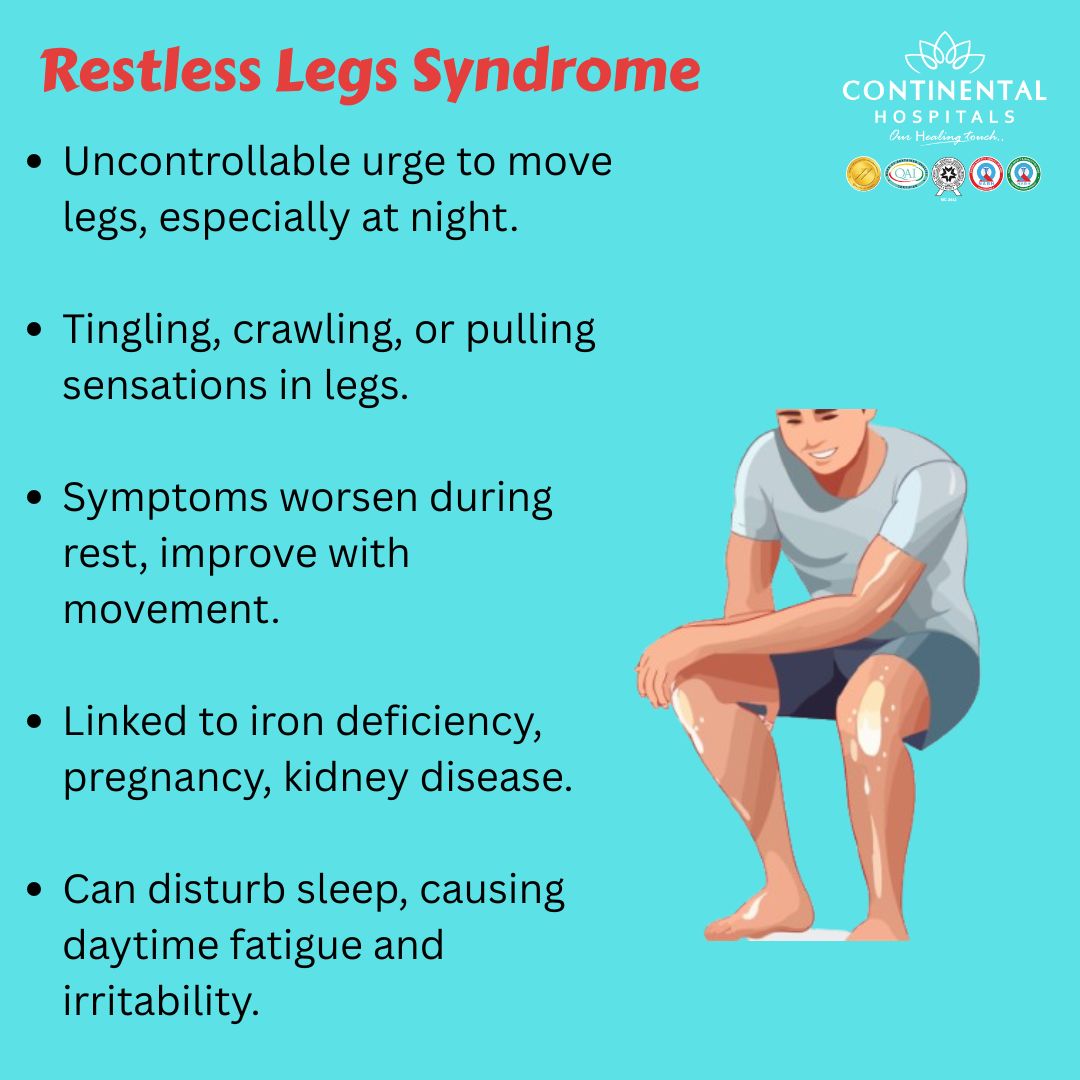
What is restless leg syndrome? Restless leg syndrome is a neurological disorder that creates an uncontrollable urge to move the legs. This feeling usually happens during rest, especially in the evening or at night. The discomfort improves when you move your legs.
Restless leg syndrome is also called RLS. It can affect both men and women, and it can occur at any age. However, it is more common in middle aged and older adults.
Many people ignore restless legs at night, thinking it is normal tiredness. But when the symptoms disturb sleep regularly, it may be restless leg syndrome.
Struggling with restless leg syndrome or disturbed sleep? Visit our best neuro doctor hyderabad at Continental Hospitals for expert diagnosis and advanced care.
What are the symptoms of restless legs syndrome?
Recognizing restless leg syndrome symptoms early can help you get the right care. The symptoms are mainly related to uncomfortable sensations in the legs.
Common restless leg syndrome symptoms include:
• Strong urge to move the legs
• Crawling, tingling, itching, or pulling feeling in the legs
• Symptoms that begin or worsen during rest
• Relief when walking or stretching
• Symptoms that are worse in the evening or at night
• Sleep disturbances due to restless legs
Many patients describe restless legs as a deep, uncomfortable sensation that cannot be ignored. The need to move becomes intense while sitting, lying down, or trying to sleep.

In some cases, RLS can also affect the arms.
Why Do Restless Legs Happen?
Understanding the causes of restless leg syndrome can help in proper diagnosis and restless legs syndrome treatment.
The exact cause of restless leg syndrome is not always clear. However, research shows it may be linked to problems with dopamine, a chemical in the brain that controls muscle movement.
Common causes and risk factors include:
• Family history of restless leg syndrome
• Iron deficiency
• Chronic kidney disease
• Diabetes
• Peripheral neuropathy
• Parkinson’s disease
• Pregnancy
• Certain medications
When iron levels in the brain are low, dopamine function may be affected. This can trigger restless legs at night.
Pregnant women may experience temporary restless leg syndrome symptoms, especially in the third trimester. In most cases, symptoms improve after delivery.
What are the types of Restless Legs Syndrome?
There are two main types of restless leg syndrome.
Primary RLS
This type has no clear underlying medical condition. It often runs in families and may start at a younger age. Symptoms can slowly worsen over time.
Secondary RLS
This type is caused by an underlying medical problem such as anemia, kidney disease, or diabetes. Treating the main condition often improves RLS symptoms.
How Is Restless Leg Syndrome Diagnosed?
There is no single test to confirm restless leg syndrome. Diagnosis is based on symptoms and medical history.
At Continental Hospitals, our neurologists follow a detailed evaluation process:
• Discussion of symptoms and sleep patterns
• Review of medical history
• Blood tests to check iron levels
• Tests to rule out nerve disorders
Early diagnosis helps prevent long term sleep problems and improves quality of life.
What happens if Restless Legs Syndrome is left untreated?
If restless leg syndrome is not treated, it can affect daily life.
Possible complications include:
• Chronic sleep deprivation
• Daytime fatigue
• Difficulty concentrating
• Mood changes
• Anxiety and depression
Poor sleep can also increase the risk of other health problems. That is why early restless legs syndrome treatment is important.
What is the best treatment for Restless Legs Syndrome?
Many people ask, is there a restless legs syndrome cure? While there is no permanent cure in most cases, effective restless leg syndrome treatment can control symptoms and improve sleep.
Treatment depends on the severity and underlying cause.
Lifestyle changes
Mild cases of restless leg syndrome may improve with simple lifestyle adjustments:
• Maintain a regular sleep schedule
• Avoid caffeine and alcohol in the evening
• Practice gentle leg stretches
• Take warm baths before bed
• Engage in moderate exercise
Iron supplements
If iron deficiency is detected, doctors may prescribe iron supplements. Correcting iron levels can significantly reduce restless leg syndrome symptoms.
Medications
For moderate to severe RLS, medications may be recommended. These include:
• Dopamine regulating drugs
• Anti seizure medications
• Muscle relaxants
• Sleep medications in selected cases
Your neurologist will decide the best RLS treatment based on your condition.
Treatment of underlying conditions
If restless leg syndrome is secondary to another medical problem, managing that condition is the first step. For example, controlling diabetes or kidney disease can reduce symptoms.
When Should You See a Doctor?
Many people live with restless legs for years without seeking help. You should consult a doctor if:
• Restless legs at night disturb your sleep regularly
• You feel extreme daytime tiredness
• Symptoms are getting worse
• Home remedies are not helping
Early medical evaluation ensures proper restless leg syndrome treatment and prevents complications.
Why Choose Continental Hospitals for Restless Leg Syndrome Treatment?
Continental Hospitals is recognized as the best hospital in Hyderabad for comprehensive neurological care.
Here is why patients trust us for restless legs syndrome treatment:
• Experienced neurologists with international expertise
• Advanced diagnostic technology
• NABH and JCI accredited hospital
• Multidisciplinary approach for complex cases
• Personalized treatment plans
• Patient focused care with global standards
Our accreditations reflect our commitment to quality, safety, and excellence in healthcare. We follow strict international protocols to ensure accurate diagnosis and effective RLS treatment.
At Continental Hospitals, we believe in delivering fast, accurate, and evidence based care for restless leg syndrome.
Can Restless Legs Be Prevented?
While not all cases of restless leg syndrome can be prevented, you can reduce your risk by:
• Maintaining healthy iron levels
• Managing chronic diseases
• Staying physically active
• Following good sleep hygiene
Regular health checkups help identify risk factors early.
Living Well with Restless Leg Syndrome
Restless leg syndrome can be frustrating, especially when it affects sleep. But with proper diagnosis and restless legs syndrome treatment, most patients experience significant relief.
Simple lifestyle measures combined with medical care can restore restful sleep and improve daily functioning.
If you are wondering what is restless leg syndrome and whether your symptoms match, do not ignore persistent discomfort in your legs.
Conclusion
Restless leg syndrome is a common neurological condition that causes uncomfortable sensations and an urge to move the legs, especially during rest. Though it may seem minor at first, untreated restless leg syndrome can seriously affect sleep and overall well being.
Understanding restless leg syndrome symptoms, identifying causes, and seeking timely restless legs syndrome treatment are essential for long term relief. With expert neurologists, world class accreditations, and advanced care facilities, Continental Hospitals stands ready to help you manage RLS effectively and safely.
Do not let restless legs control your nights. Seek expert care and sleep peacefully again.
If you suffer from restless leg syndrome, restless legs at night, or ongoing sleep disturbances, consult our Best Neurologist in Hyderabad at Continental Hospitals.