.webp)

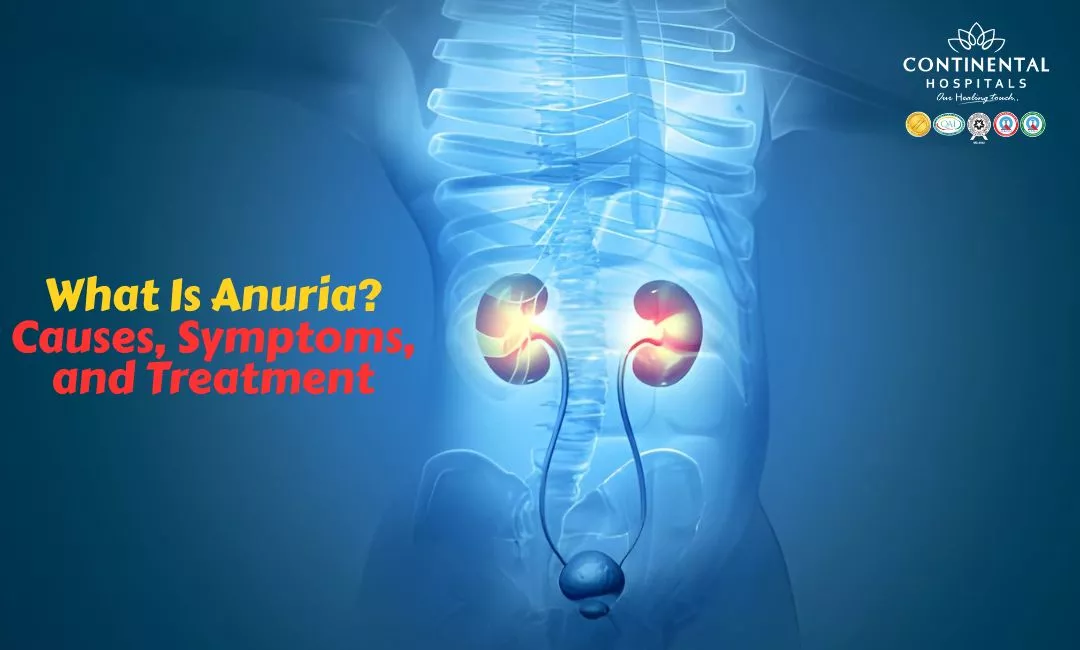
Anuria is a serious medical condition in which the body produces little to no urine. In simple terms, anuria meaning is the complete absence or near absence of urine output, usually less than 100 milliliters in 24 hours. Urine is how the body removes waste and extra fluids. When urine stops or becomes extremely low, it signals that the kidneys may not be working properly.
Understanding what is anuria, its causes, anuria symptoms, and anuria treatment is very important. Early medical care can protect kidney function and prevent life threatening complications.
What Is Anuria?
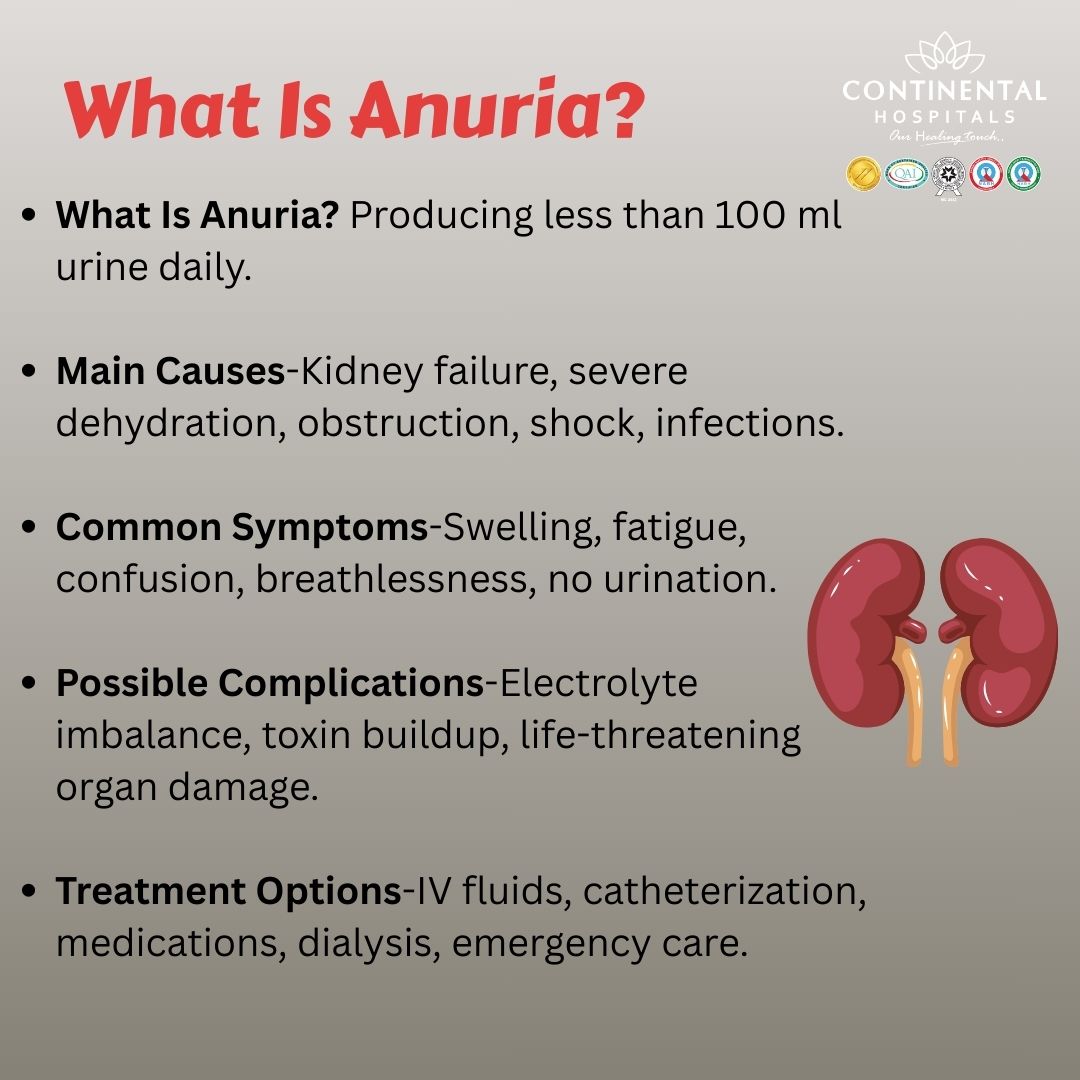
What is anuria? Anuria is a condition where the kidneys fail to produce enough urine. It is different from oliguria, which means reduced urine output. In anuria, urine output is almost completely stopped.
The kidneys filter waste from the blood and convert it into urine. When this process is disrupted, waste builds up in the body. This can quickly affect other organs such as the heart, lungs, and brain.
Anuria can occur suddenly or develop gradually due to chronic kidney disease. It is considered a medical emergency and needs immediate evaluation.
Visit our Nephrology Department at Continental Hospitals, Hyderabad, for expert kidney care from experienced nephrologists and urologists you can trust.
How the Kidneys Work
To understand anuria, it helps to know how healthy kidneys function.
The kidneys:
• Filter waste and toxins from the blood
• Balance fluids in the body
• Control blood pressure
• Maintain electrolyte balance
• Produce hormones for red blood cell production
When the kidneys are damaged due to kidney disease or injury, urine production decreases. In severe cases, this leads to anuria.

Causes of Anuria
There are several causes of anuria. Doctors usually group them into three main categories.
1. Pre renal causes
These occur when blood flow to the kidneys is reduced.
Common reasons include:
• Severe dehydration
• Heavy blood loss
• Heart failure
• Severe infections
• Shock
When blood does not reach the kidneys properly, they cannot produce urine.
2. Renal causes
These are problems directly affecting the kidneys.
Examples include:
• Acute kidney injury
• Chronic kidney disease
• Severe infections of the kidney
• Toxic drug reactions
• Autoimmune disorders
Chronic kidney disease is a major risk factor. If left untreated, kidney disease can gradually worsen and result in anuria.
3. Post renal causes
These occur when urine flow is blocked after it leaves the kidneys.
Common causes include:
• Kidney stones
• Enlarged prostate in men
• Tumors in the urinary tract
• Blood clots in the bladder
A blockage prevents urine from exiting the body, leading to anuria.
Anuria in Adults
Anuria in adults is often linked to chronic kidney disease, diabetes, high blood pressure, or severe infections. Adults with uncontrolled kidney disease are at higher risk.
Symptoms may appear suddenly in cases of acute kidney injury. In other cases, people with long standing kidney disease may notice gradual changes before complete anuria develops.
Early diagnosis is critical to prevent permanent kidney damage.
Anuria in Children
Anuria in children is rare but very serious. It may result from:
• Severe dehydration due to diarrhea or vomiting
• Congenital kidney abnormalities
• Urinary tract blockage
• Severe infections
Children require immediate medical care if there is no urine output for several hours. Pediatric nephrologists at Continental Hospitals provide specialized care for anuria in children.
Anuria Symptoms
Anuria symptoms can vary depending on the cause. The most obvious sign is no urine output or extremely low urine output.
Other common anuria symptoms include:
• Swelling in legs, feet, or face
• Shortness of breath
• Fatigue
• Confusion
• Nausea and vomiting
• Irregular heartbeat
• Chest pain
Because waste builds up in the bloodstream, the body becomes toxic. This condition can quickly become life threatening if not treated.
If you or a loved one notices sudden absence of urine, seek immediate medical attention.
How Is Anuria Diagnosed?
Doctors use several tests to confirm anuria and identify the cause.
Diagnostic methods include:
• Physical examination
• Blood tests to check kidney function
• Urine tests if any urine is present
• Ultrasound of the kidneys and bladder
• CT scan to detect blockage
• Electrolyte level testing
Early and accurate diagnosis helps doctors decide the best anuria treatment plan.
Anuria Treatment
Anuria treatment depends on the underlying cause. The primary goal is to restore urine flow and protect kidney function.
Treatment options include:
Treating dehydration or shock
• Intravenous fluids
• Blood transfusion if needed
Managing kidney injury
• Stopping harmful medications
• Controlling blood pressure
• Treating infections
Removing blockages
• Catheter insertion
• Surgery for kidney stones
• Procedures to remove tumors
Dialysis
In severe cases where the kidneys cannot function, dialysis may be required. Dialysis helps remove waste and extra fluids from the blood.
Prompt anuria treatment can prevent permanent kidney damage. Delayed care increases the risk of complications.
Complications of Anuria
If not treated quickly, anuria can lead to serious complications such as:
• Severe electrolyte imbalance
• Heart rhythm problems
• Fluid buildup in lungs
• Permanent kidney failure
• Multi organ failure
These complications highlight why early medical attention is critical.
Preventing Anuria
While not all cases can be prevented, you can reduce risk by:
• Staying well hydrated
• Managing diabetes and high blood pressure
• Avoiding excessive use of painkillers
• Getting regular kidney function tests
• Seeking early treatment for urinary problems
People with chronic kidney disease should follow their doctor’s advice strictly to prevent worsening kidney disease and anuria.
Why Choose Continental Hospitals for Anuria Treatment?
Continental Hospitals is considered the best hospital in Hyderabad for advanced kidney care. The hospital offers comprehensive evaluation and treatment for anuria and other kidney diseases.
Key highlights include:
• Dedicated Department of Nephrology and Urology
• Experienced nephrologists and urologists
• Advanced dialysis facilities
• Modern intensive care units
• 24 hour emergency services
• Multidisciplinary team approach
Continental Hospitals holds prestigious accreditations including NABH and JCI. These accreditations reflect international standards of patient safety, clinical excellence, and quality care.
The hospital combines advanced technology with compassionate care, ensuring accurate diagnosis and personalized anuria treatment plans.
Patients benefit from seamless coordination between emergency medicine specialists, nephrologists, intensivists, and urologists.
When Should You See a Doctor?
You should consult a doctor immediately if:
• There is no urine output for several hours
• You experience sudden swelling and breathlessness
• You have severe abdominal or back pain
• You have existing kidney disease and notice reduced urination
Early intervention improves recovery and protects long term kidney health.
Conclusion
Anuria is a serious condition that signals a major problem with kidney function. Understanding what is anuria, recognizing anuria symptoms, and seeking timely anuria treatment can prevent life threatening complications.
Anuria in adults is often linked to chronic kidney disease, diabetes, or severe infections. Anuria in children requires urgent medical evaluation. Because the kidneys play a vital role in filtering waste, even a short delay in treatment can have serious consequences.
If you or your loved one is experiencing symptoms of anuria or has been diagnosed with kidney disease, do not ignore the warning signs.
Consult our best nephrology team at Continental Hospitals, the best hospital in Hyderabad. Our experienced nephrologists and urologists are equipped to diagnose and manage all types of kidney disease and emergency conditions like anuria with precision and care.