.webp)


A dry cough can be irritating, exhausting, and sometimes worrying. Unlike a wet cough, a dry cough does not produce mucus. It often feels like a tickle or scratch in the throat and may become worse at night. While occasional coughing is normal, a persistent dry cough can affect sleep, work, and daily life.
What Is a Dry Cough?
A dry cough is a non productive cough. This means there is no phlegm or mucus coming out. It may feel like:
• A constant urge to clear the throat
• A burning or tickling sensation
• Throat irritation that worsens with talking
• Night time coughing that disturbs sleep
If you are wondering how to stop coughing, the first step is identifying the underlying cause.
Struggling with persistent cough? Visit our Pulmonology Department at Continental Hospitals for expert diagnosis and advanced respiratory care.
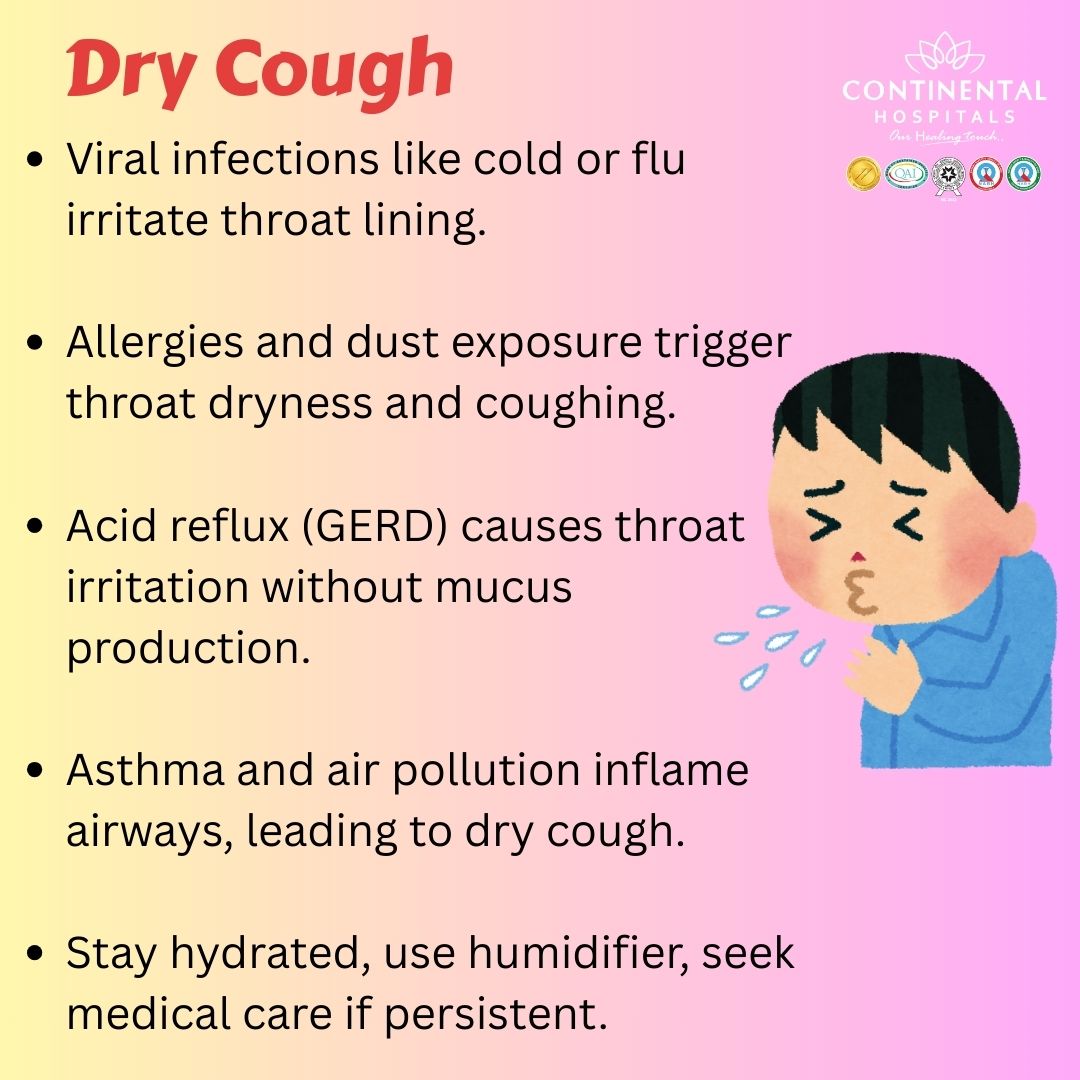
Common Dry Cough Causes
There are several dry cough causes. Some are mild and temporary, while others may require medical attention.
1. Viral Infections
The common cold and viral flu are frequent triggers. Even after other symptoms improve, a dry cough may continue for weeks. This is called post viral cough.

2. Allergies
Dust, pollen, pet dander, and pollution can irritate the airways. Allergies often lead to coughing, sneezing, and itchy eyes. If the cough appears during certain seasons or in specific environments, allergies may be responsible.
3. Asthma
Asthma is a chronic respiratory condition that causes airway inflammation. In some people, a persistent dry cough is the only symptom. This is known as cough variant asthma.
If you experience breathlessness, chest tightness, or wheezing along with coughing, consult a pulmonologist.
4. Acid Reflux or GERD
Gastroesophageal reflux disease can cause stomach acid to flow back into the throat. This irritation may trigger a dry cough, especially after meals or while lying down.
Lifestyle changes and medications can help manage this condition effectively.
5. Air Pollution and Smoking
Exposure to smoke, chemicals, and polluted air can irritate the throat and lungs. Long term exposure increases the risk of chronic coughing and lung disease.
6. Certain Medications
Some blood pressure medicines may cause a persistent dry cough as a side effect. If you notice coughing after starting a new medication, speak to your doctor.
7. Chronic Respiratory Conditions
Conditions like bronchitis or interstitial lung disease may present with ongoing dry cough. In rare cases, it can also be a sign of lung infections or more serious issues.
If your cough lasts more than three weeks, medical evaluation is important.
When Should You Worry About a Persistent Dry Cough?
Seek medical attention if you notice:
• Cough lasting more than three weeks
• Blood in cough
• Chest pain
• Difficulty breathing
• Unexplained weight loss
• Fever that does not settle
A persistent dry cough should not be ignored, especially if it interferes with daily life.
How to Stop a Dry Cough at Home?
For mild cases, simple home remedies for cough may provide relief.
Effective Dry Cough Home Remedy Options
• Drink warm water frequently
• Use honey with warm water or herbal tea
• Gargle with warm salt water
• Use a humidifier to reduce throat dryness
• Avoid smoke and strong perfumes
These remedies soothe throat irritation and reduce coughing. However, if symptoms continue, professional dry cough treatment is necessary.
Medical Dry Cough Treatment
Treatment depends on the cause. At Continental Hospitals, our respiratory specialists create personalized treatment plans.
Common Treatment Options
• Antihistamines for allergies
• Inhalers for asthma
• Antacids for acid reflux
• Cough suppressants for severe dry cough
• Antibiotics only if bacterial infection is confirmed
Diagnostic tests such as chest X ray, pulmonary function tests, and blood tests may be recommended to identify the exact reason.
Understanding how to stop coughing permanently requires treating the root cause, not just the symptom.
How to Stop Coughing at Night?
Night time coughing is common in dry cough cases. You can try:
• Elevating your head while sleeping
• Avoiding heavy meals before bedtime
• Using a humidifier
• Taking prescribed medication before sleep
If night coughing continues, consult a pulmonology expert for evaluation.
Preventing Dry Cough
Prevention is always better than cure. You can reduce your risk by:
• Avoiding smoking and second hand smoke
• Wearing a mask in polluted areas
• Staying hydrated
• Managing allergies effectively
• Taking prescribed asthma medication regularly
Regular health checkups also help detect early respiratory issues.
Why Choose Continental Hospitals for Dry Cough Treatment?
Continental Hospitals is recognized as the best hospital in Hyderabad for comprehensive respiratory care. Our focus is on quality, safety, and advanced medical excellence.
Our Accreditations and Standards
Continental Hospitals is accredited by Joint Commission International which reflects global standards in patient safety and quality care. We are also accredited by NABH and NABL, ensuring strict clinical protocols and laboratory excellence.
These accreditations demonstrate our commitment to international healthcare standards.
Advanced Pulmonology Department
Our pulmonology department offers:
• Expert pulmonologists and respiratory specialists
• Advanced diagnostic facilities
• Modern pulmonary function testing labs
• Comprehensive allergy testing
• Intensive care support if needed
We follow evidence based practices to provide accurate diagnosis and effective dry cough treatment.
Frequently Asked Questions
What causes a dry cough without fever?
It may be due to allergies, asthma, acid reflux, or environmental irritants.
How long does a dry cough last?
A mild dry cough may last a few days. A post viral cough may continue for up to eight weeks.
Can stress cause coughing?
Stress can worsen throat irritation and trigger coughing in sensitive individuals.
How to stop a dry cough quickly?
Hydration, honey, steam inhalation, and prescribed cough suppressants may help. Persistent cases require medical evaluation.
Conclusion
A dry cough may seem minor at first, but if it continues or worsens, it should not be ignored. Identifying the exact dry cough causes is essential for proper dry cough treatment. While home remedies for cough may provide temporary relief, a persistent dry cough needs expert evaluation.
If you are suffering from ongoing coughing or unsure how to stop coughing effectively, consult the specialists at Continental Hospitals. Consult our best pulmonology team, which is dedicated to diagnosing and treating respiratory conditions with precision and care.
Related Blog Topics: