.webp)


Obesity is a complex medical condition that goes beyond simple aesthetics. It is a chronic disease where excess body fat accumulates to an extent that it may have an adverse effect on health. While the fundamental cause of obesity is an energy imbalance between calories consumed and calories expended, the way this condition manifests often differs significantly between men and women. Understanding these gender differences in obesity is crucial for effective prevention, diagnosis, and treatment.
Understanding Obesity Through a Gender Lens
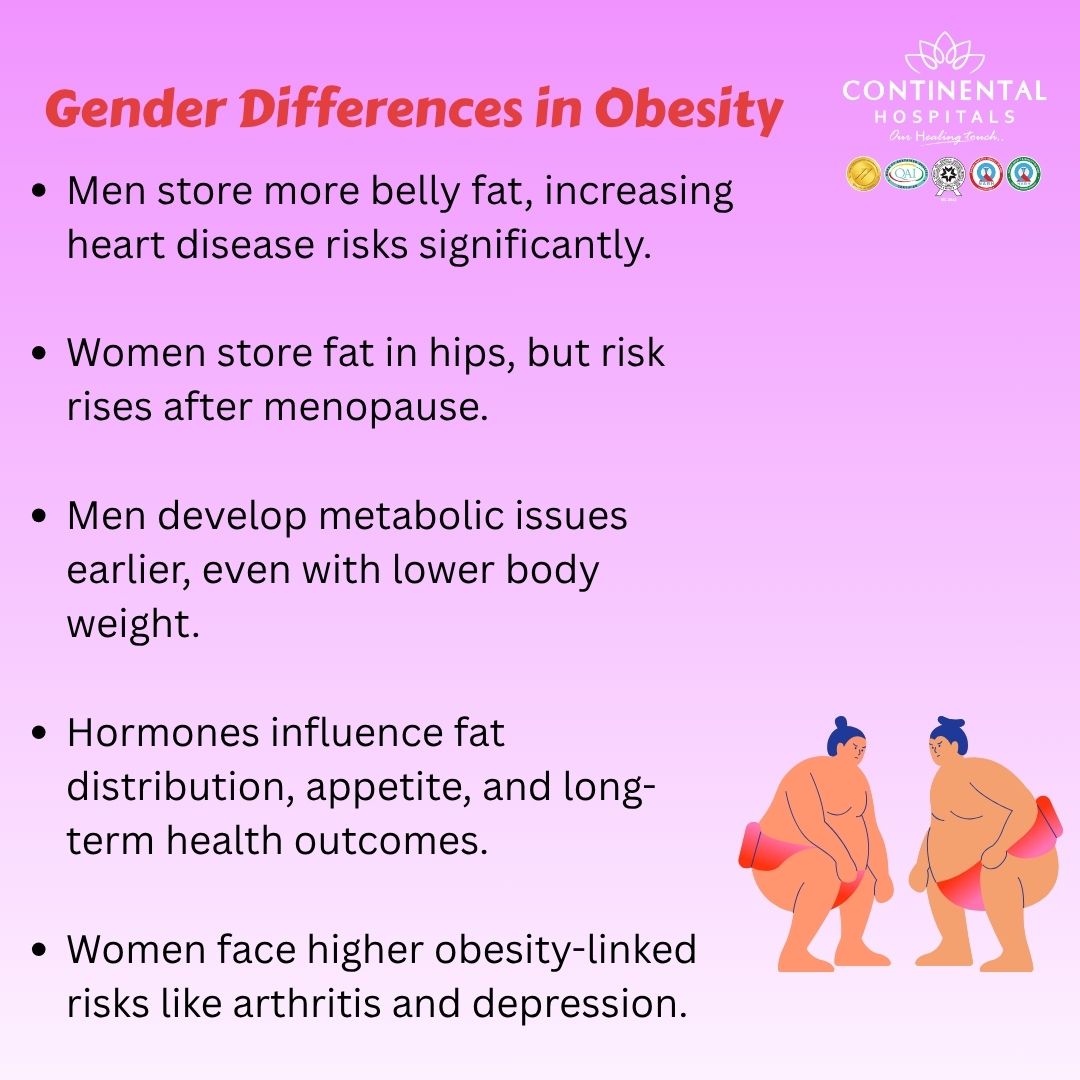
Research indicates that biological, social, and behavioral factors play distinct roles in how men and women experience weight gain. For instance, hormonal profiles significantly influence where fat is stored in the body. Women typically have a higher percentage of body fat than men. However, the distribution of this fat leads to different obesity health risks by gender.
In women, fat is often stored in the hips and thighs, creating a pear-shaped physique. While this can be difficult to lose, it is generally considered less metabolically harmful than the fat stored by men. Men are more prone to abdominal obesity, often referred to as an apple-shaped body. This visceral fat surrounds vital organs and is a major driver for metabolic complications.
Struggling with weight gain, joint pain, or metabolic issues? Visit our Endocrinology Department at Continental Hospitals for expert, personalized care today.
Obesity in Men vs Women: Key Physiological Differences
The metabolic rate and hormonal environment create a unique landscape for male vs female obesity.
Hormonal Influences
Hormones like estrogen and testosterone dictate fat storage. In women, estrogen promotes fat deposition in the lower body to support reproductive functions. As women transition into menopause, estrogen levels drop, leading to a shift where fat begins to accumulate in the abdomen, mirroring the male pattern and increasing health risks. In men, lower testosterone levels are often linked to increased body fat and decreased muscle mass, creating a cycle that makes weight loss more challenging.
Muscle Mass and Metabolism
Men generally possess more lean muscle mass than women. Since muscle tissue burns more calories at rest than fat tissue, men often have a higher basal metabolic rate. This means men might lose weight faster initially when starting a fitness regimen compared to women of the same weight.
Specific Health Risks Linked to Gender
When discussing obesity and gender, it is vital to look at the specific diseases that affect each group differently.

Health Risks for Women
- Polycystic Ovary Syndrome (PCOS): Obesity is closely linked to PCOS, which can cause hormonal imbalances, irregular periods, and infertility.
- Osteoarthritis: Because women generally have smaller joints and different bone density profiles, carrying excess weight puts significant strain on the knees and hips.
- Breast and Endometrial Cancer: Post-menopausal obesity is a significant risk factor for these types of cancers due to the increased production of estrogen in fat tissue.
Health Risks for Men
- Cardiovascular Disease: Men with abdominal obesity are at a higher risk for heart attacks and hypertension at an earlier age than women.
- Sleep Apnea: Men are statistically more likely to suffer from obstructive sleep apnea, a condition often exacerbated by excess neck fat that obstructs airways during sleep.
- Type 2 Diabetes: The visceral fat common in men is highly active and contributes to insulin resistance more aggressively.
Psychological and Social Factors
The impact of obesity extends to mental health, and here too, gender differences are evident. Women often face higher levels of social stigma regarding body weight, which can lead to higher rates of depression, anxiety, and disordered eating. Men may be less likely to seek medical help for obesity until a secondary health crisis, such as a heart issue, occurs.
Why Choose Continental Hospitals for Obesity Management?
When seeking the best hospital in Hyderabad for weight management and metabolic health, Continental Hospitals stands out as a leader in clinical excellence. We understand that obesity is not a one-size-fits-all condition. Our approach is rooted in precision medicine and compassionate care.
Accreditations and Quality Standards
Continental Hospitals is proud to be a facility that adheres to the highest global standards. We hold the prestigious Joint Commission International (JCI) accreditation, which is considered the gold standard in global healthcare. Additionally, our National Accreditation Board for Hospitals & Healthcare Providers (NABH) accreditation ensures that we maintain rigorous safety and quality protocols. These certifications reflect our commitment to providing world-class medical outcomes for every patient.
Comprehensive Care Model
Our multidisciplinary team includes expert endocrinologists, bariatric surgeons, clinical nutritionists, and psychologists. We offer a range of services from medical weight management and lifestyle coaching to advanced bariatric surgery for those with morbid obesity.
State of the Art Technology
At Continental Hospitals, we utilize advanced diagnostic tools to assess body composition and metabolic health accurately. This allows us to create personalized treatment plans that address the unique physiological needs of both men and women.
Taking the First Step Toward Health
Managing obesity requires a long term commitment and professional guidance. It is not just about the number on the scale? it is about reducing the risk of life-threatening complications and improving your quality of life. Whether you are struggling with hormonal weight gain, metabolic syndrome, or related chronic conditions, expert intervention can make a difference.
If you are concerned about your weight or how it is affecting your health, do not wait for complications to arise. Early intervention is the key to a healthier, longer life.
Conclusion
Gender plays a pivotal role in the development and health outcomes of obesity. From the way fat is distributed to the specific diseases that follow, men and women face unique challenges. By understanding these differences, healthcare providers can offer more targeted and effective treatments. Continental Hospitals remains dedicated to being the best hospital in Hyderabad by offering specialized, gender-sensitive care for obesity and its related health risks.
Are you struggling with weight-related health issues?
If you suffer from persistent weight gain, joint pain, or metabolic disorders, our specialists are here to help you regain control of your health. Consult our best endocrinologist in Hyderabad at Continental Hospitals today for a personalized evaluation.
Related Blog Topics: