.webp)


Obesity has become one of the most common health concerns today, affecting people of all ages. It is not just about appearance or body size. Obesity increases the risk of diabetes, heart disease, joint pain, hormonal imbalance, sleep disorders, and reduced quality of life. The good news is that effective Weight Loss Therapy is available, and with the right medical guidance, obesity can be managed safely and sustainably.
Understanding Obesity and Its Impact
Obesity occurs when excess body fat interferes with normal health. It is influenced by multiple factors such as unhealthy eating habits, lack of physical activity, hormonal imbalance, genetics, stress, and certain medical conditions.
If obesity is not treated early, it can lead to serious complications like
- Type 2 diabetes
- High blood pressure
- Heart disease and stroke
- Joint and spine problems
- Fatty liver disease
- Fertility issues
- Reduced energy and mental well-being
Obesity treatment is not a quick fix. It requires a structured, medically guided Weight Loss Therapy plan that focuses on long-term health rather than temporary weight reduction.
Visit our Bariatric Surgery Department at Continental Hospitals, Hyderabad. Consult expert bariatric surgeons for advanced, personalised weight loss care.
What Is Weight Loss Therapy?
Weight Loss Therapy refers to medically supervised methods used to help individuals lose weight safely and maintain it over time. It goes beyond simple diet plans and exercise routines. A proper Weight Loss Therapy program addresses metabolism, hormones, lifestyle habits, mental health, and medical conditions contributing to obesity.
Weight loss treatment for obesity generally falls into two main categories
- Medical Weight Loss Therapy
- Surgical Weight Loss Therapy
Both approaches have proven benefits when used appropriately under expert care.

Medical Weight Loss Therapy
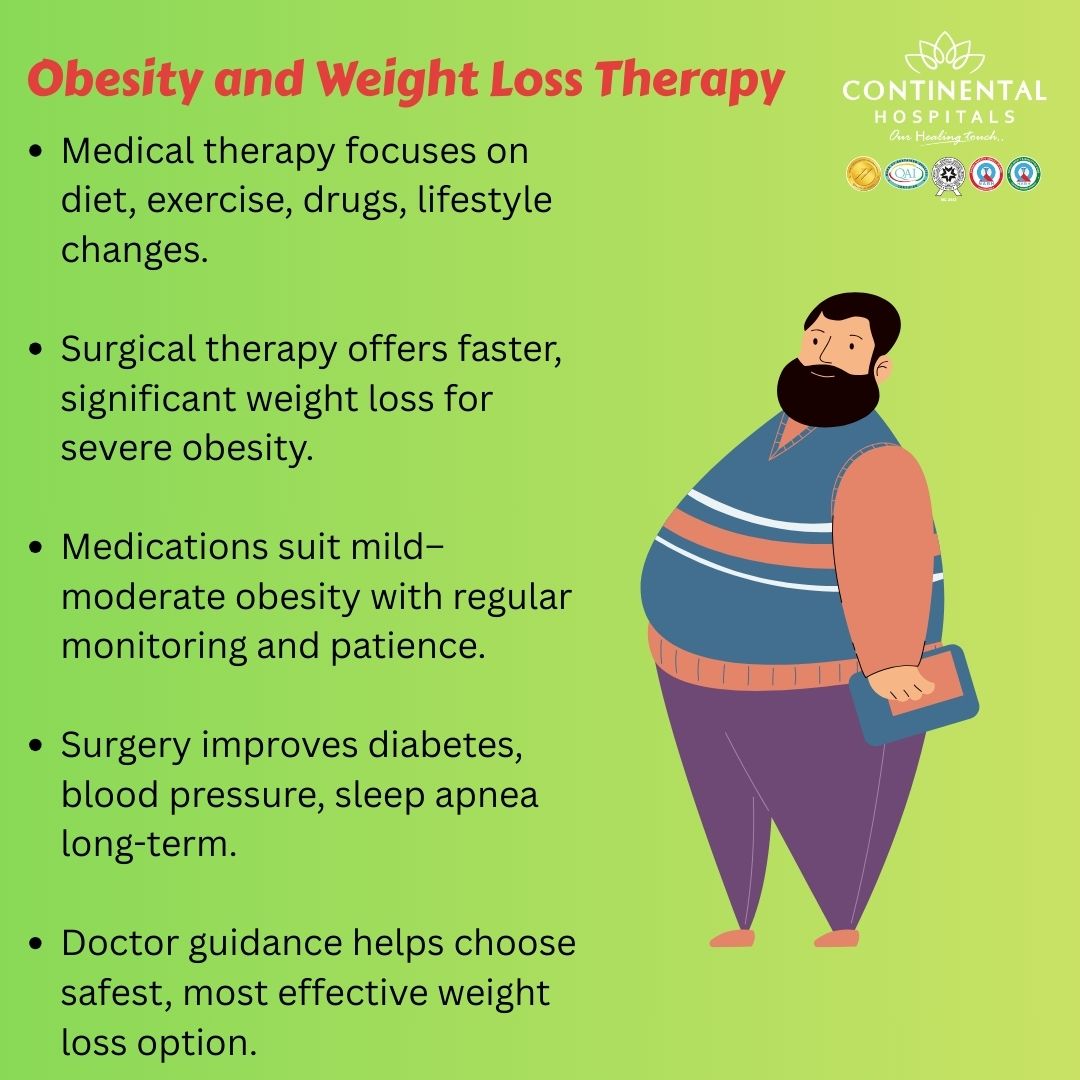
Medical Weight Loss Therapy focuses on non-surgical methods to manage obesity. It is usually recommended for individuals with mild to moderate obesity or those who prefer non-invasive options.
Key Components of Medical Weight Loss Therapy
Personalised Nutrition Planning
Doctors and dietitians design meal plans based on your body needs, medical conditions, and lifestyle. The focus is on balanced nutrition, portion control, and sustainable eating habits.
Lifestyle and Behavioural Therapy
Weight loss tips therapy includes guidance on physical activity, sleep improvement, stress management, and behavior modification. These changes help prevent weight regain.
Medical Evaluation and Monitoring
Regular follow-ups ensure progress is safe and effective. Conditions like thyroid disorders or insulin resistance are addressed alongside weight loss.
Medication Support When Needed
In some cases, doctors may prescribe approved medicines to support appetite control or metabolism, always under strict medical supervision.
Who Benefits from Medical Weight Loss Therapy?
- Individuals in early stages of obesity
- Patients with obesity-related conditions needing careful monitoring
- People looking for gradual and sustainable weight loss
- Those not suitable for bariatric surgery
Medical Weight Loss Therapy works best when patients are committed to long-term lifestyle changes.
Surgical Weight Loss Therapy
Surgical Weight Loss Therapy, commonly known as bariatric surgery or weight loss surgery, is recommended for individuals with severe obesity or those who have not achieved results with medical management alone.
What Is Bariatric Surgery?
Bariatric surgery includes procedures that help reduce food intake, improve metabolism, or both. These procedures support significant and sustained weight loss when combined with lifestyle changes.
Common Types of Weight Loss Surgery
- Procedures that reduce stomach capacity
- Procedures that limit calorie absorption
- Combination approaches that affect digestion and hunger hormones
Doctors decide the most suitable option after detailed evaluation of health conditions, weight history, and lifestyle factors.
Benefits of Surgical Weight Loss Therapy
- Significant and long-term weight reduction
- Better control of diabetes, blood pressure, and cholesterol
- Reduced joint pain and improved mobility
- Improved quality of life and energy levels
Who Should Consider Surgical Weight Loss Therapy?
- Individuals with severe obesity
- Patients with obesity-related complications
- Those who have tried medical weight loss without success
- Patients committed to long-term follow-up and lifestyle change
Surgical vs medical weight loss decisions should always be made after consulting experienced specialists.
Surgical vs Medical Weight Loss: How Do You Choose?
Choosing between surgical vs medical weight loss depends on several factors. There is no one-size-fits-all solution.
Important Factors to Consider
- Severity of obesity
- Presence of obesity-related diseases
- Previous weight loss attempts
- Overall health condition
- Personal goals and commitment
Medical Weight Loss Therapy is often the first line of treatment, while bariatric surgery is considered when medical approaches are not enough.
A comprehensive obesity management plan often combines medical care before and after surgery to ensure long-term success.
Importance of a Multidisciplinary Approach
Successful obesity treatment requires collaboration between specialists. This includes
- Bariatric surgeons
- Physicians
- Dietitians
- Psychologists
- Physiotherapists
This team-based approach ensures that both physical and emotional aspects of weight loss are addressed.
Why Choose Continental Hospitals for Weight Loss Therapy?
Continental Hospitals is recognized as one of the best hospitals in Hyderabad for advanced obesity management and Weight Loss Therapy. The hospital follows global standards of care and focuses on patient safety, outcomes, and long-term wellness.
Key Reasons to Choose Continental Hospitals
Comprehensive Obesity Management
From medical Weight Loss Therapy to advanced bariatric surgery, all treatments are available under one roof.
Experienced Specialists
Highly qualified bariatric surgeons, physicians, dietitians, and support staff work together to deliver personalised care.
Advanced Infrastructure and Technology
State-of-the-art operation theatres, modern diagnostic facilities, and advanced monitoring systems ensure safe treatment.
International Accreditations and Quality Standards
Continental Hospitals follows internationally recognised healthcare standards, reflecting its commitment to patient safety, clinical excellence, and continuous quality improvement.
Patient-Centred Care
Each treatment plan is customised based on individual needs, ensuring comfort, clarity, and confidence throughout the journey.
Long-Term Success in Weight Loss Therapy
Weight loss is not just about losing kilos. It is about improving health, mobility, confidence, and overall quality of life. Long-term success depends on
- Regular medical follow-ups
- Healthy eating habits
- Physical activity
- Emotional well-being
- Consistent guidance from healthcare experts
Whether you choose medical or surgical weight loss treatment for obesity, ongoing support plays a critical role.
Conclusion
Obesity is a complex medical condition that requires structured and professional care. With the right Weight Loss Therapy, it is possible to achieve safe, sustainable, and life-changing results. Understanding the difference between surgical vs medical weight loss helps you make informed decisions about your health.
If you are struggling with obesity and finding it difficult to lose weight despite repeated efforts, do not ignore it. Early medical intervention can prevent serious complications and improve your quality of life.
consult our best bariatric surgeons at Continental Hospitals, Hyderabad. Our experts provide comprehensive Weight Loss Therapy using advanced medical and surgical approaches, tailored to your needs, to help you regain control of your health and live a healthier life.
Related Blog Topics: