.webp)

The human nervous system is an intricate network that controls everything from your heartbeat to your deepest thoughts. Because it is so complex, even minor disruptions can have a significant impact on your daily life. Recognizing the early signs of neurological disorders is the first step toward effective management and recovery. Often, these symptoms are subtle and easily dismissed as stress or fatigue, but early intervention can make a life-changing difference.
What are neurological disorders?
Neurological disorders are conditions that affect the brain, spinal cord, and the nerves that connect them. There are hundreds of different types, including stroke, epilepsy, multiple sclerosis, and Parkinson’s disease. While each condition has unique characteristics, they often share common warning signs that indicate the nervous system is struggling to communicate properly.
Persistent headaches or unexplained weakness? Visit our best neuro doctor hyderabad at Continental Hospitals, Hyderabad, for expert evaluation and personalized care.
What are the common early symptoms of neurological disorders?
Monitoring your health involves paying attention to changes in how your body moves, feels, and processes information. Here are the most frequent neurological symptoms to watch for in yourself or your loved ones:
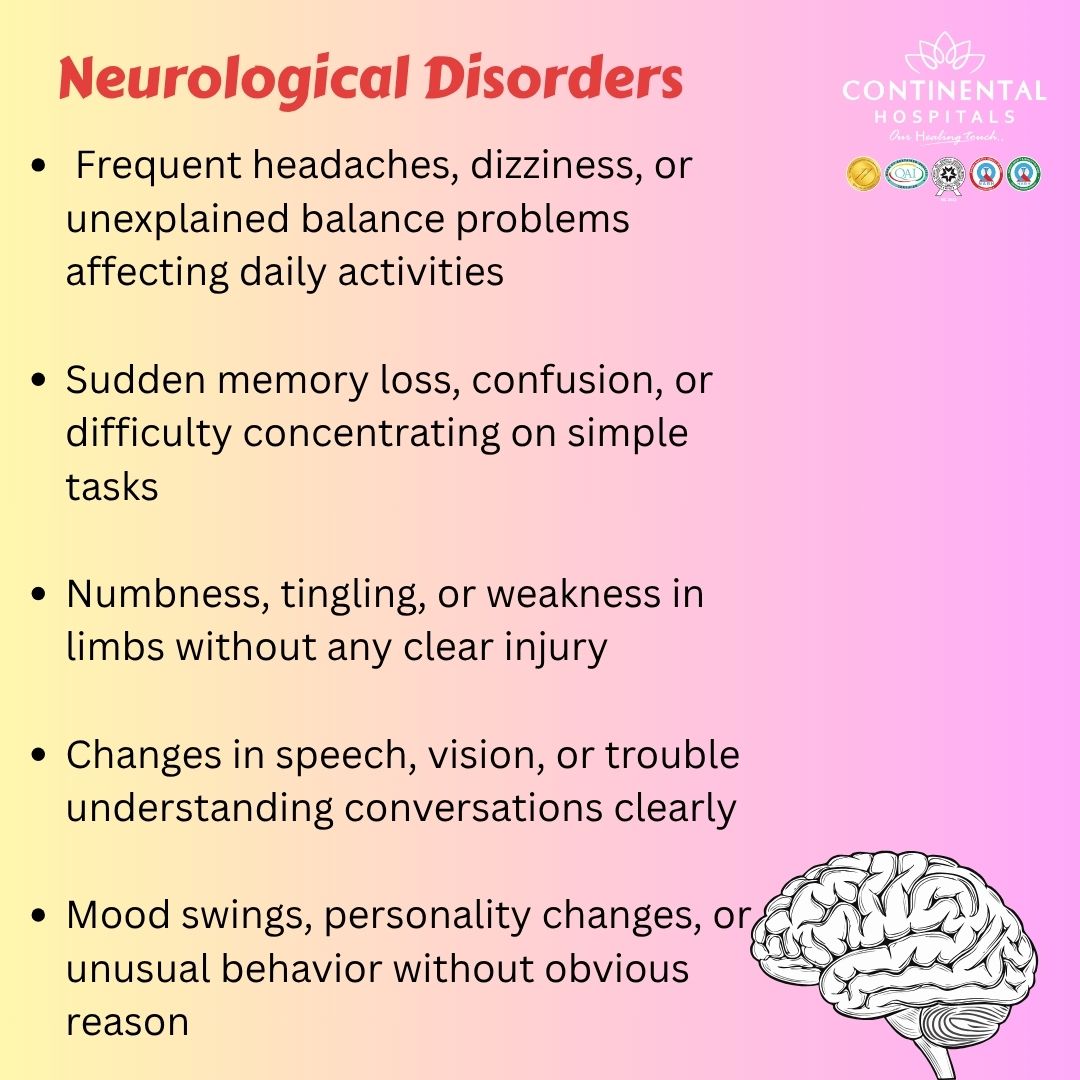
Persistent Headaches: While most headaches are harmless, a sudden, severe headache or a chronic headache that changes in intensity could be a warning sign of brain disorders.
- Memory Loss and Cognitive Changes: Forgetting recent conversations, getting lost in familiar places, or struggling to find the right words can indicate early cognitive decline.
- Numbness or Tingling: A pins and needles sensation in the arms or legs that does not go away is often among the primary nerve disorder symptoms.
- Loss of Balance or Coordination: If you find yourself stumbling frequently or feeling dizzy without an obvious cause, it may be a sign of a vestibular or cerebellar issue.
- Vision Changes: Sudden double vision, blurring, or loss of sight in one or both eyes are critical early symptoms of neurological disease.
- Muscle Weakness: Difficulty lifting objects or a feeling of heaviness in the limbs can suggest that the signals between your brain and muscles are being interrupted.
- Tremors or Involuntary Movements: Uncontrollable shaking in the hands, chin, or lips often serves as a precursor to movement disorders.
Why is early detection important in neurology?
The field of neurology has advanced rapidly, offering treatments that were unavailable just a decade ago. However, the success of these treatments often depends on how quickly the condition is diagnosed.
Brain cells are highly sensitive. In the case of conditions like a stroke, every minute counts to prevent permanent damage. For chronic conditions like Alzheimer’s or Parkinson’s, early detection allows for lifestyle modifications and medications that can significantly slow the progression of the disease and improve quality of life.
When Should You See a Specialist?
It is easy to rationalize symptoms. You might tell yourself you are just tired or that your back pain is from sitting too long. However, you should consult a specialist if you notice:
- Symptoms that are progressive (getting worse over time).
- Symptoms that interfere with your ability to perform daily tasks.
- Sudden changes in speech, such as slurring or difficulty understanding others.
- Any first-time seizure or unexplained fainting spell.
Why Choose Continental Hospitals for Neurological Care?
When it comes to your brain and spine, you deserve the highest standard of medical excellence. Continental Hospitals is widely recognized as the best hospital in Hyderabad for comprehensive neurological care. Our facility is designed to provide a seamless experience from diagnosis to rehabilitation.

World-Class Accreditations
Continental Hospitals holds prestigious accreditations, including JCI (Joint Commission International) and NABH (National Accreditation Board for Hospitals & Healthcare Providers). These certifications are a testament to our commitment to international safety standards, clinical excellence, and patient-centric care. Our adherence to these rigorous protocols ensures that every patient receives world-class treatment right here in Hyderabad.
Advanced Diagnostic Technology
Accurate diagnosis is the foundation of effective treatment. Our neurodiagnostic lab is equipped with the following:
- High-definition MRI and CT imaging for detailed brain mapping.
- Advanced EEG and EMG studies to monitor electrical activity in the brain and muscles.
- Specialized neuro-angiography for vascular conditions.
Multidisciplinary Approach
At Continental Hospitals, we believe in a team-based approach. Our neurologists work closely with neurosurgeons, radiologists, and rehabilitation therapists to create a personalized treatment plan tailored to your specific needs. This collaborative environment ensures that all aspects of your health are addressed under one roof.
How Can You Take Control of Your Neurological Health?
Prevention and awareness are your best tools. While some neurological disorders are genetic, others can be influenced by lifestyle. Maintaining a heart-healthy diet, staying physically active, and engaging in mental exercises can help protect your brain as you age.
If you or a family member experiences any of the early signs of neurological disorders mentioned above, do not wait for the symptoms to become severe. A simple consultation can provide the clarity and peace of mind you need.
Conclusion
Your neurological health is the pillar of your overall well-being. By staying informed about early symptoms of neurological disease and choosing a trusted healthcare partner, you can navigate these challenges with confidence. Whether it is a minor nerve issue or a complex brain condition, the right care at the right time is essential.
If you suffer from persistent headaches, unexplained weakness, or any of the symptoms discussed, reach out to our experts today. Consult our best neurologist in Hyderabad at Continental Hospitals for a comprehensive evaluation and personalized care plan.
Related Blog Topics: