.webp)


The journey to lose weight is often fueled by a desire for quick results. When you decide to transform your health, the immediate urge is to see a different number on the scale as fast as possible. However, the debate between slow weight loss and fast weight loss is about more than just speed. It is about sustainability, metabolic health, and long-term success.
To lose weight effectively, one must understand how the body responds to different rates of reduction. While the allure of shedding pounds in a few days is strong, the science of physiology often favors a more measured approach.
Understanding Fast Weight Loss
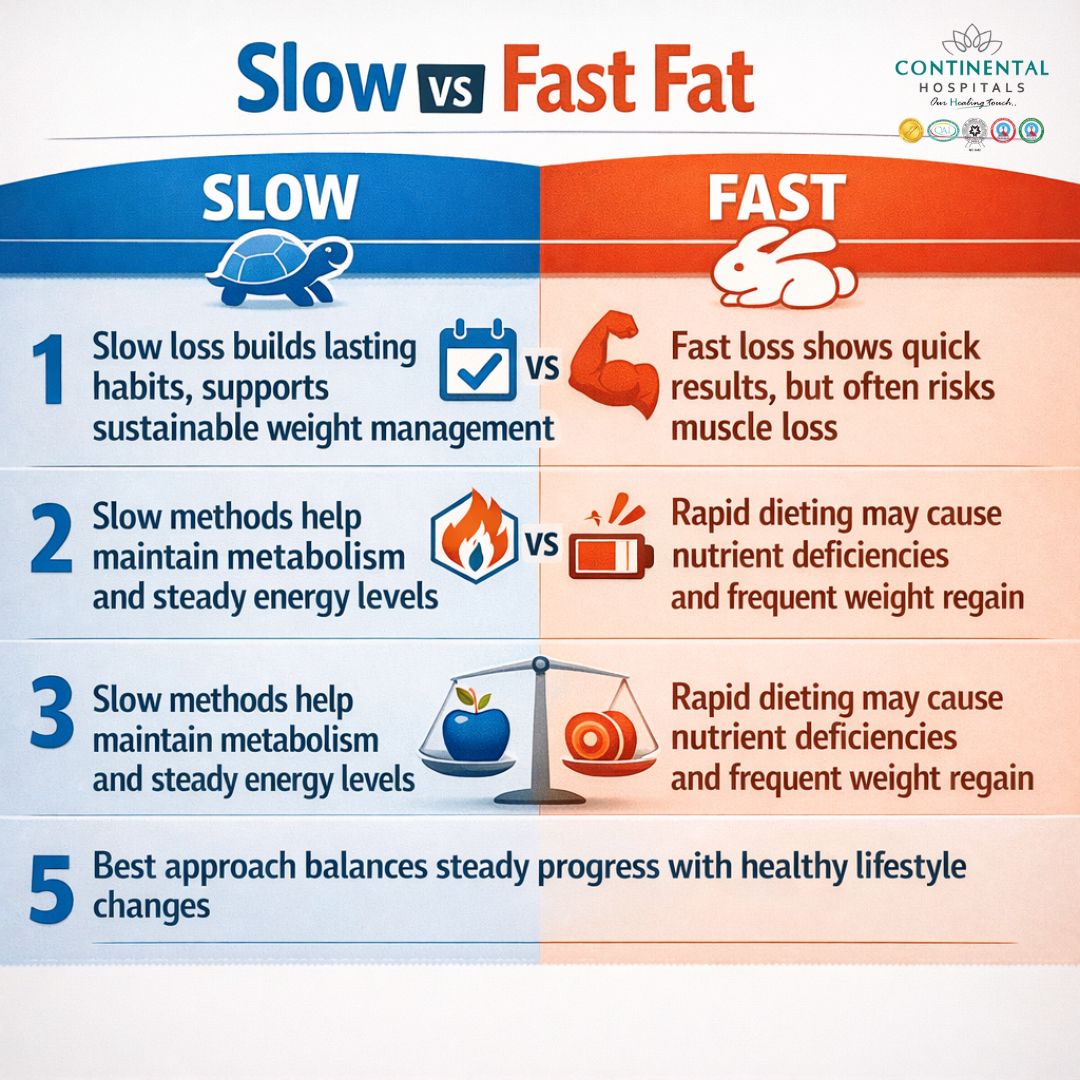
Fast weight loss is typically defined as losing more than one kilogram per week. This is often achieved through significant calorie restriction or intense physical regimens. While it provides immediate mental satisfaction, it comes with specific physiological trade-offs.
When you attempt to lose weight rapidly, the body often pulls energy from muscle tissue and water weight rather than just fat stores. This can lead to a drop in your basal metabolic rate, meaning your body burns fewer calories at rest. For many, this rapid shift is difficult to maintain, leading to a cycle where the weight is regained just as quickly as it was lost.
If you suffer from obesity or metabolic disorders, consult experts at Continental Hospitals. Visit our endocrinology department today.
The Case for Slow Weight Loss
Slow weight loss is generally categorized as losing 0.5 to 1 kilogram per week. This pace is widely recommended by healthcare professionals because it allows the body to adjust to new habits without triggering a starvation response.
Choosing to lose weight slowly helps preserve lean muscle mass. Muscle is metabolically active; the more you have, the more calories you burn throughout the day. Furthermore, a gradual approach allows for the development of sustainable eating habits and a healthier relationship with food. It focuses on permanent lifestyle changes rather than temporary fixes.
Key Differences: At a Glance
- Sustainability: Slow weight loss is easier to maintain over years, while fast weight loss often leads to weight fluctuations.
- Nutritional Adequacy: Gradual plans usually allow for a wider variety of foods, ensuring you do not suffer from vitamin or mineral deficiencies.
- Skin Elasticity: Losing weight at a steady pace gives the skin more time to retract, potentially reducing the appearance of sagging skin.
- Energy Levels: Drastic calorie cuts can lead to fatigue and irritability, whereas a balanced approach keeps energy levels stable for daily tasks.
Practical Tips to Lose Weight Effectively
Regardless of the speed, the goal should always be fat loss rather than just weight loss. Here are essential strategies to help you on your journey:

- Prioritize Protein Intake: Protein helps keep you full and protects your muscles during a calorie deficit.
- Incorporate Strength Training: Building muscle is a proactive way to ensure your metabolism stays high while you lose weight.
- Stay Hydrated: Sometimes the brain confuses thirst with hunger. Drinking water consistently can prevent overeating.
- Focus on Whole Foods: Processed foods are often calorie-dense but nutrient-poor. Opt for vegetables, lean meats, and complex carbohydrates.
- Monitor Sleep Patterns: Lack of sleep disrupts hormones that control hunger, making it much harder to lose weight the next day.
Why Choose Continental Hospitals for Your Weight Loss Journey?
Achieving a healthy weight is a medical milestone that often requires professional guidance. At Continental Hospitals, we provide a holistic environment to help you lose weight safely and scientifically.
We are proud to be recognized as the best hospital in Hyderabad, offering world-class infrastructure and a patient-centric approach. Our facility is backed by prestigious national and international accreditations, including JCI (Joint Commission International) and NABH (National Accreditation Board for Hospitals & Healthcare Providers). These certifications ensure that the care you receive meets the highest global standards for safety and quality.
Our multidisciplinary team works together to create personalized plans that address the root causes of weight gain, whether they are hormonal, lifestyle-based, or metabolic. We believe that weight management is not a one-size-fits-all solution but a journey that deserves expert supervision.
The Biological Impact of Weight Loss
When you begin to lose weight, your body undergoes a series of complex changes. Initially, you might notice a drop in inflammation and an improvement in blood pressure. However, if the deficit is too aggressive, the body may increase the production of ghrelin, the hunger hormone, while decreasing leptin, the hormone that tells you that you are full.
This hormonal shift is why many people find it hard to lose weight after the initial few weeks of a "crash diet." By opting for a professional, clinical approach, you can navigate these hormonal hurdles with the help of experts who understand the science of obesity and metabolism.
Long-term Success and Fat Loss
The ultimate winner in the "slow vs fast" debate is the method that keeps the weight off for good. Statistics show that individuals who lose weight gradually are significantly more likely to keep it off compared to those who follow extreme programs.
To lose weight and maintain that loss, you must focus on the quality of your calories and the consistency of your movement. Small, incremental changes—such as walking ten thousand steps a day or replacing sugary drinks with water—accumulate into massive results over time.
Conclusion
The path to a healthier version of yourself is a marathon, not a sprint. While the temptation to lose weight fast is understandable, the benefits of a slow and steady approach are backed by clinical evidence. By focusing on sustainable habits, nutritional balance, and professional support, you can achieve a transformation that lasts a lifetime.
If you are struggling to lose weight or are concerned about how your weight is affecting your overall health, it is time to seek expert advice. Taking the first step toward a healthier lifestyle is easier when you have a dedicated team supporting you.
If you suffer from obesity, metabolic disorders, or weight-related health complications, consult our best endocrinologist in Hyderabad at Continental Hospitals.
Related Blog Topics: