.webp)

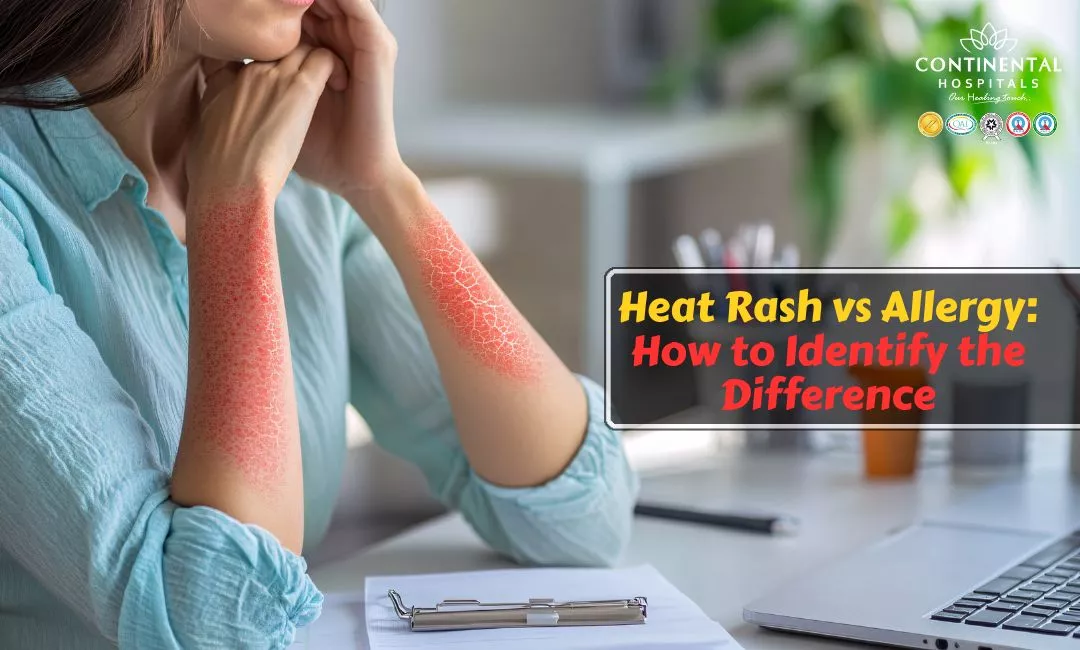
Skin irritations are incredibly common, especially in warm climates like Hyderabad. When you wake up with a red, itchy patch of skin, your first instinct is often to wonder what caused it. Is it the sweltering heat, or did you have a reaction to something you ate or touched? Understanding the difference between a heat rash vs allergy is essential for choosing the right treatment and finding relief quickly.
While both conditions can look similar at a glance, they have distinct causes, symptoms, and behaviors. This guide will help you navigate the nuances of these skin conditions and understand when it is time to seek professional medical advice.
What is Heat Rash?
Heat rash, medically known as miliaria, occurs when your sweat ducts become blocked. Instead of evaporating, sweat stays trapped beneath the skin, leading to inflammation and a characteristic rash. This is most common in hot, humid weather or during intense physical activity that leads to excessive sweating.
There are three main types of heat rash:
Miliaria Crystallina: The mildest form, affecting the sweat ducts in the top layer of skin. It looks like small, clear, fluid-filled blisters that break easily.
Miliaria Rubra: Occurs deeper in the skin. This type is often called prickly heat because it causes red bumps and an intense itchy or prickly sensation.
Miliaria Profunda: A less common form that affects the deeper layer of the dermis, resulting in firm, flesh-colored lesions.
Persistent skin irritation? Don’t wait. Get expert care at Continental Hospitals—visit our dermatology department today for relief.
What is a Skin Allergy?
A skin allergy is an immune system response to a foreign substance that is normally harmless. When your skin comes into contact with an allergen, your body releases chemicals like histamine, which trigger inflammation.

Common triggers for skin allergies include:
- Fragrances or chemicals in soaps and detergents
- Certain metals like nickel
- Latex
- Specific foods or medications
- Pollen or pet dander
Allergic reactions can manifest as contact dermatitis, hives (urticaria), or eczema flares. Unlike heat rash, which is purely physical, an allergy is a biological overreaction.
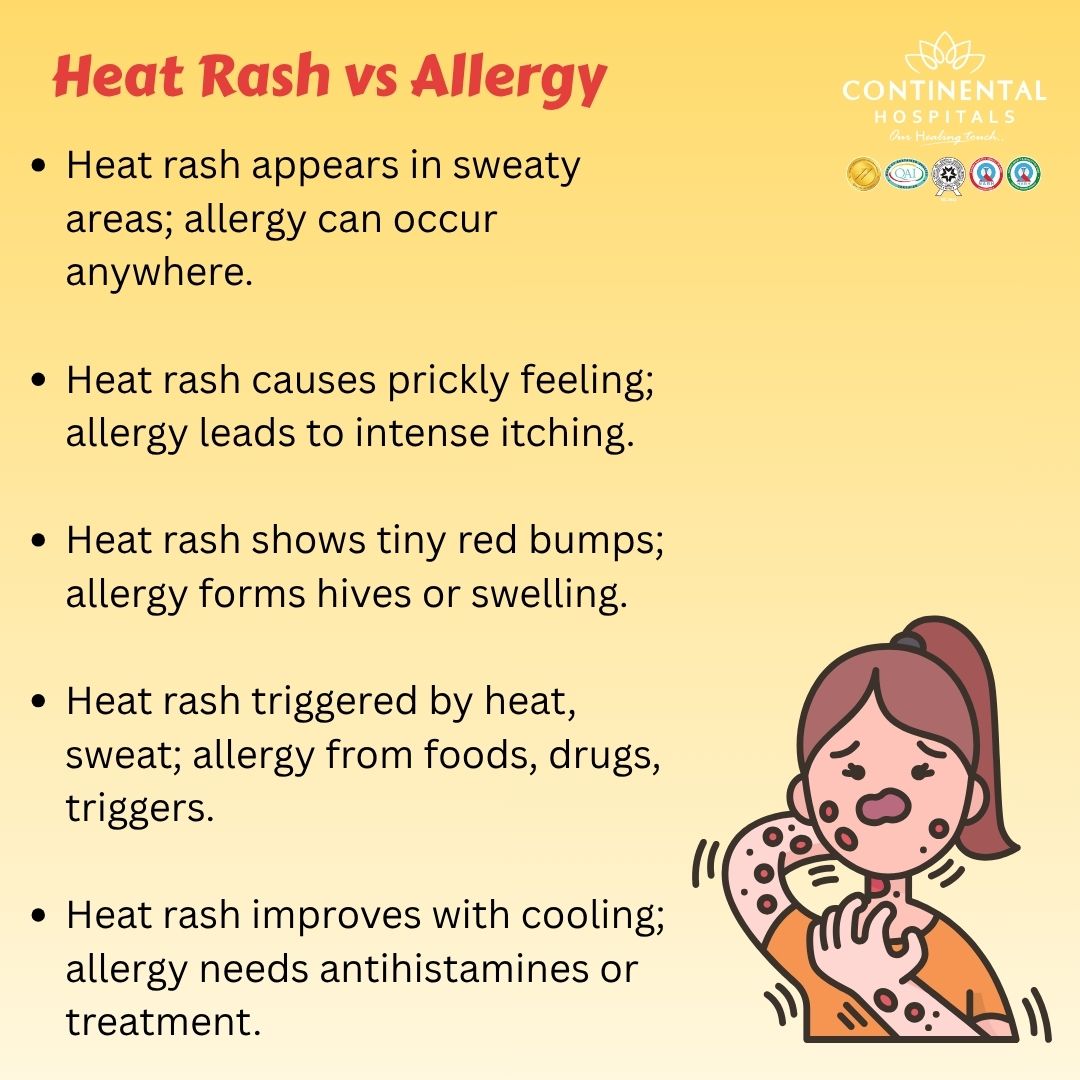
Heat Rash vs Allergy: Key Differences in Symptoms
Identifying the cause of your discomfort requires looking closely at how the rash behaves and where it appears.
1. Visual Appearance
A heat rash usually looks like clusters of tiny red pimples or small blisters. It often appears in areas where skin folds or where clothing causes friction, such as the neck, armpits, groin, or under the breasts.
In contrast, an allergic reaction can vary significantly in appearance. It may look like flat red patches, raised welts (hives), or dry, scaly skin. Allergies often appear on the part of the body that touched the allergen, though hives can spread across the entire body.
2. Physical Sensation
Heat rash is famously prickly. It feels like a stinging or itchy sensation that worsens with heat. If you move into a cool, air-conditioned room, the sensation often calms down quickly.
Allergies are usually intensely itchy. In some cases, such as contact dermatitis, the skin might feel like it is burning or stinging rather than just itching. If the allergy is severe, you might also experience swelling in the affected area.
3. Duration and Triggers
Heat rash usually subsides within a few days once the skin is kept cool and dry. If you stop sweating and the rash persists, it might not be heat-related.
An allergic rash will likely persist as long as you are in contact with the allergen. It may take several days or even weeks to disappear entirely, even after the trigger is removed.
Understanding Heat Rash Causes and Types
To effectively manage skin health, one must understand why these issues occur. Heat rash is driven by environmental factors. High humidity prevents sweat from evaporating, while tight clothing can trap moisture against the skin. Infants are particularly susceptible because their sweat ducts are not yet fully developed.
Skin allergies, however, are driven by your unique biology. You might develop an allergy to a product you have used for years because the immune system can become sensitized over time.
Heat Rash Treatment and Management
- Most cases of heat rash can be managed at home by focusing on cooling the skin.
- Wear loose-fitting cotton clothing that allows the skin to breathe.
- Use cool compresses on the affected areas to reduce inflammation.
- Take cool baths or showers and let the skin air dry.
- Avoid using heavy creams or ointments that can further block the pores.
- Spend time in air-conditioned or well-ventilated environments.
- For more stubborn cases, over-the-counter calamine lotion or mild hydrocortisone creams may help soothe the irritation.
Managing Skin Allergy Symptoms
Treating an allergy starts with identifying and removing the trigger.
- Wash the skin thoroughly if you suspect you touched an irritant.
- Use oral antihistamines to reduce the body's immune response.
- Apply soothing fragrance-free moisturizers to repair the skin barrier.
- For severe reactions, a physician may prescribe stronger topical or oral steroids.
Why Choose Continental Hospitals for Skin Concerns?
When skin irritations become persistent, painful, or widespread, seeking expert care is vital. Continental Hospitals is recognized as the best hospital in Hyderabad for comprehensive dermatological and systemic care.
Clinical Excellence and Accreditations
Continental Hospitals holds prestigious accreditations, including JCI (Joint Commission International) and NABH (National Accreditation Board for Hospitals & Healthcare Providers). These certifications are a testament to our commitment to maintaining international standards of patient safety and clinical quality. Our protocols ensure that every patient receives evidence-based treatment in a safe environment.
Advanced Diagnostic Facilities
Our dermatology department is equipped with modern diagnostic tools to accurately differentiate between various skin conditions. Whether you need patch testing for allergies or specialized imaging for chronic skin issues, our facility provides rapid and precise results.
Multidisciplinary Approach
Skin issues are sometimes symptoms of underlying systemic problems. At Continental Hospitals, our dermatologists work closely with allergists, immunologists, and internal medicine specialists to provide a holistic treatment plan. This collaborative environment ensures that we don't just treat the rash, but we address the root cause.
When to See a Doctor?
While many rashes are minor, you should consult a specialist if you notice any of the following:
- The rash is spreading rapidly across your body.
- You develop a fever or chills along with the skin irritation.
- The rash begins to blister or becomes extremely painful.
- There are signs of infection, such as pus, increased swelling, or warmth in the area.
- The rash does not improve after several days of home care.
Differentiating between heat rash vs allergy is the first step toward clear, healthy skin. By paying attention to the location, sensation, and triggers of your rash, you can take the necessary steps to find relief.
Conclusion
Whether you are dealing with the seasonal discomfort of heat rash or the complexities of a skin allergy, understanding your body is key. Preventive measures like staying cool and using hypoallergenic products can go a long way. However, when home remedies aren't enough, professional intervention is necessary to prevent complications and ensure a speedy recovery.
If you suffer from persistent skin irritation or cannot determine the cause of your discomfort, do not wait for the condition to worsen. Expert guidance can provide the clarity and relief you need to return to your daily life comfortably. Consult our best dermatologist in Hyderabad today at Continental Hospitals for expert diagnosis and personalized treatment plans.
Related Blog Topics: