.webp)

The pursuit of glowing, flawless skin has led many to adopt complex multi-step routines. With an endless array of serums, exfoliants, and creams available, it is easy to fall into the trap of thinking that more is always better. However, the overuse of skincare products can often lead to the very problems you are trying to solve. Understanding the delicate balance of your skin is essential to maintaining its health and natural radiance.
The Science of Your Skin Barrier
To understand why the overuse of skincare products is harmful, one must first understand the skin barrier. Think of your skin as a protective shield. The outermost layer, known as the stratum corneum, acts as a brick-and-mortar structure that keeps moisture in and harmful irritants out.
When you apply too many skincare products, especially those with high concentrations of active ingredients, you risk stripping away the natural oils that hold this barrier together. A damaged skin barrier cannot effectively protect itself, leading to moisture loss and increased sensitivity. This often results in a cycle where individuals apply even more products to fix the irritation, further exacerbating the issue.
Persistent skin issues? Don’t delay care. Prevent scarring and restore skin health—visit our Dermatology Department at Continental Hospitals today.
Common Skincare Routine Mistakes
Many people unknowingly commit skincare routine mistakes by following trends rather than listening to their skin. Some of the most frequent errors include:
Layering Incompatible Actives: Combining Retinol with Vitamin C or mixing multiple AHAs and BHAs can overwhelm the skin, leading to chemical burns or extreme dryness.
Over-Exfoliation: Using physical scrubs and chemical exfoliants too frequently is a leading cause of damaging skin. Exfoliation should assist cell turnover, not raw-strip the surface.
Skipping Moisturizer: Those with oily skin often believe they do not need hydration, but failing to moisturize can cause the skin to overproduce oil, leading to breakouts.
Ignoring Sun Protection: Using powerful treatments without daily SPF makes the skin highly vulnerable to UV damage.

Recognizing Skincare Overuse Side Effects
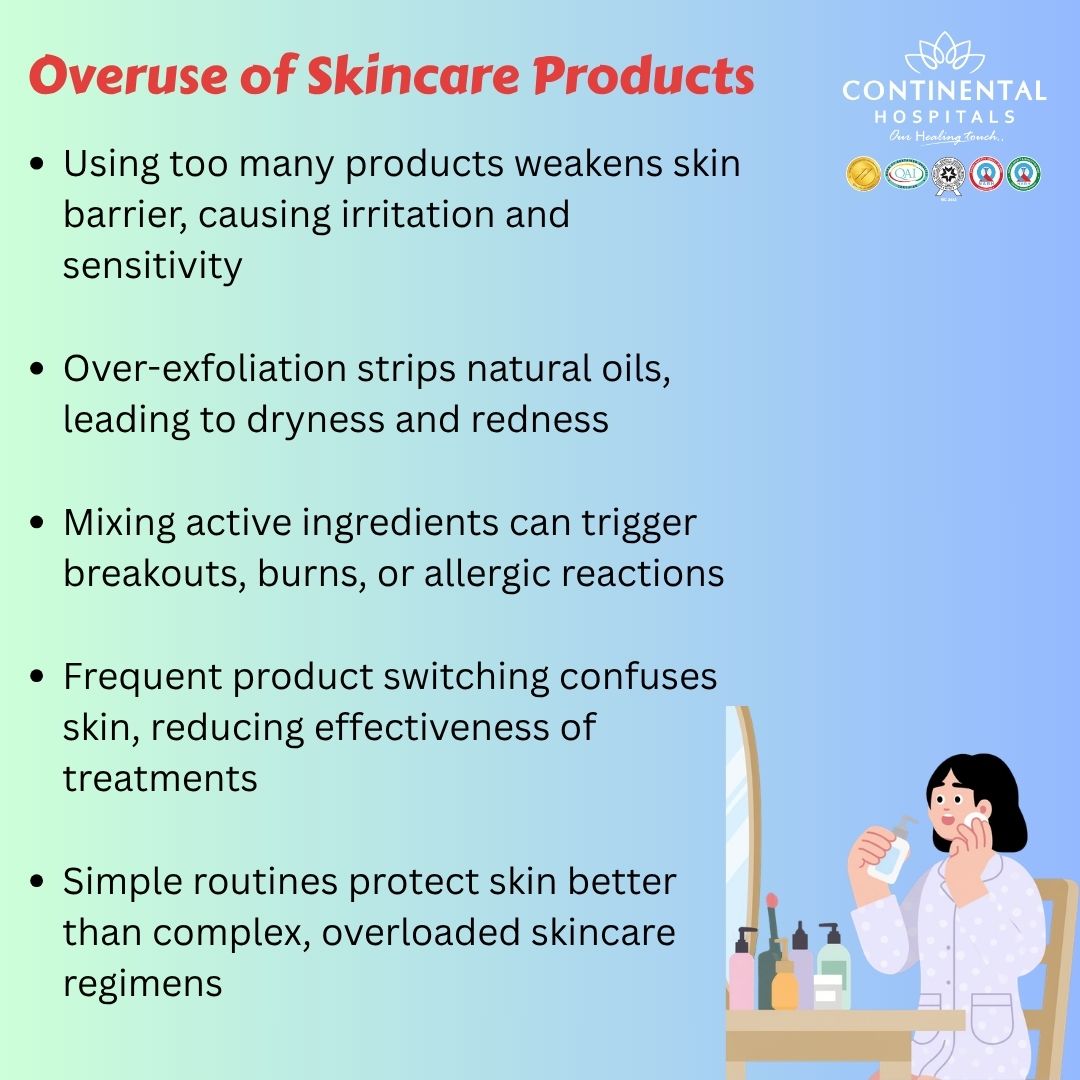
How do you know if you are doing too much? Your skin has several ways of signaling that it is stressed. If you notice these symptoms, it may be time to scale back:
Persistent Redness and Inflammation: If your face feels hot or looks flushed long after your routine, your products may be too harsh.
Increased Sensitivity: Products that used to feel fine might suddenly sting or itch upon application.
Unexpected Breakouts: A damaged skin barrier allows bacteria to enter more easily, which can trigger acne even in people who typically have clear skin.
Dry, Flaky Patches: Even if your skin type is oily, skincare overuse side effects can manifest as rough, peeling areas that feel tight.
An Unnatural Waxy Shine: When the skin is over-exfoliated, it may look shiny or plastic-like. This is not a healthy glow; it is a sign that the texture has been thinned dangerously.
How to Heal Damaged Skin
If you suspect you are suffering from the overuse of skincare products, the first step is to simplify. Reverting to a "skincare fast" allows the skin to reset and repair itself.
The Minimalist Approach
Focus on three core pillars: a gentle cleanser, a barrier-repairing moisturizer, and a broad-spectrum sunscreen. Avoid all active ingredients like acids, retinoids, or brightening agents for at least two to three weeks. Look for ingredients such as ceramides, hyaluronic acid, and fatty acids, which help rebuild the lipid layer.
Reintroducing Products
Once the irritation subsides, do not jump back into a ten-step routine. Introduce one product at a time and monitor how your skin reacts over a week. This "patch testing" phase ensures that you identify exactly which product provides a benefit and which one causes distress.
Essential Components of a Balanced Routine
Healthy skin does not require a vast cabinet of skincare products. A sustainable routine usually consists of:
Cleansing: Removing dirt and pollutants without stripping natural moisture.
Hydration: Attracting water to the skin cells.
Moisturization: Sealing in that water and supporting the barrier.
Protection: Guarding against environmental damage and UV rays.
By focusing on quality over quantity, you ensure that each step serves a specific purpose without causing damaging skin reactions.
Why Choose Continental Hospitals for Skin Health?
Continental Hospitals is recognized as the best hospital in Hyderabad for comprehensive dermatological care. We understand that skin health is often a reflection of internal well-being. Our approach combines advanced clinical expertise with a focus on patient education to ensure long-term results.
International Standards and Accreditations
At Continental Hospitals, we take pride in our commitment to global healthcare standards. Our facility holds the prestigious JCI (Joint Commission International) accreditation, which is the gold standard in global healthcare. Additionally, we are NABH (National Accreditation Board for Hospitals & Healthcare Providers) accredited, ensuring that every patient receives the highest quality of safety and clinical care. These certifications reflect our dedication to maintaining rigorous protocols in every treatment we provide.
Expert Dermatologists
Our Department of Dermatology features some of the most experienced specialists in the region. We utilize state-of-the-art diagnostic tools to analyze skin conditions at a cellular level. Whether you are dealing with a damaged skin barrier from product misuse or complex chronic skin conditions, our team provides personalized treatment plans tailored to your specific needs.
Conclusion
Your skin is a living, breathing organ that requires care, not combat. While the variety of skincare products on the market is exciting, your routine should prioritize health over trends. Avoiding the overuse of skincare products is the simplest way to maintain a youthful, resilient complexion. If you find that your skin is not responding to home care or if you are experiencing severe skincare overuse side effects, seeking professional medical advice is the most responsible next step.
If you suffer from persistent skin irritation, chronic acne, or signs of a severely compromised skin barrier, do not wait for the condition to worsen. Expert intervention can prevent permanent scarring and restore your skin’s natural health. Book an appointment with our best dermatologist in Hyderabad at Continental Hospitals today.
Related Blog Topics: