.webp)

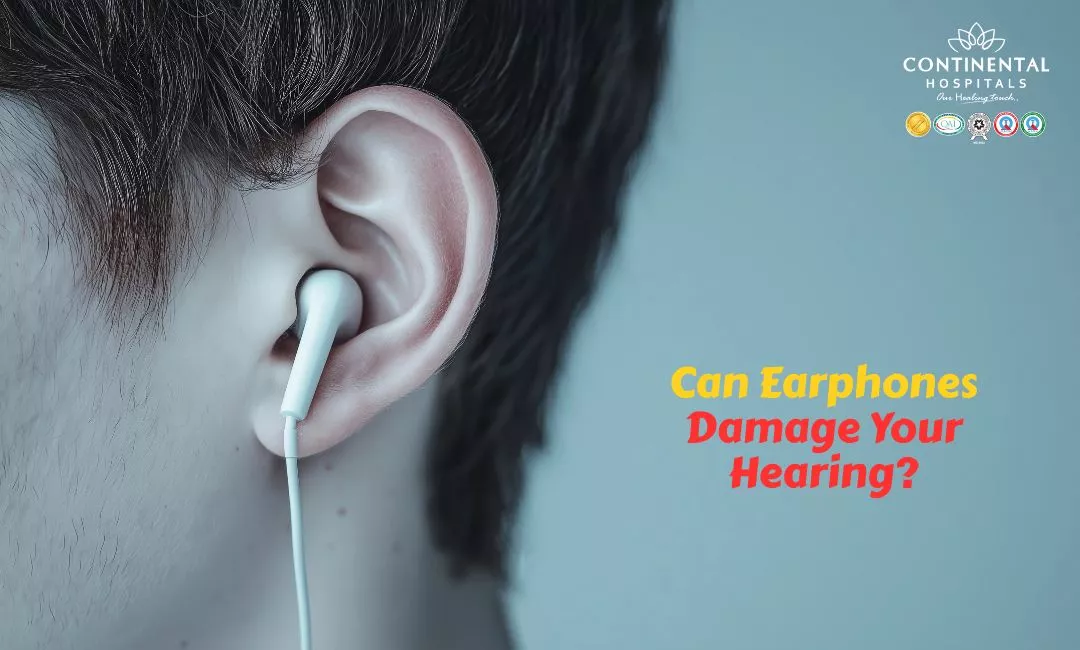
In the modern digital era, whether you are commuting to work, exercising at the gym, or focusing in a busy office, earphones have become an essential accessory. We use them for music, podcasts, and endless virtual meetings. However, as these devices become more integrated into our daily routines, a critical health question arises: Can earphones damage your hearing?
The short answer is yes. While earphones provide convenience and privacy, improper use can lead to permanent auditory complications. Understanding how these devices interact with your ears is the first step toward protecting your long-term health.
How Earphones Affect Your Auditory System
To understand how earphones cause damage, it is helpful to look at how we hear. Sound waves travel through the ear canal and hit the eardrum, causing it to vibrate. These vibrations reach the cochlea, a fluid-filled structure in the inner ear that contains thousands of tiny hair cells. These hair cells convert vibrations into electrical signals that the brain interprets as sound.
When you use earphones at high volumes, you are directing powerful sound waves straight into the ear canal. This intense pressure can stress or even kill the delicate hair cells in the cochlea. Unlike some other cells in the human body, these hair cells do not regenerate. Once they are gone, the resulting hearing loss is permanent.
If you have persistent ringing, ear pain, or hearing changes, don’t delay—visit our ENT specialist department in Hyderabad for expert care today.
The Problem with Proximity and Volume
The design of earphones, especially earbuds that sit directly inside the ear canal, naturally increases the intensity of the sound. Because the sound source is so close to the eardrum, the volume can be boosted by as much as 7 to 9 decibels compared to over-the-ear headphones. Many personal audio devices can reach levels of 100 decibels or higher. At these levels, permanent damage can occur in as little as fifteen minutes of daily exposure.
Common Signs of Hearing Damage
Hearing loss often happens gradually. You might not notice it until it significantly impacts your quality of life. Here are several signs that your earphone habits might be affecting your ears:
- Tinnitus: This is a persistent ringing, buzzing, or hissing sound in the ears that occurs even when there is no external noise.
- Muffled Hearing: Feeling as though your ears are "plugged" or that people are mumbling during regular conversation.
- Difficulty in Crowds: Finding it hard to distinguish specific voices when there is background noise.
- Hypersensitivity: Finding certain everyday sounds painfully loud or jarring.
- Increasing the Volume: Noticing that you consistently need to turn the volume higher than you used to just to hear clearly.
If you recognize any of these symptoms, it is vital to seek a professional evaluation immediately.

Best Practices for Safe Listening
You do not have to give up your favorite audio content to stay safe. By following a few simple guidelines, you can enjoy your earphones while minimizing the risk to your hearing.
The 60/60 Rule
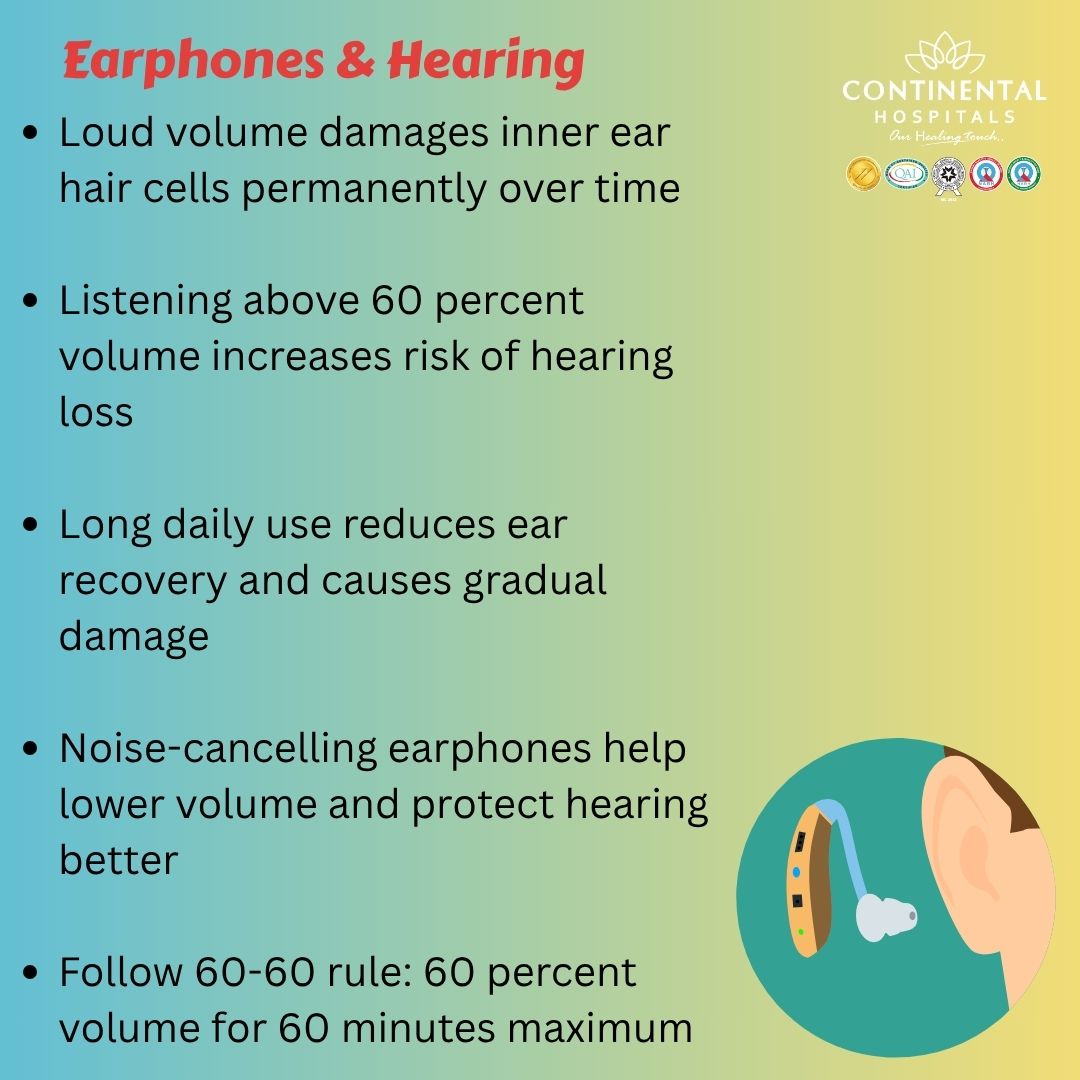
One of the most effective ways to protect your ears is the 60/60 rule. This means listening at no more than 60 percent of the maximum volume for no more than 60 minutes at a time. This gives your ears the necessary breaks to recover from sound pressure.
Choose Noise-Canceling Options
Often, we turn up the volume of our earphones to drown out background noise like traffic or office chatter. Noise-canceling headphones use technology to reduce external sounds, allowing you to hear your music clearly at much lower, safer volumes.
Use Over-the-ear headphones
Whenever possible, opt for over-the-ear headphones rather than earbuds. Because they sit outside the ear, they create a natural buffer that reduces the direct pressure on the eardrum.
Monitor Your Environment
If the person sitting next to you can hear what you are listening to through your earphones, the volume is too high. Use this as a simple gauge to keep your levels in check.
Why Choose Continental Hospitals for Ear Health?
When it comes to your health, especially a sense as vital as hearing, you deserve the highest standard of care. Continental Hospitals stands out as a leader in clinical excellence in Hyderabad. Our facility is designed to provide comprehensive diagnostic and therapeutic services under one roof.
Global Standards and Accreditations
Continental Hospitals is widely recognized for its commitment to safety and quality. We take pride in our prestigious accreditations, including Joint Commission International (JCI) and National Accreditation Board for Hospitals & Healthcare Providers (NABH). These certifications reflect our adherence to strict global protocols, ensuring that every patient receives international-quality treatment.
Advanced Diagnostic Technology
Our audiology department is equipped with the latest technology to detect hearing loss at its earliest stages. From sophisticated audiometry tests to specialized pediatric hearing screenings, we use high-precision tools to provide accurate results.
Multidisciplinary Approach
At Continental Hospitals, we believe in treating the person, not just the symptom. Our ENT specialists work closely with neurologists and rehabilitative experts to ensure that if hearing damage is detected, you have access to a full spectrum of care, including hearing aids, surgical interventions, or therapy.
Patient-Centric Environment
Located in the heart of the city, we are recognized as a best hospital in Hyderabad because of our focus on patient comfort and transparency. Our experts take the time to explain your condition and involve you in every step of the treatment plan.
Steps to Prevent Hearing Loss
Prevention is always more effective than treatment. In addition to managing earphone use, consider these daily habits:
Carry Earplugs: If you know you will be in a loud environment like a concert or a construction zone, use earplugs to reduce the decibel load.
Get Regular Checkups: Just as you visit the dentist, you should have your hearing tested periodically, especially if you work in a loud profession or use earphones daily.
Stay Healthy: Good cardiovascular health improves blood flow to the ears, which helps keep the internal structures of the cochlea healthy.
Give Ears Rest: If you have been in a loud environment, give your ears at least sixteen hours of quiet time to recover.
Conclusion
Your hearing is an irreplaceable asset that connects you to the world and the people you love. While earphones are a wonderful piece of technology, they must be used with respect for your physiological limits. By maintaining moderate volume levels, taking frequent breaks, and choosing the right equipment, you can prevent permanent hearing damage and enjoy your audio for years to come.
Do not ignore the warning signs. Early intervention is the key to managing hearing loss and maintaining your quality of life.
If you suffer from persistent ringing in the ears, ear pain, or a sudden change in your ability to hear, consult our best ENT specialist in Hyderabad today.
Related Blog Topics: