.webp)

The rising temperatures in Hyderabad call for more than just switching on the air conditioner. Your body works overtime during the warmer months to maintain a stable internal temperature, a process known as thermogenesis. What you choose to put on your plate significantly impacts how well your body handles the heat. While it is tempting to reach for spicy delicacies or heavy street food, certain choices can lead to dehydration, indigestion, and heat exhaustion.
Maintaining a proper summer diet is about choosing items that have high water content and are easy to digest. Conversely, consuming the wrong items can increase internal body heat and lead to discomfort. Here is a comprehensive guide on the foods to avoid in summer to ensure you stay energized and hydrated throughout the season.
Why Your Diet Matters During the Summer Months
In hot weather, the digestive system often becomes more sensitive. The body diverts blood flow toward the skin to assist with cooling through sweat, which can sometimes slow down the digestive process. Eating heavy or heat-inducing items puts an extra burden on your metabolic system. By focusing on summer diet tips that prioritize cooling and hydration, you can prevent common seasonal issues like bloating, acidity, and lethargy.
Struggling with digestive issues, dehydration, or lifestyle disorders this summer? Visit our Nutritionist Department at Continental Hospitals for expert, personalized care today.
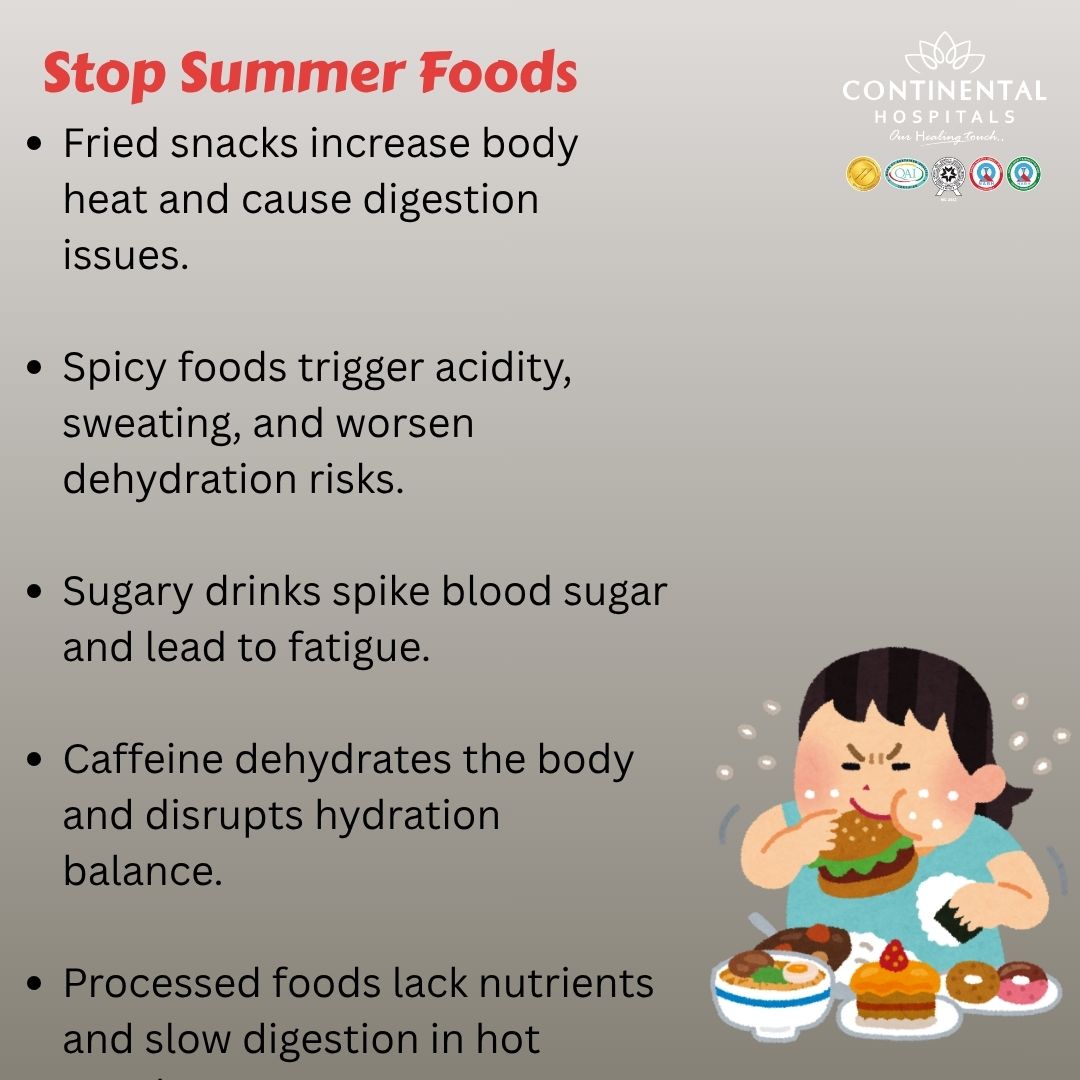
5 Foods to Avoid in Summer
To keep your body cool and your energy levels high, you should consider limiting or completely removing the following items from your daily intake during the peak heat.
1. Excessively Spicy Dishes
Spices like chili powder, ginger, pepper, and nutmeg are known for their thermogenic properties. They contain compounds like capsaicin which naturally increase the temperature of the body. While spices are a staple of local cuisine, consuming them in high quantities during May and June can lead to excessive sweating and dehydration. If you find yourself feeling unusually warm after a meal, it is likely due to the heat-inducing nature of your spices.
2. Fried and Greasy Street Foods
Deep-fried items such as samosas, pakoras, and fries are packed with fats and oils. These are difficult for the stomach to break down, especially when the external temperature is already high. High-fat meals require more energy and water for digestion, which can leave you feeling sluggish and dehydrated. Furthermore, the oil used in street food can sometimes lead to skin breakouts and digestive infections during the humid months.
3. Caffeinated and Sugary Carbonated Drinks
Many people reach for a cold soda or a large cup of iced coffee to beat the heat. However, caffeine and high sugar content act as diuretics. This means they encourage the body to flush out water, leading to more frequent urination and a higher risk of dehydration. While they provide a temporary cooling sensation, the long-term effect on your hydration levels is negative. It is better to opt for natural alternatives like coconut water or buttermilk.
4. Excessive Red Meat
Red meats like lamb and beef are high in protein and fats, which require a significant amount of metabolic energy to digest. This process creates internal heat in a phenomenon known as the thermic effect of food. During the summer, it is advisable to switch to lighter protein sources such as fish, lean poultry, or plant-based proteins like pulses and legumes, which are much gentler on the digestive tract.

5. Salty Snacks and Processed Foods
High sodium intake is a major contributor to dehydration. Salt draws water out of your cells. If you consume a lot of processed snacks, chips, or canned foods, your body will struggle to maintain its fluid balance. Excessive salt also leads to water retention and bloating, making you feel uncomfortable in the heat.
Essential Summer Diet Tips for Better Health
Knowing the worst foods for summer is only half the battle. To truly thrive, you must incorporate habits that support your body's natural cooling mechanisms.
- Hydrate Beyond Water: While water is essential, including electrolytes through lemon water or natural fruit juices (without added sugar) helps maintain mineral balance.
- Eat Seasonal Fruits: Fruits like watermelon, muskmelon, and citrus are excellent because they have a water content exceeding 90%.
- Opt for Smaller Meals: Instead of three heavy meals, try five or six smaller portions. This prevents the "food coma" and keeps your metabolism steady without overproduction of heat.
- Incorporate Curd and Buttermilk: Probiotics are vital in the summer to prevent stomach infections and provide a natural cooling effect.
- Monitor Your Intake of Mangoes: While the king of fruits is a summer favorite, excessive consumption can increase body heat and lead to skin issues in some individuals.
Why Choose Continental Hospitals for Your Wellness?
When it comes to managing your health in Hyderabad, Continental Hospitals stands as a beacon of clinical excellence and patient-centered care. As a premier healthcare institution, we are committed to providing world-class medical services across a wide range of specialties.
Our facility is recognized as the best hospital in Hyderabad due to our unwavering focus on quality and safety. We understand that nutrition and lifestyle are the foundations of health, which is why our clinical nutritionists work closely with our medical teams to provide holistic care for every patient.
Our Accreditations and Standards
Continental Hospitals is proud to be a leader in healthcare quality. Our commitment is reflected in our prestigious accreditations?
JCI Accreditation: We adhere to the Joint Commission International standards, ensuring that our patient safety protocols meet global benchmarks.
NABH Accreditation: Our hospital is accredited by the National Accreditation Board for Hospitals & Healthcare Providers, which is the highest national recognition for quality in India.
NABL Certified Labs: Our diagnostic facilities are NABL accredited, ensuring that every test result is accurate and reliable.
By choosing Continental, you are choosing a facility that integrates advanced technology with compassionate care. From preventative screenings to complex surgeries, we ensure that every patient receives the best possible outcome in a safe environment.
Understanding Heat-Related Health Issues
The impact of unhealthy summer foods goes beyond simple discomfort. Poor dietary choices in extreme heat can lead to several clinical conditions?
Heat Exhaustion: Characterized by heavy sweating, rapid pulse, and dizziness. This is often exacerbated by dehydration.
Gastroenteritis: Summer is a peak time for water-borne and food-borne illnesses. Avoiding street food and prioritizing hygiene is crucial.
Acid Reflux: Heavy, oily meals can cause the lower esophageal sphincter to relax, leading to painful heartburn.
Skin Disorders: High-heat foods can trigger inflammation in the body, leading to heat rashes or acne.
Conclusion
The secret to a comfortable summer lies in listening to your body. By identifying the foods to avoid in summer and replacing them with hydrating, nutrient-dense alternatives, you can enjoy the season without compromising your health. Remember that what not to eat in hot weather is just as important as the cooling activities you engage in. Stay hydrated, choose light meals, and keep your salt and spice intake in check.
If you experience persistent digestive issues, extreme fatigue, or symptoms of heatstroke, it is vital to seek professional medical advice immediately. Timely intervention can prevent minor seasonal discomfort from turning into a serious health concern.
If you suffer from chronic digestive issues, severe dehydration, or lifestyle-related health problems this summer, we are here to help. At Continental Hospitals, our team of specialists is dedicated to your recovery and long-term wellness. Contact our best nutritionist in Hyderabad today for a personalized health plan.
Related Blog Topics: