.webp)


For decades, we were warned about the dangers of tobacco. Today, a new health-silent threat has emerged that affects almost everyone with a desk job or a penchant for screen time. Often called the sitting disease, this condition refers to the metabolic and physical havoc caused by prolonged sedentary behavior.
Understanding Sitting Disease
The human body is built for movement. Our ancestors spent their days walking, climbing, and lifting. However, modern life has shifted us into chairs. Whether it is during a long commute, eight hours at an office desk, or relaxing on the couch, most adults now spend more than nine hours a day sitting.
The comparison to smoking is not just for dramatic effect. Research suggests that the health risks associated with sitting for more than eight hours a day without physical activity are similar to the risks posed by obesity and smoking. When you sit for long periods, your body’s metabolism slows down, affecting your ability to regulate blood sugar and blood pressure and break down body fat.
Struggling with back pain, fatigue, or lifestyle-related issues? Visit our Internal Medicine department at Continental Hospitals, Hyderabad, today.
The Physical Toll of Sitting Too Much
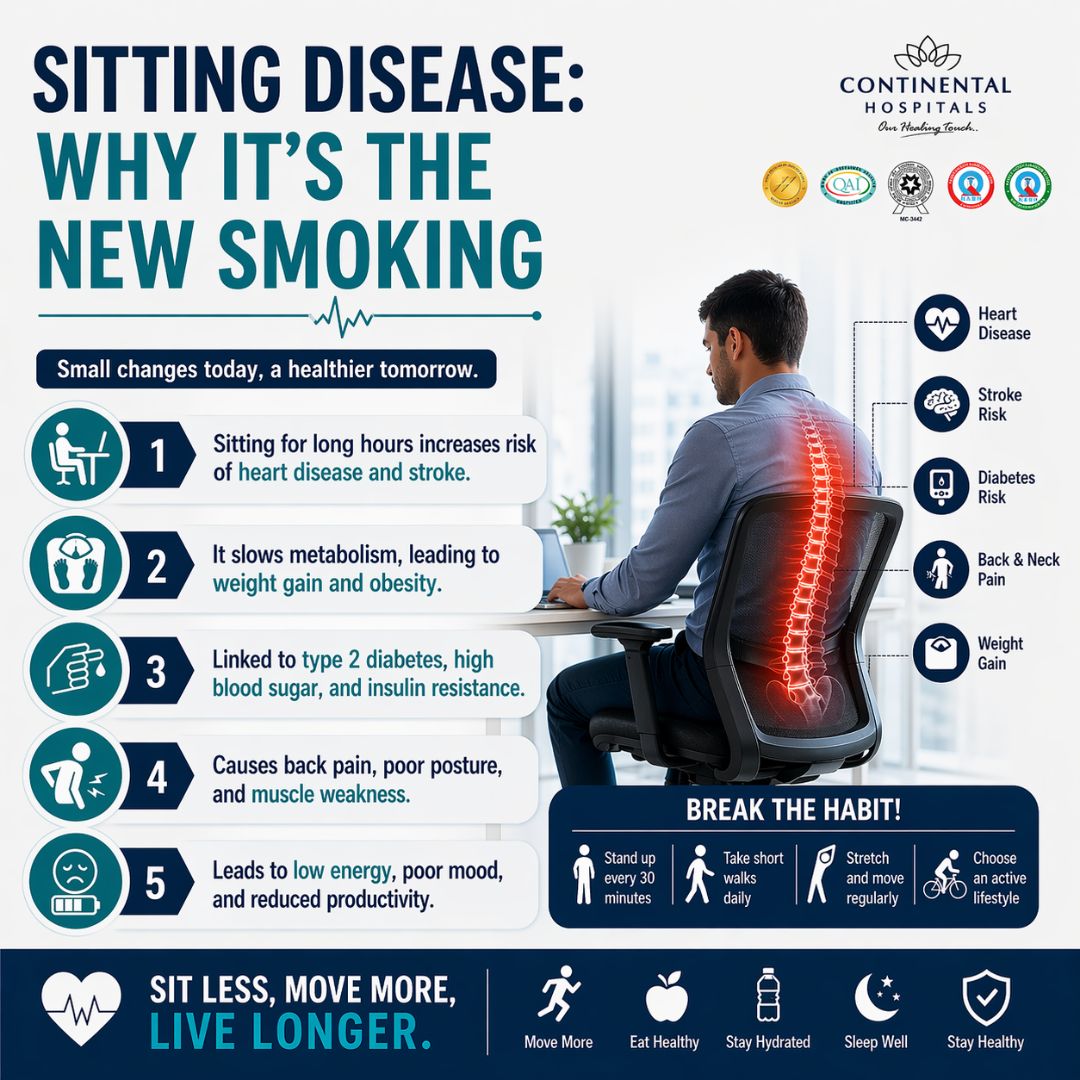
When you remain stationary, several physiological changes occur. The muscles in your lower body turn off, and the enzymes responsible for breaking down fats in the bloodstream drop significantly. Over time, the effects of sitting too much manifest in various ways:
Heart Health: Prolonged inactivity is linked to high blood pressure and elevated cholesterol. Muscles burn less fat and blood flows more sluggishly during long periods of sitting, making it easier for fatty acids to clog the heart.
Insulin Resistance: Even one day of prolonged sitting can lead to a reduced response to insulin, which helps the body process glucose. This increases the risk of Type 2 diabetes.
Weight Management: Sitting uses very little energy. The calories you burn while sitting are significantly fewer than when standing or moving, contributing to gradual weight gain.
Muscle Degeneration: When you sit, your abdominal muscles go unused and eventually weaken. Similarly, the hip flexors become tight and limited in range of motion because they are rarely extended.

Structural and Postural Impacts
It is not just about internal organs; sitting disease also destroys your posture. Most people do not sit with perfect ergonomics. We tend to slouch, crane our necks toward screens, and round our shoulders.
The Spine and Neck
Moving helps the soft discs between your vertebrae expand and contract like sponges, soaking up fresh blood and nutrients. When you sit, these discs are compressed unevenly. This leads to chronic back pain and "tech neck," where the cervical spine loses its natural curve due to constant downward glancing at devices.
Leg Disorders
Sitting for long periods leads to poor circulation in the legs. This can cause fluid to pool, leading to swollen ankles, varicose veins, and in severe cases, deep vein thrombosis?a dangerous blood clot that can travel to the lungs.
How to Combat Sitting Disease
The good news is that you do not need to quit your job to save your health. The key is "intermittent movement."
- The 30-Minute Rule: Set a timer to stand up every 30 minutes. Even standing for two minutes can jumpstart your metabolic processes.
- Desk Exercises: Incorporate leg lifts or calf raises while you are on a phone call.
- Active Meetings: If a meeting does not require a screen, suggest a walking meeting.
- Commute Changes: If you take public transport, stand instead of looking for a seat. If you drive, park further away from the entrance to get in extra steps.
Why Choose Continental Hospitals for Your Wellness?
When dealing with the long-term effects of a sedentary lifestyle, you need a healthcare partner that understands the complexity of metabolic and musculoskeletal health. Continental Hospitals is recognized as the best hospital in Hyderabad for its comprehensive approach to preventive and curative care.
Accreditations and Standards
Quality and safety are the pillars of our institution. Continental Hospitals is proud to be a JCI-accredited facility. This Joint Commission International accreditation is the gold standard in global healthcare, ensuring that we follow the strictest patient safety protocols. Additionally, we are NABH accredited, which reflects our commitment to high-quality clinical care and continuous improvement in healthcare services.
Our facility is designed to provide a healing environment with state-of-the-art technology. We focus on evidence-based medicine, meaning your treatment plan is backed by the latest scientific research. Whether you are seeking a routine check-up to monitor your heart health or require advanced physiotherapy for chronic back issues, we provide world-class expertise right here in Hyderabad.
Comprehensive Specialist Care
At Continental Hospitals, we do not just treat symptoms; we treat the individual. Our multidisciplinary team includes:
- Cardiologists who monitor your vascular health and heart function.
- Endocrinologists who help manage blood sugar levels and metabolic syndromes.
- Orthopedicians and physiotherapists who specialize in correcting postural damage and restoring mobility.
- Nutritionists who design meal plans to counteract a slow metabolism.
Taking the First Step Toward a Healthier You
Recognizing that sitting is a risk factor is the first step. The second step is taking action before the damage becomes permanent. Sitting too much is a habit of the modern world, but it is one that can be managed with mindfulness and the right medical guidance.
If you find yourself stuck in a chair for most of your day, your body is likely signaling for help through fatigue, stiffness, or weight fluctuations. Do not ignore these signs. A sedentary lifestyle is a silent contributor to chronic illnesses that can diminish your quality of life.
Conclusion
The phrase "sitting is the new smoking" serves as a vital wake-up call. While we may not be able to eliminate desks and computers from our lives, we can certainly change how we interact with them. By incorporating movement into your routine and seeking professional advice, you can protect your long-term health.
Continental Hospitals is dedicated to helping the people of Hyderabad lead active, disease-free lives. From advanced diagnostics to personalized wellness programs, we are here to support your journey away from the chair and toward a healthier future.
If you suffer from chronic back pain, unexplained fatigue, or metabolic concerns due to a sedentary lifestyle, consult our best internal medicine specialist in Hyderabad at Continental Hospitals.
Related Blog Topics: