.webp)

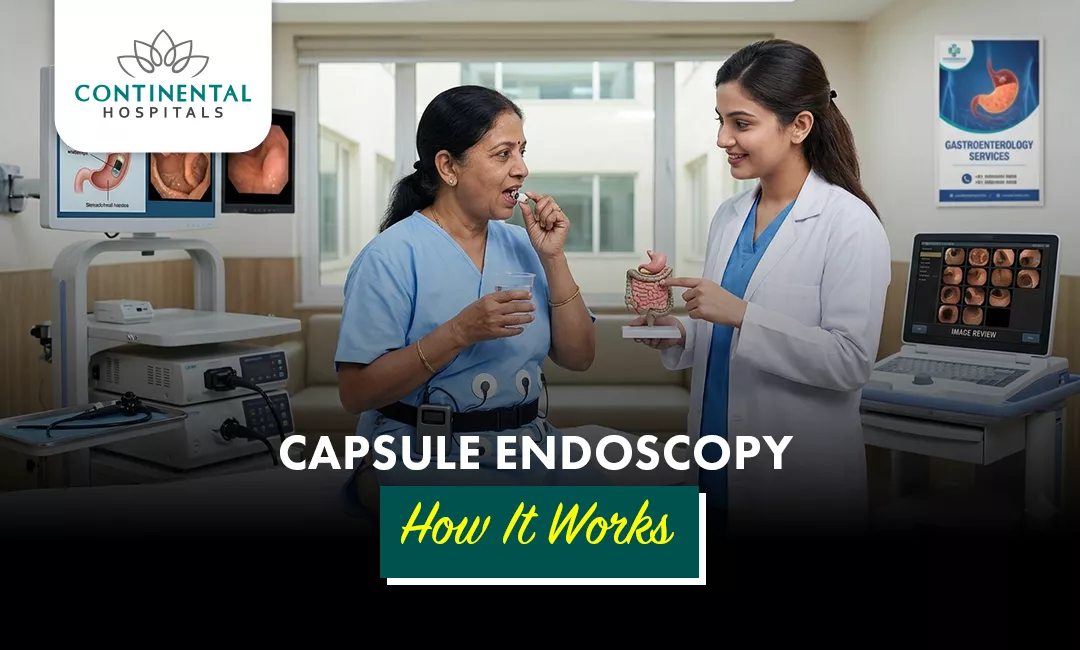
Maintaining digestive health is essential for overall well-being, yet many individuals hesitate to seek diagnostic care due to the perceived discomfort of traditional procedures. Modern medical technology has transformed this experience through the development of capsule endoscopy. Often referred to as a pill camera test, this innovative procedure allows doctors to visualize parts of the digestive system that are otherwise difficult to reach. As a leading provider of healthcare services, Continental Hospitals is committed to bringing these advanced diagnostic solutions to patients in Hyderabad.
Understanding Capsule Endoscopy
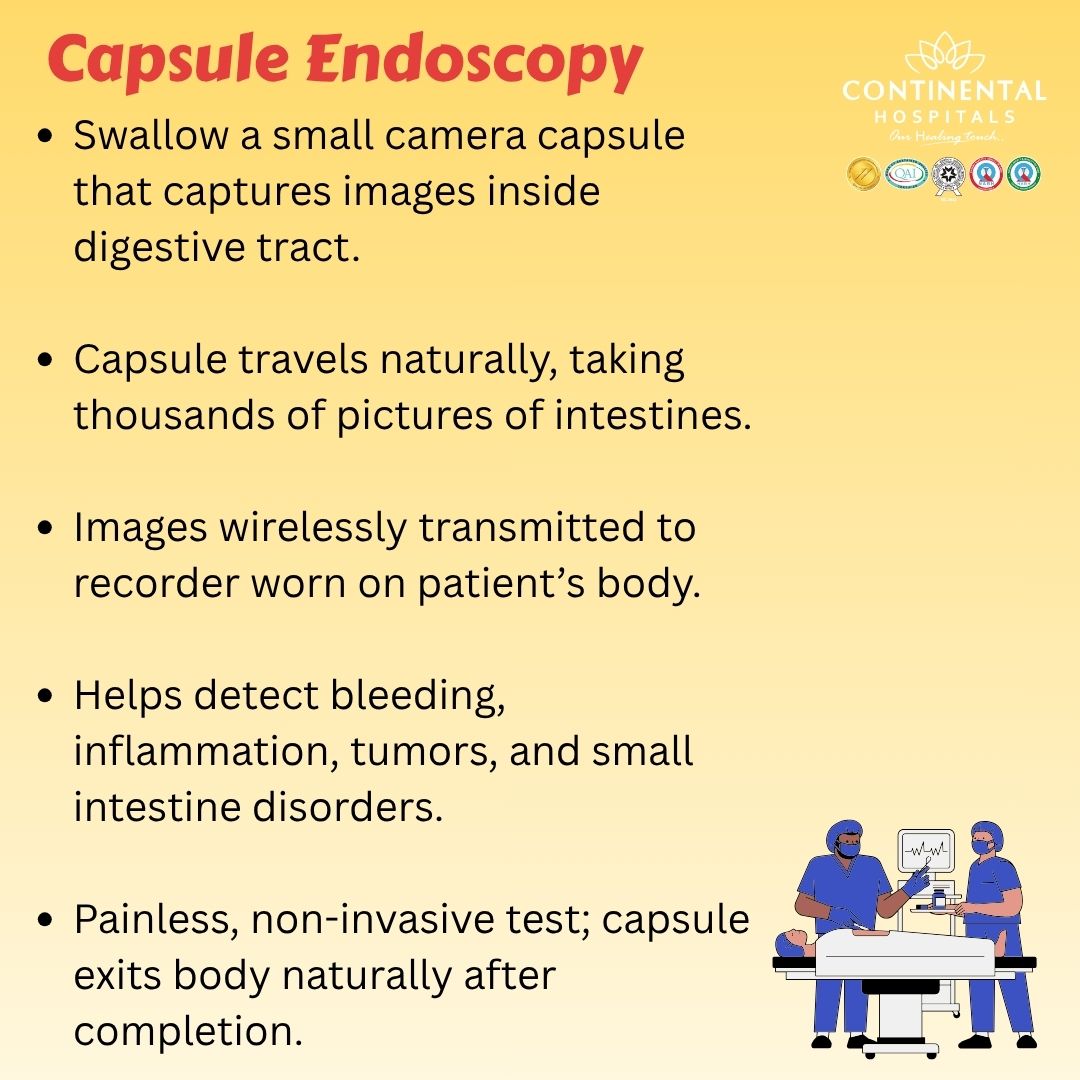
Capsule endoscopy is a non-invasive diagnostic procedure where a patient swallows a small, pill-sized capsule containing a microscopic camera. This camera travels naturally through the digestive tract, taking thousands of high-quality images of the esophagus, stomach, and particularly the small intestine. These images are transmitted wirelessly to a recording device worn by the patient, providing a comprehensive view of the internal lining of the bowel.
While traditional endoscopy and colonoscopy are highly effective, they primarily focus on the upper and lower ends of the digestive system. The small intestine, which sits between these two areas, is quite long and can be challenging to inspect thoroughly. The capsule endoscopy procedure bridges this gap, offering a clear window into the entire length of the small bowel without the need for sedation or invasive tubes.
Chronic abdominal pain or bloating? Visit the Gastroenterology Department at Continental Hospitals. Consult our expert gastroenterologists today.
How Capsule Endoscopy Works: A Step-by-Step Guide
The process of capsule endoscopy is designed to be straightforward and patient-friendly. Here is a breakdown of how the pill camera test typically unfolds:
Preparation: Before the procedure, patients usually follow a clear liquid diet and a brief period of fasting to ensure the digestive tract is clear for the camera.
The Capsule: The capsule itself is about the size of a large vitamin pill. It contains a light source, a lens, a radio transmitter, and a battery.
Swallowing: The patient swallows the capsule with a sip of water. It is designed with a smooth coating to make this process easy.
Transmission: As the capsule moves through the body via natural muscle contractions, it captures images at a rapid rate. These images are sent to sensors placed on the patient's abdomen, which are connected to a data recorder worn on a belt.

Daily Activity: One of the primary benefits of wireless capsule endoscopy is that patients can usually go about their normal daily activities during the test. There is no need to stay in the hospital for the duration of the filming.
Completion: After approximately eight hours, the data recorder is returned to the physician. The capsule is disposable and passes naturally through a bowel movement, often without the patient even noticing.
Why Do Doctors Recommend This Procedure?
Physicians may recommend a capsule endoscopy for several diagnostic reasons. Because it provides a detailed view of the small intestine, it is particularly useful for identifying issues that other tests might miss. Common reasons for the procedure include:
Obscure Gastrointestinal Bleeding: If a patient has signs of bleeding in the digestive tract that cannot be located via a standard endoscopy or colonoscopy, the pill camera can find the source in the small intestine.
Crohn’s Disease: This inflammatory bowel disease can affect any part of the tract. The capsule helps doctors see the extent of inflammation or ulceration.
Celiac Disease: The procedure can help monitor the small intestine's reaction to gluten and check for damage to the intestinal lining.
Detecting Polyps or Tumors: While rare in the small intestine, tumors can be difficult to find. The capsule provides a high-definition view to locate these growths.
Unexplained Abdominal Pain: When other diagnostic avenues have been exhausted, this test can provide answers for chronic pain or discomfort.
What to Expect During the Procedure
Choosing a capsule endoscopy procedure means choosing a path of minimal interference with your life. Unlike traditional methods, there is no recovery time because there is no anesthesia involved. Most patients find the swallowing of the capsule to be no different than taking a supplement.
During the eight-hour window while the capsule is active, you may be asked to avoid strenuous exercise or heavy lifting, but walking and light office work are perfectly fine. After a few hours, you are usually allowed to have light snacks or liquids as directed by your specialist. Once the recorder is removed, the images are compiled into a video format that the gastroenterologist reviews to make a precise diagnosis.
Why Choose Continental Hospitals for Capsule Endoscopy?
Continental Hospitals is recognized as the best hospital in Hyderabad for advanced gastroenterology and diagnostic imaging. We combine world-class technology with a patient-centric approach to ensure your journey to health is seamless.
JCI and NABH Accreditations
Quality and safety are the pillars of our institution. Continental Hospitals holds the prestigious Joint Commission International (JCI) accreditation, which is a global gold standard for healthcare quality. Additionally, our National Accreditation Board for Hospitals & Healthcare Providers (NABH) accreditation ensures that we adhere to rigorous national standards in patient care and safety. These certifications reflect our commitment to maintaining a sterile, efficient, and high-quality medical environment.
Expertise and Technology
Our gastroenterology department is equipped with the latest generation of wireless capsule endoscopy technology. This ensures higher resolution images, better transmission, and more accurate data for our doctors to analyze. Our specialists are highly trained in interpreting these complex visual reports, ensuring that nothing is overlooked.
Comprehensive Care
At Continental Hospitals, we don't just provide a test; we provide a solution. If the capsule endoscopy reveals an issue, our multidisciplinary team of surgeons, nutritionists, and specialists is ready to create a personalized treatment plan immediately. Our facility in Hyderabad is designed to be a one-stop destination for all your healthcare needs.
Conclusion
The capsule endoscopy has revolutionized the way we look at digestive health. By choosing a pill camera test, you are opting for a safe, painless, and highly effective way to monitor your internal health. There is no longer a need to fear the "unknown" when it comes to the small intestine.
If you are experiencing persistent digestive issues, unexplained anemia, or abdominal discomfort, it may be time to consult a professional. Early diagnosis is the key to successful treatment and a faster return to a comfortable life. At Continental Hospitals, we are here to provide the clarity and care you deserve.
If you suffer from chronic abdominal pain, persistent bloating, or unexplained digestive symptoms, please consult our experts today. Consult our best gastroenterologist in Hyderabad at Continental Hospitals.
Related Blog Topics: