post-title

Headaches in Summer? Common Causes and Prevention Tips

Written by - Editorial Team
Medically Reviewed by - Dr M K Singh

Summer in Hyderabad brings vibrant energy, but the rising temperatures often bring an unwelcome companion: the summer headache. Many individuals find that as the thermometer climbs, the frequency and intensity of their head pain increase. Understanding why this happens and how to manage it is essential for enjoying the season to its fullest.

Why Do I Get Headaches More Often During Summer?

A headache in summer is not just a minor inconvenience. For many, it can escalate into a debilitating migraine or a persistent tension headache that disrupts daily life. The primary reason for this seasonal spike is the body’s reaction to environmental stressors like extreme heat, high humidity, and increased light intensity.

When the body is exposed to high temperatures, it works overtime to cool itself down. This process involves dilating blood vessels and increasing sweat production. If these physiological changes are not balanced with proper hydration and rest, the nervous system can trigger pain signals, resulting in various types of headaches.

Frequent headaches or migraines? Don’t wait. Visit our best neuro doctor hyderabad at Continental Hospitals, Hyderabad, for expert care and lasting relief.

What causes headaches during summer?

There are several biological and environmental factors that contribute to the onset of headaches during the warmer months.

1. Dehydration and Electrolyte Imbalance
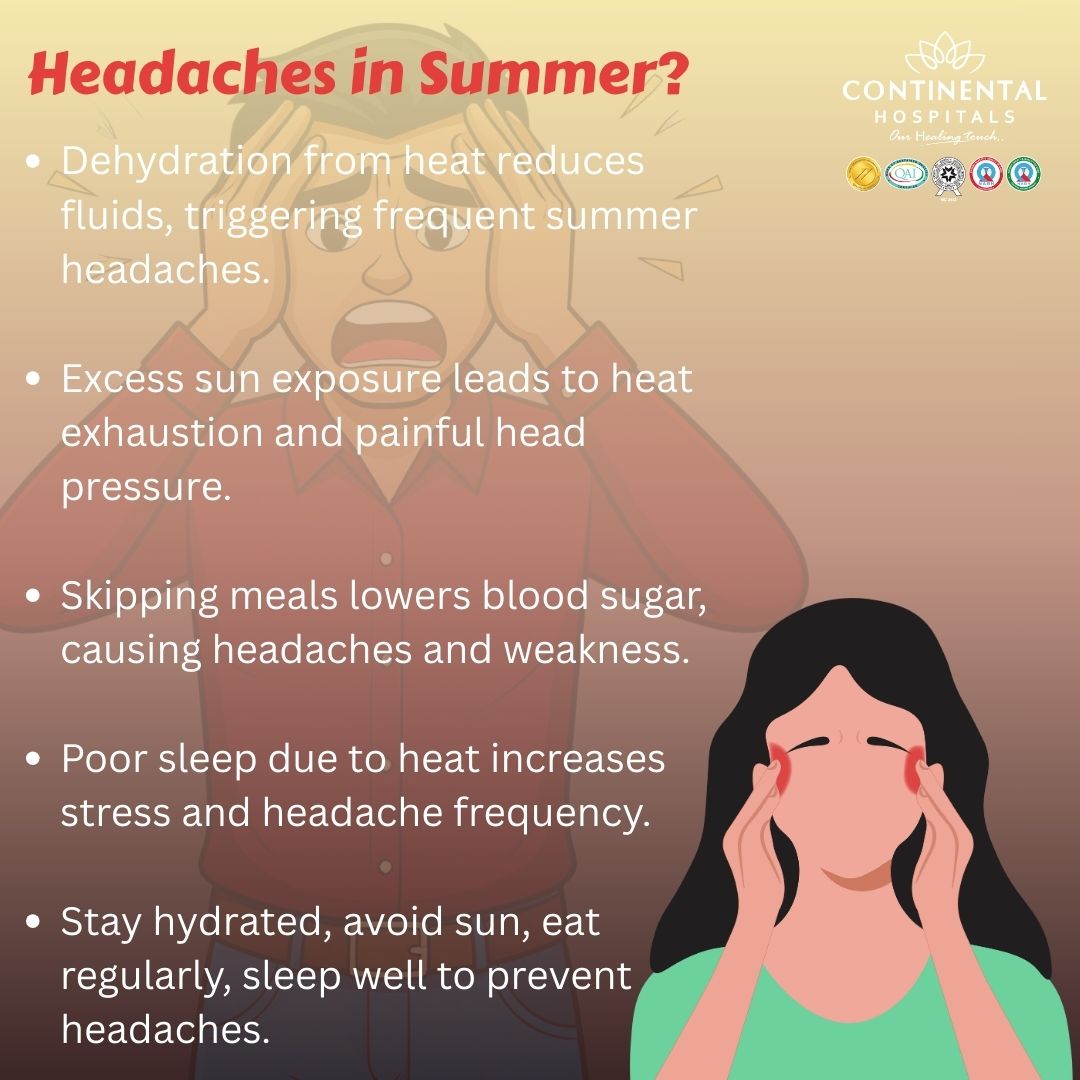
Dehydration is perhaps the most frequent cause of a headache in summer. When you sweat, you lose not just water but also essential minerals like sodium and potassium. Without adequate fluid replacement, brain tissues can temporarily shrink or contract, pulling away from the skull and causing a dehydration headache.

2. Heat Exhaustion
Prolonged exposure to high temperatures can lead to heat exhaustion. This condition often presents with a throbbing headache, dizziness, and nausea. It is a sign that your body's internal cooling system is struggling to keep up with the external environment.

3. High Light Intensity and Glare
Bright sunlight acts as a powerful trigger for a migraine. The glare from the sun or reflections off surfaces can overstimulate the optic nerve. For individuals sensitive to light, a few hours outdoors without eye protection can result in a severe migraine attack.

4. Changes in Barometric Pressure
Summer storms often cause sudden shifts in air pressure. These fluctuations can create an imbalance in the pressure within the sinuses and the middle ear, leading to a tension headache or sinus-related pain.

Second Opinion

5. Altered Sleep Patterns
Longer daylight hours often lead to later bedtimes. Disrupting your natural circadian rhythm can trigger headaches. Lack of quality sleep lowers the pain threshold, making you more susceptible to a headache in summer.
How to Identify the Type of Headache You Have?

Not all head pain is the same. Recognizing the specific type of headache can help in choosing the right relief strategy.

  • Migraine: Typically characterized by intense pulsing or throbbing on one side of the head. It is often accompanied by sensitivity to light and sound.
  • Tension Headache: Feels like a tight band around the head. These are often caused by stress or physical strain from heat.
  • Cluster Headache: Occurs in cyclical patterns or clusters and is known for severe pain around one eye.

How Can You Prevent Summer Headaches Effectively?

Preventing a headache in summer requires a proactive approach to lifestyle and environmental management.

  • Prioritize Hydration: Drink water consistently throughout the day, even if you do not feel thirsty. Aim for at least 3 to 4 liters if you are active outdoors.
  • Monitor Electrolytes: Include natural drinks like coconut water or infused water with a pinch of salt and lemon to replenish lost minerals.
  • Wear Protective Gear: Use wide-brimmed hats and high-quality polarized sunglasses to reduce the impact of bright sunlight on your eyes.
  • Stay in the Shade: Limit outdoor activities during peak heat hours, usually between 11 AM and 4 PM.
  • Maintain a Cool Environment: Use fans or air conditioning to keep indoor temperatures stable.
  • Consistent Meal Times: Low blood sugar can trigger a headache. Eat light, frequent meals that are easy to digest.
  • Cool Compresses: Applying a cold pack to the back of the neck or forehead can help constrict dilated blood vessels and provide immediate headache relief.

When to See a Doctor?

While most summer headaches are manageable with home care, certain symptoms require professional medical evaluation. If your headache is sudden, unusually severe, or accompanied by blurred vision, confusion, or a stiff neck, it is vital to seek help immediately. Persistent headaches that occur more than three times a week also warrant a consultation with a specialist to rule out underlying conditions.

Why Choose Continental Hospitals for Headache Management?

Continental Hospitals in Hyderabad is a premier destination for neurological care and pain management. We provide a comprehensive approach to treating headaches and migraines, ensuring that patients receive more than just temporary relief.

Advanced Diagnostic Facilities
We utilize state-of-the-art imaging technology to accurately diagnose the root cause of persistent head pain. Our facilities allow for detailed mapping of neurological health, ensuring no symptom goes unexplained.

Need an Appointment?

Multi-Disciplinary Expert Team
Our team consists of highly experienced neurologists, pain management specialists, and nutritionists. This collaborative approach ensures that lifestyle factors, dietary triggers, and physical health are all addressed in your treatment plan.

World-Class Accreditations
Continental Hospitals is committed to the highest standards of patient safety and clinical excellence. Our facility holds prestigious accreditations, including:

JCI (Joint Commission International) Accreditation: A global gold standard for healthcare quality and patient safety.

NABH (National Accreditation Board for Hospitals & Healthcare Providers): Ensuring excellence in Indian healthcare delivery.

These accreditations are a testament to our rigorous protocols and our dedication to providing evidence-based medical care. When you choose Continental Hospitals, you are choosing a facility recognized globally for its commitment to healing and safety.

Specialized Migraine Clinics
We offer dedicated clinics focused on chronic headache and migraine management. From preventive therapies to advanced interventional procedures, we tailor our treatments to suit the individual needs of every patient.

Summary of Summer Wellness

To keep a headache in summer at bay, remember the following points:

  • Drink plenty of fluids.
  • Avoid direct sun exposure during peak hours.
  • Maintain a regular sleep and meal schedule.
  • Use sunglasses and hats outdoors.
  • Keep a headache diary to track your triggers.

Conclusion

A headache in summer can certainly dampen your seasonal plans, but it is often preventable with the right habits. By staying hydrated, protecting yourself from the sun, and managing heat exposure, you can significantly reduce your risk. If you find that headaches are becoming a regular part of your life, professional intervention is the best path forward.

Continental Hospitals is dedicated to helping you live a pain-free life. Our expert team is here to provide the diagnosis and care you need to enjoy every season in comfort.

If you suffer from frequent headaches or debilitating migraines, do not wait for the pain to worsen. Consult our best neurologist in Hyderabad at Continental Hospitals. Our experts specialize in identifying environmental triggers and providing long-term relief strategies tailored to your lifestyle.

Related Blog Topics:

  1. Managing Headaches and Dizziness from Heat
  2. What are Different Types of Headaches
  3. Headache Hacks: Simple Tricks to Ease Pain Fast

Frequently Asked Questions

Headaches are more common during summer because high temperatures can trigger dehydration, one of the leading causes of headaches. Excessive sweating reduces the body's water and electrolyte levels, affecting normal brain function. Prolonged exposure to sunlight can also lead to heat exhaustion and increase headache frequency. Bright sunlight may trigger migraines in people who are sensitive to light. Changes in daily routines, outdoor activities, and irregular meal timings can further contribute to headaches. Humidity and poor air circulation may also worsen symptoms. In some people, summer allergies can trigger sinus headaches. Drinking less water while consuming more caffeinated or sugary beverages may increase the risk. Taking preventive measures such as staying hydrated, avoiding prolonged sun exposure, and maintaining a healthy routine can significantly reduce summer headaches. If headaches become severe or frequent, medical evaluation is recommended.
Yes, dehydration is one of the most common causes of headaches during hot weather. When the body loses more fluids than it takes in, blood volume decreases, reducing oxygen and nutrient supply to the brain. This can trigger headache pain ranging from mild discomfort to severe migraines. Excessive sweating, inadequate water intake, and prolonged outdoor activity increase dehydration risk. Symptoms may include dizziness, dry mouth, fatigue, dark-colored urine, and muscle cramps. Rehydrating with water and electrolyte-rich fluids often relieves dehydration-related headaches. Drinking water regularly throughout the day instead of waiting until you feel thirsty is important. Limiting alcohol and excessive caffeine also helps prevent dehydration. If dehydration is severe or accompanied by confusion, vomiting, or fainting, immediate medical attention is necessary.
Preventing summer headaches starts with staying well hydrated by drinking enough water throughout the day. Avoid prolonged exposure to direct sunlight, especially during peak afternoon hours. Wear a wide-brimmed hat, sunglasses, and lightweight clothing when outdoors. Eat balanced meals regularly to maintain stable blood sugar levels. Limit caffeinated, sugary, and alcoholic drinks that may contribute to dehydration. Take frequent breaks if working or exercising outside in the heat. Use sunscreen and stay in shaded or air-conditioned areas whenever possible. Maintain a regular sleep schedule because poor sleep can increase headache frequency. Monitor weather conditions if you are prone to migraines triggered by heat. If headaches continue despite preventive measures, consult a healthcare professional for proper evaluation.
Yes, heat is a well-known trigger for migraine attacks in many individuals. High temperatures can cause dehydration, which directly contributes to migraine onset. Bright sunlight and glare may also trigger migraines in people who are sensitive to light. Sudden weather changes, humidity, and intense physical activity outdoors can increase the likelihood of an attack. People with migraines should stay hydrated and avoid excessive heat exposure whenever possible. Wearing sunglasses and taking breaks in cool environments can help reduce symptoms. Identifying personal migraine triggers through a headache diary may also be beneficial. Taking prescribed preventive medications as advised by a doctor is important for individuals with frequent migraines. Early treatment at the first sign of symptoms can reduce the severity and duration of an attack.
Most summer headaches improve with hydration, rest, and avoiding heat exposure. However, you should seek medical attention if the headache is sudden, severe, or unlike any previous headache. Headaches accompanied by fever, confusion, weakness, vision changes, difficulty speaking, or seizures require immediate emergency care. Persistent headaches lasting several days despite treatment should also be evaluated. Frequent headaches that interfere with daily activities may indicate an underlying condition. If headaches occur after a head injury or are associated with repeated vomiting, prompt medical assessment is necessary. Individuals with chronic migraines experiencing worsening symptoms should consult their doctor. A healthcare professional can identify the underlying cause and recommend appropriate treatment. Early diagnosis helps prevent complications and improves long-term headache management.
Staying hydrated with water is the most effective way to reduce the risk of summer headaches. Coconut water and oral rehydration solutions can help replace lost electrolytes after heavy sweating. Eating water-rich fruits such as watermelon, oranges, cucumbers, and strawberries supports hydration. Leafy vegetables and fresh salads also contribute to fluid intake. Balanced meals containing whole grains, lean proteins, and healthy fats help maintain stable energy levels. Avoid skipping meals, as low blood sugar can trigger headaches. Reduce excessive intake of caffeinated beverages, sugary soft drinks, and alcohol, which may worsen dehydration. Including foods rich in magnesium, such as nuts and seeds, may support headache prevention in some individuals. Healthy hydration and nutrition play a major role in reducing summer headache episodes.
Yes, children are particularly vulnerable to headaches caused by summer heat because they become dehydrated more quickly than adults. Spending long hours playing outdoors in high temperatures increases the risk. Children may not recognize early signs of dehydration or remember to drink enough water. Symptoms may include headache, fatigue, dizziness, irritability, and reduced concentration. Parents should encourage regular water intake before, during, and after outdoor activities. Providing nutritious snacks and avoiding prolonged sun exposure during peak heat hours can help. Lightweight clothing and shaded play areas are also beneficial. If a child develops severe headache, vomiting, confusion, high fever, or persistent symptoms, immediate medical evaluation is necessary. Prompt hydration and rest usually relieve mild heat-related headaches.
A headache associated with heat exhaustion or heatstroke should never be ignored. Warning signs include intense headache, excessive sweating followed by dry skin, dizziness, nausea, vomiting, muscle cramps, and extreme fatigue. Individuals may also experience rapid heartbeat, confusion, difficulty walking, or fainting. Heatstroke can cause a very high body temperature and changes in mental status, making it a medical emergency. Immediate cooling measures and emergency medical care are essential if these symptoms occur. Delaying treatment can lead to serious complications affecting the brain, heart, kidneys, and other organs. Moving the person to a cool place, offering fluids if they are conscious, and seeking urgent medical attention are critical first steps. Early recognition can be lifesaving.
Disclaimer: The information provided in this blog is intended for general knowledge and informational purposes only, and does not constitute medical advice. Always consult with a qualified healthcare professional for any medical concerns or before making any decisions about your health.

Get in Touch With Us

Whether you are from India or abroad, we are here to help you with your medical queries. Please fill out the form below and our team will connect with you shortly.

  • ✔ Quick response from our medical experts
  • ✔ Secure data handling & privacy
  • ✔ Easy upload for reports & documents
banner_image

Chat with our medical experts on WhatsApp for quick assistance and hassle-free appointment booking

Recent Posts