.webp)

Hemophilia is a rare bleeding disorder that affects the body’s ability to form blood clots. When a person has hemophilia, even a small injury can lead to prolonged bleeding. In some cases, bleeding can happen internally without any visible wound. Understanding hemophilia, its symptoms, causes, and treatment options can help patients and families take the right steps toward safe and effective care.
What is hemophilia?
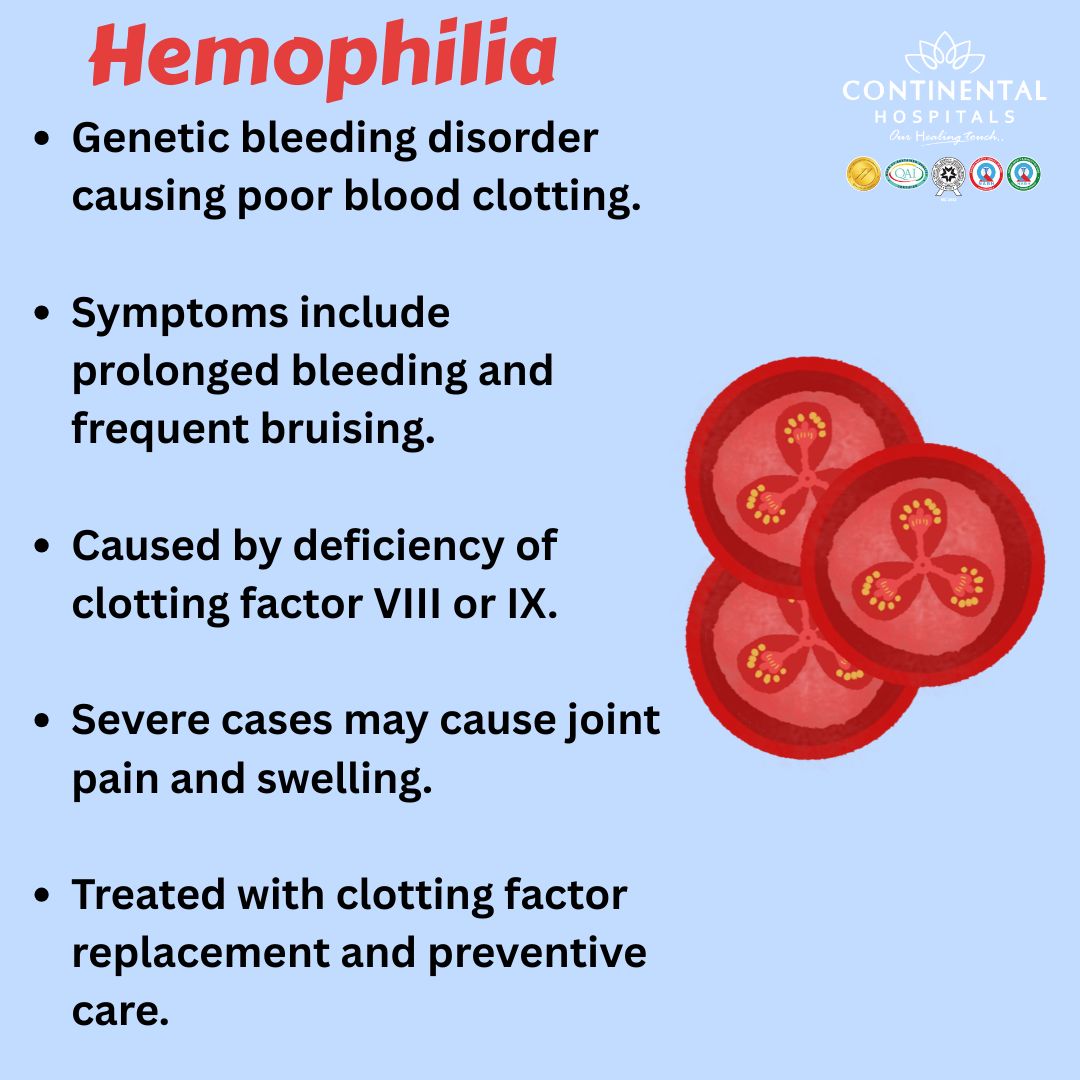
What is hemophilia? It is a genetic blood disorder in which the body lacks certain clotting factors needed to stop bleeding. Clotting factors are proteins in the blood that work together to form a clot and prevent excessive blood loss.
There are two main types of hemophilia:
• Hemophilia A
• Hemophilia B
Hemophilia A occurs due to a deficiency of clotting factor VIII.
Hemophilia B occurs due to a deficiency of clotting factor IX.
When comparing hemophilia A vs B, both conditions cause similar symptoms, but they differ in the specific clotting factor that is missing. Hemophilia A is more common than hemophilia B.
Visit our Hematology Department at Continental Hospitals, Hyderabad, for expert diagnosis, advanced hemophilia care, and trusted specialist support.
Hemophilia A and B explained
Hemophilia A and B are inherited conditions, usually passed from parents to children through hemophilia genetics. The faulty gene is typically carried on the X chromosome. This is why hemophilia is more common in males, while females are often carriers.
Hemophilia A
• Caused by factor VIII deficiency
• Most common type of hemophilia
• Symptoms can range from mild to severe

Hemophilia B
• Caused by factor IX deficiency
• Less common than hemophilia A
• Also known as Christmas disease
Understanding hemophilia A vs B helps doctors choose the right hemophilia treatment based on the missing clotting factor.
Causes of hemophilia
The primary causes of hemophilia are genetic mutations affecting clotting factor production. In most cases, hemophilia genetics plays a central role. The gene responsible for producing clotting factors is altered, leading to reduced or absent clotting activity.
Key causes of hemophilia include:
• Inherited genetic mutation from one or both parents
• Family history of hemophilia
• Spontaneous genetic mutation without family history
In rare cases, a person may develop acquired hemophilia due to immune system problems, but this is different from inherited hemophilia.
Hemophilia symptoms
Recognizing hemophilia symptoms early is essential for proper management. Symptoms may appear in infancy or early childhood, especially in severe cases.
Common hemophilia symptoms include:
• Prolonged bleeding after cuts or injuries
• Frequent nosebleeds
• Easy bruising
• Bleeding into joints causing pain and swelling
• Blood in urine or stool
• Excessive bleeding after dental procedures or surgery
Internal bleeding into joints is one of the most serious complications of hemophilia. Repeated joint bleeding can lead to joint damage and chronic pain if not treated properly.
In mild hemophilia, symptoms may only appear after surgery or major injury. In severe hemophilia, bleeding episodes can occur without any obvious cause.
If you notice repeated or unexplained bleeding, should you consult a doctor? Yes, early evaluation can prevent complications and improve long term outcomes.
How is hemophilia diagnosed?
Diagnosis of hemophilia involves:
• Detailed medical history
• Family history evaluation
• Blood tests to measure clotting factor levels
• Genetic testing to confirm hemophilia genetics
Specialized blood tests determine whether a person has hemophilia A or hemophilia B. Accurate diagnosis is crucial to plan effective hemophilia treatment.
At Continental Hospitals, advanced laboratory facilities ensure precise and timely diagnosis of hemophilia and related bleeding disorders.
Hemophilia treatment options
Modern hemophilia treatment focuses on replacing the missing clotting factor and preventing complications. With proper care, people with hemophilia can lead active and fulfilling lives.
Main hemophilia treatment options include:
Factor replacement therapy
This is the most common hemophilia treatment. The missing clotting factor is given through intravenous infusion.
• Factor VIII for hemophilia A
• Factor IX for hemophilia B
Replacement therapy can be given:
• On demand during bleeding episodes
• As preventive therapy to reduce bleeding risk
Desmopressin
Used in some cases of mild hemophilia A to stimulate release of stored factor VIII.
Antifibrinolytic medications
These medicines help stabilize blood clots and are useful during dental procedures or minor surgeries.
Gene therapy
Emerging treatments aim to correct hemophilia genetics by introducing functional genes into the body. Research is ongoing and shows promising results.
Physical therapy
Important for patients who experience joint bleeding to maintain mobility and prevent stiffness.
Comprehensive hemophilia treatment requires regular monitoring, personalized care plans, and patient education.
Living with hemophilia
Living with hemophilia requires awareness and preventive care. Simple lifestyle measures can reduce the risk of bleeding.
Helpful tips for patients with hemophilia:
• Avoid high impact sports
• Use protective gear when needed
• Maintain good dental hygiene
• Inform doctors before any procedure
• Follow prescribed hemophilia treatment schedule
Education and family support are important parts of hemophilia management.
Why choose Continental Hospitals for hemophilia treatment?
Continental Hospitals is widely recognized as the best hospital in Hyderabad for advanced hematology care. Our approach to hemophilia focuses on safety, accuracy, and long term health outcomes.
Key reasons to choose Continental Hospitals:
• Expert hematologists with extensive experience in managing hemophilia A and B
• Advanced diagnostic laboratories for precise clotting factor analysis
• Comprehensive hemophilia treatment under one roof
• Multidisciplinary team including hematology, orthopedics, physiotherapy, and critical care
• NABH accredited hospital ensuring high standards of patient safety
• NABL accredited laboratory services for reliable test results
• Modern infrastructure with international quality protocols
• Patient focused care with continuous follow up support
Our team understands the complexities of hemophilia genetics and provides individualized treatment plans based on each patient’s condition.
When should you see a specialist?
Do you experience frequent bruising or prolonged bleeding?
Does your child bleed excessively after minor injuries?
Is there a family history of hemophilia A or hemophilia B?
If the answer is yes, consult a hematology specialist immediately. Early diagnosis and timely hemophilia treatment can prevent serious complications such as joint damage and internal bleeding.
Conclusion
Hemophilia is a lifelong bleeding disorder caused by deficiencies in specific clotting factors. Whether it is hemophilia A or hemophilia B, understanding the causes of hemophilia, recognizing hemophilia symptoms, and seeking proper hemophilia treatment are essential steps toward safe living.
Advancements in medical science have significantly improved the outlook for individuals with hemophilia. With early diagnosis, preventive therapy, and expert care, patients can maintain an active and healthy life.
If you or your loved one suffers from hemophilia symptoms or has a family history of hemophilia, do not ignore the signs. Consult our Best Hematology at Continental Hospitals, the best hospital in Hyderabad, for accurate diagnosis and advanced hemophilia treatment. Your health deserves expert care, trusted guidance, and timely intervention.