.webp)


Betel nut is widely used in many parts of Asia and is often chewed alone or mixed with betel leaf, tobacco, or lime. Many people chew betel nut as part of tradition, for stimulation, or simply out of habit. While it may seem harmless, regular use of betel nut can seriously harm oral health. Dentists and health experts have repeatedly warned about the long term effects of betel nut chewing on the mouth, teeth, and gums.
Understanding the dangers of betel nut is important because the damage usually develops slowly. Many people ignore early warning signs until the condition becomes severe. Learning about betel nut oral health risks can help prevent serious oral diseases.
What is Betel Nut?
Betel nut comes from the areca palm tree and is commonly called areca nut. It is often chewed wrapped in betel leaf with lime and sometimes tobacco. The mixture produces a stimulating effect that many users find addictive.
The chemicals present in betel nut stimulate the nervous system and create a feeling of alertness. However, these same chemicals can also damage the tissues inside the mouth. Over time, chewing betel nut can affect gums, teeth, tongue, and the inner lining of the mouth.
Suffering from mouth ulcers or gum problems due to betel nut chewing? Consult the dental department at Continental Hospitals for early screening and timely care.
Betel Nut Oral Health Risks
Regular chewing of betel nut can lead to several oral health problems. The damage may start with minor irritation but can develop into serious conditions.
Common betel nut oral health risks include:
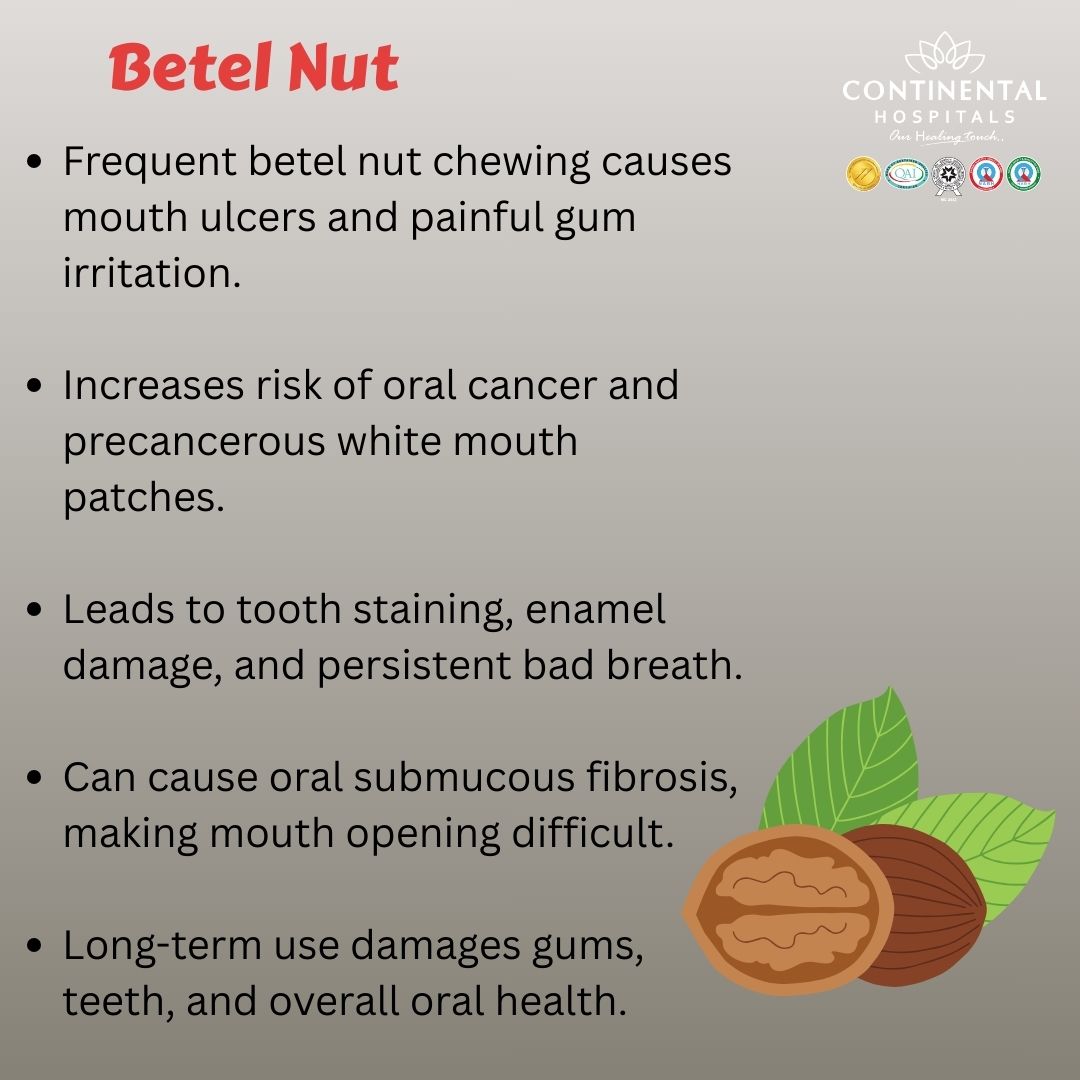
• Staining and discoloration of teeth
• Damage to gums and oral tissues
• Development of mouth ulcers and betel nut related irritation
• Increased risk of oral infections
• Higher chances of oral cancer
Dentists often notice that people who chew betel nut for many years develop thickened oral tissues and reduced mouth flexibility.

Chewing Betel Nut Side Effects on Teeth
One of the first visible effects of betel nut chewing is staining of the teeth. The reddish brown color from betel nut sticks to the enamel and causes permanent discoloration.
Other dental problems caused by betel nut include:
• Severe tooth staining
• Enamel damage
• Increased plaque buildup
• Gum inflammation
• Tooth sensitivity
Over time, chewing betel nut can weaken the structure of teeth and increase the risk of cavities and gum disease.
Mouth Ulcers and Betel Nut
Mouth ulcers are a common problem among people who chew betel nut regularly. The hard fibers of the nut and the chemicals present in it irritate the soft tissues inside the mouth.
Signs of mouth ulcers caused by betel nut include:
• Painful sores inside the mouth
• Burning sensation while eating spicy food
• Difficulty in speaking or chewing
• Red or white patches on the inner cheeks
If these ulcers persist for a long time, they should never be ignored. Persistent mouth ulcers may sometimes develop into serious oral conditions.
Betel Nut Chewing Dangers for the Oral Tissues
The repeated chewing motion and chemical exposure can damage the lining of the mouth. One major condition associated with betel nut use is oral submucous fibrosis.
In this condition, the inner lining of the mouth becomes stiff and thick. This reduces the ability to open the mouth normally. People with this condition may experience:
• Difficulty opening the mouth
• Burning sensation in the mouth
• Stiffness in the cheeks
• Difficulty swallowing food
Oral submucous fibrosis is considered a precancerous condition, which means it can increase the risk of developing oral cancer if not treated early.
Increased Risk of Oral Cancer
One of the most serious betel nut chewing dangers is the increased risk of oral cancer. Studies have shown that long term use of betel nut significantly raises the chances of cancer in the mouth, throat, and tongue.
Warning signs that should never be ignored include:
• Persistent mouth ulcers
• White or red patches inside the mouth
• Lumps in the oral cavity
• Difficulty swallowing
• Unexplained bleeding in the mouth
Early detection of these symptoms can save lives. Regular dental and medical checkups are important for people who chew betel nut frequently.
Impact on Overall Oral Health
Betel nut does not only affect teeth and gums. It also changes the environment inside the mouth. The chemicals in betel nut can disturb the natural balance of bacteria in the oral cavity.
This can lead to:
• Chronic bad breath
• Increased bacterial infections
• Gum disease
• Reduced saliva production
Poor oral health can eventually affect digestion, nutrition, and overall wellbeing.
Why Quitting Betel Nut is Important
Stopping betel nut chewing can greatly improve oral health. While some damage may already exist, quitting the habit can prevent further complications.
Benefits of quitting betel nut include:
• Reduced risk of oral cancer
• Healthier gums and teeth
• Improved mouth flexibility
• Lower chances of mouth ulcers
• Better overall oral hygiene
Many people find it difficult to stop because betel nut can be addictive. However, with proper medical guidance and awareness, it is possible to overcome the habit.
When Should You See a Doctor?
If you chew betel nut regularly, it is important to watch for warning signs that indicate oral health problems.
Consult a doctor if you notice:
• Mouth ulcers that do not heal
• Pain or burning sensation in the mouth
• Difficulty opening the mouth
• White or red patches in the oral cavity
• Persistent bad breath
Early diagnosis and treatment can prevent serious oral diseases.
Why Choose Continental Hospitals?
Choosing the right hospital plays an important role in maintaining oral and overall health. Continental Hospitals in Hyderabad is known for its advanced medical care, experienced specialists, and patient-focused approach.
Continental Hospitals is recognized as one of the best hospitals in Hyderabad and follows international standards in healthcare. The hospital is accredited by respected healthcare organizations and is known for maintaining high standards in patient safety and quality treatment.
Key strengths of Continental Hospitals include:
• Highly experienced specialists and dental experts
• Advanced diagnostic technology
• Comprehensive screening for oral health conditions
• Multidisciplinary care approach
• Patient centered treatment plans
The hospital offers modern facilities for early detection and management of oral diseases caused by habits such as betel nut chewing.
Conclusion
Betel nut chewing may seem like a harmless habit, but it can cause serious damage to oral health over time. From tooth staining and mouth ulcers to serious conditions like oral submucous fibrosis and oral cancer, the risks are significant.
Understanding betel nut oral health risks can help individuals make informed choices about their health. Maintaining good oral hygiene, avoiding harmful habits, and seeking medical advice when symptoms appear can protect long term oral health.
If you suffer from persistent mouth ulcers, gum problems, or other oral health issues linked to betel nut chewing, consult our best dental specialists at Continental Hospitals, the best hospital in Hyderabad. Early screening, accurate diagnosis, and timely treatment can help prevent serious complications and protect your oral and digestive health.
Related Blog Topics: