.webp)

Nipah Virus is a serious viral infection that has raised public health concerns in India and other parts of Asia. Periodic Nipah virus outbreaks remind us how quickly infectious diseases can spread when humans, animals, and the environment interact closely. Understanding how the Nipah virus outbreak occurred and how to stay safe is essential for protecting yourself, your family, and the community.
What Is Nipah Virus?
Nipah Virus is a zoonotic virus, which means it spreads from animals to humans. Fruit bats, also known as flying foxes, are the natural carriers of the Nipah virus. The virus can infect humans directly from animals or through contaminated food and can also spread from person to person.
Nipah virus disease is considered dangerous because it can cause severe respiratory illness and brain inflammation. The fatality rate can be high if early medical care is delayed.
Visit our General Physician department at Continental Hospitals, Hyderabad. Early evaluation and expert care can improve your recovery.
How Did the Nipah Virus Outbreak Occur?
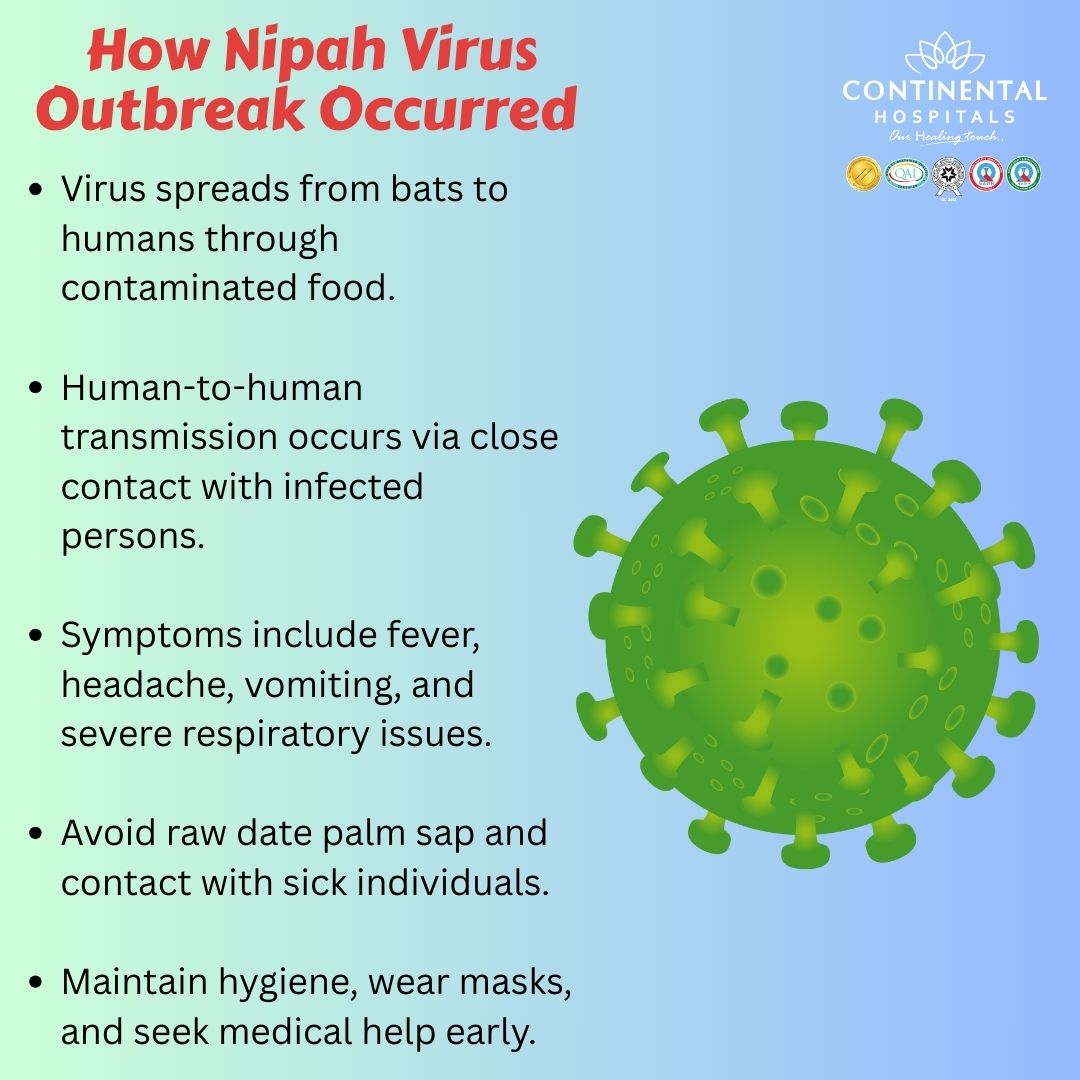
A Nipah virus outbreak usually begins when humans come into contact with infected animals or their bodily fluids. The most common sources include fruit bats and pigs.
Key Causes of Nipah Virus Outbreak:
- Consumption of fruits or raw foods contaminated by bat saliva or urine
- Drinking raw date palm sap contaminated by infected bats
- Close contact with infected pigs or other animals
- Person to person transmission through respiratory droplets and bodily fluids
Once the virus enters the human body, it multiplies rapidly. Crowded living conditions, lack of early diagnosis, and delayed isolation can accelerate Nipah virus spread.
Nipah Virus Transmission Explained Simply
Understanding Nipah virus transmission helps reduce panic and improves prevention.

Nipah virus infection can spread through:
- Direct contact with infected animals
- Eating or drinking contaminated food
- Close contact with an infected person
- Exposure to body fluids such as saliva, urine, blood, or respiratory secretions
Healthcare settings without proper infection control can also contribute to Nipah virus transmission if precautions are not followed strictly.
Nipah Virus Symptoms You Should Not Ignore?
Recognizing Nipah virus symptoms early can save lives. Symptoms may appear within a few days or even weeks after exposure.
Early Symptoms of Nipah Virus
- Fever
- Headache
- Muscle pain
- Vomiting
- Sore throat
Severe Symptoms of Nipah Virus Disease
- Difficulty breathing
- Drowsiness or confusion
- Seizures
- Loss of consciousness
- Acute brain inflammation
If you or a family member develops these symptoms after possible exposure, seek immediate medical care.
Why Nipah Virus Is a Serious Health Threat?
Nipah Virus is dangerous due to its rapid progression and lack of a specific cure. The virus can affect the brain and lungs, leading to life threatening complications.
Major risks include:
- High mortality rate
- Quick person to person spread
- Severe neurological damage
- Limited treatment options
This is why every Nipah virus alert issued by health authorities must be taken seriously.
How to Stay Safe During a Nipah Virus Outbreak?
Prevention is the strongest defense against Nipah virus infection. Simple habits and awareness can reduce the risk significantly.
- Safety Measures to Follow
- Avoid eating fruits that are partially eaten or fallen on the ground
- Wash fruits thoroughly before consumption
- Do not drink raw date palm sap
- Avoid contact with bats and sick animals
- Maintain hand hygiene using soap and water
- Wear masks when caring for infected individuals
- Follow isolation guidelines if symptoms appear
Hospitals and caregivers should strictly follow infection control practices to prevent Nipah virus spread.
What to Do If You Suspect Nipah Virus Infection?
If you experience symptoms and suspect exposure:
- Do not self medicate
- Isolate yourself from others
- Visit a hospital immediately
- Inform the doctor about possible exposure
Early diagnosis improves survival chances and helps prevent community transmission.
Nipah Virus Latest News and Public Awareness
Health authorities closely monitor Nipah virus outbreaks and issue alerts when necessary. Staying informed through verified medical sources helps avoid misinformation and panic.
Public cooperation plays a major role in controlling Nipah virus outbreaks. Reporting symptoms early and following medical advice protects everyone.
Why Choose Continental Hospitals for Nipah Virus Care?
Continental Hospitals is recognized as one of the best hospitals in Hyderabad, known for advanced infectious disease care and patient safety.
What Makes Continental Hospitals a Trusted Choice?
- Internationally recognized accreditations ensuring quality and safety standards
- Advanced diagnostic laboratories for early virus detection
- Dedicated infection control protocols
- Experienced multidisciplinary medical teams
- Modern intensive care and isolation facilities
The hospital follows globally accepted clinical practices to manage complex viral infections like Nipah virus disease.
When Should You Consult a Doctor?
Consult a doctor immediately if you have:
- Fever with neurological symptoms
- Breathing difficulty after exposure
- Close contact with a confirmed Nipah virus case
Timely medical attention can prevent complications and save lives.
Conclusion
Nipah Virus is a serious but preventable disease when awareness, hygiene, and timely medical care come together. Understanding how the Nipah virus outbreak occurred and knowing how to stay safe empowers individuals and communities to respond responsibly.
By choosing a trusted healthcare provider like Continental Hospitals, patients receive expert care backed by advanced infrastructure and accredited medical standards. Staying informed, alert, and proactive is the best way to protect yourself during a Nipah virus alert and ensure long term health and safety.
consult our best general physician at Continental Hospitals, Hyderabad. Early evaluation and specialized care can make a critical difference in recovery.
Related Blog Topics: