.webp)

Citric acid is one of the most common ingredients found in our modern diet. Whether it occurs naturally in a refreshing orange or is added to your favorite sparkling beverage as a preservative, it plays a massive role in the food industry. However, as the saying goes, too much of anything can be a concern. While it is generally recognized as safe, understanding the potential health risks of excess citric acid and knowing the signs of overconsumption is essential for maintaining your long-term well-being.
What Exactly Is Citric Acid?
Before diving into the potential risks, it is important to understand what citric acid is. Naturally, it is an organic acid found in citrus fruits like lemons, limes, oranges, and grapefruits. It gives these fruits their characteristic tart, sour taste and acts as a powerful antioxidant.
On the other hand, manufactured citric acid is produced through a fermentation process. This version is widely used as a preservative, a flavoring agent, and an emulsifier in everything from canned vegetables to ice cream and soft drinks. Because it is so prevalent, many people consume far more than they realize.
Experiencing acid reflux or digestive discomfort? Visit the Gastroenterology Department at Continental Hospitals for expert care.
Is Too Much Citric Acid Harmful?
The short answer is that for most people, moderate amounts are perfectly fine. However, when consumption becomes excessive, several citric acid side effects can emerge. The human body is designed to process natural acids, but a constant influx of concentrated, manufactured citric acid can overwhelm certain systems, particularly the digestive tract and dental health.
The Impact on Dental Health
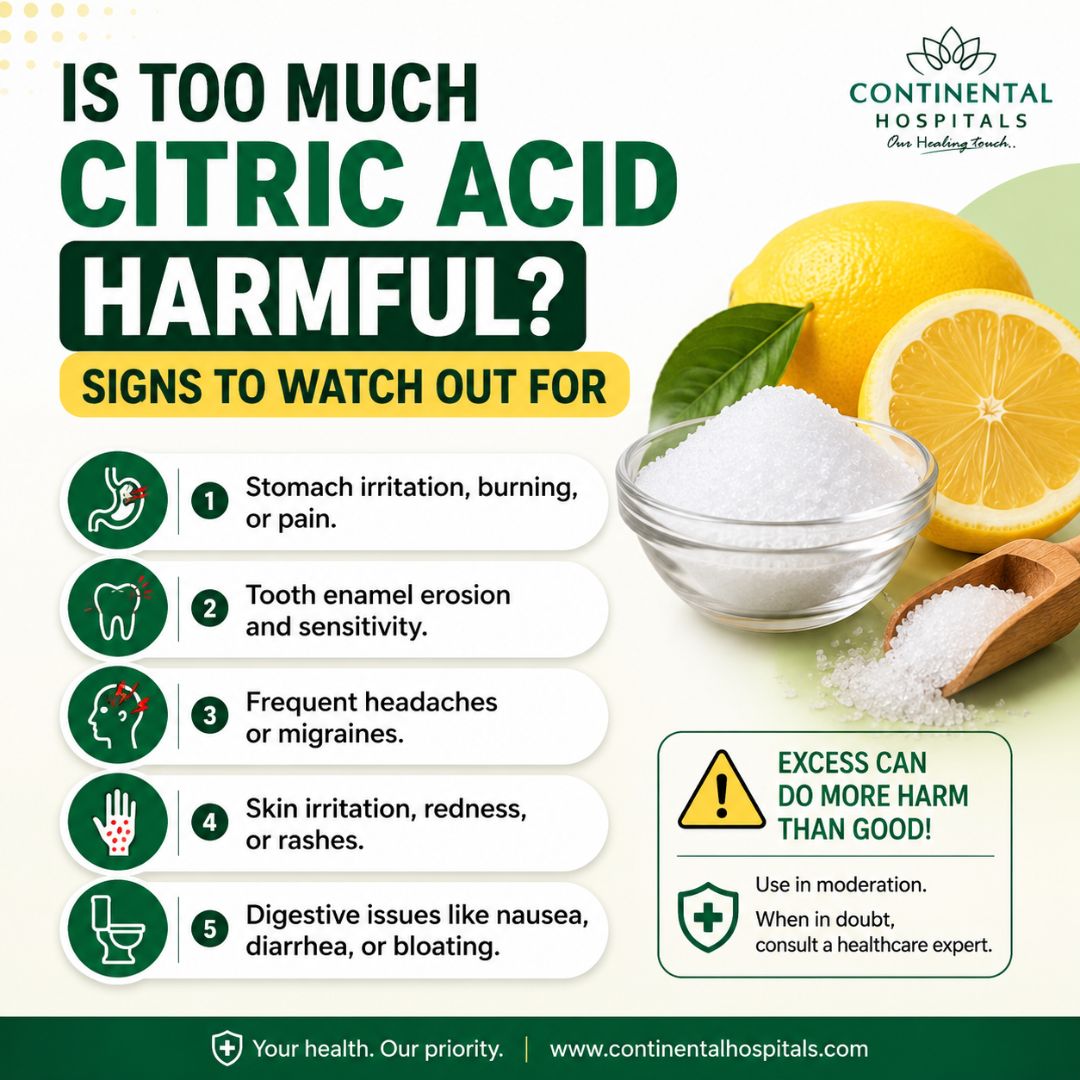
One of the most immediate citric acid health risks is the erosion of tooth enamel. Citric acid is highly acidic. When you frequently consume foods or drinks high in this acid, it softens the enamel, which is the protective outer layer of your teeth. Over time, this leads to:
- Increased tooth sensitivity to hot and cold
- A yellowish appearance as the dentin underneath is exposed
- A higher risk of developing cavities and tooth decay
Unlike some other parts of the body, tooth enamel does not grow back. Once it is eroded by excess citric acid, the damage is permanent, requiring professional dental intervention.
Digestive Distress and Irritation
The stomach is naturally acidic, but adding a high volume of citric acid can lead to significant discomfort. For individuals with sensitive stomachs or conditions like acid reflux or GERD, the symptoms are often magnified. Common excess citric acid symptoms in the digestive system include the following:
- Frequent heartburn or a burning sensation in the chest
- Stomach cramps and bloating
- Nausea after consuming acidic beverages
- Aggravation of stomach ulcers
If you find yourself reaching for antacids regularly after consuming processed snacks or sodas, you may be experiencing the effects of too much citric acid.

Recognizing the Signs to Watch Out For
How do you know if your intake has crossed the line? Monitoring your body’s reaction is key. Here are the primary signs that suggest you might be dealing with citric acid side effects:
- Mouth Sores: High acidity can irritate the soft tissues of the mouth, leading to canker sores or general inflammation of the gums.
- Skin Sensitivity: In some cases, high levels of citric acid in the diet can manifest as skin irritation or hives, particularly in individuals with a specific sensitivity to manufactured additives.
- Joint Discomfort: While less common, some reports suggest that high levels of manufactured citric acid may contribute to joint swelling or stiffness in sensitive individuals.
- Frequent Urination or Bladder Irritation: Highly acidic diets can irritate the lining of the bladder, leading to discomfort or a more frequent urge to go.
Citric Acid and Kidney Health
There is a complex relationship between citric acid and the kidneys. In some medical contexts, citrate is actually used to prevent the formation of certain types of kidney stones. However, when consumed in the form of heavily processed foods containing high amounts of additives, the benefits may be outweighed by other ingredients like sodium or sugar.
If you have a history of kidney issues, it is vital to consult a specialist to understand how citric acid interacts with your specific condition. Balance is the most important factor in ensuring that your diet supports your organ function rather than hindering it.
How to Manage Your Intake
You do not have to eliminate citric acid entirely to stay healthy. Instead, focus on these simple strategies to keep your levels in check:
- Read Labels Carefully: Look for citric acid in the ingredient lists of packaged foods, sodas, and energy drinks.
- Rinse After Eating: If you consume something highly acidic, rinse your mouth with plain water afterward to help neutralize the acid and protect your enamel.
- Choose Whole Fruits: Opt for whole citrus fruits over processed fruit juices. The fiber in the fruit helps slow down the impact of the acid and sugar.
- Stay Hydrated: Drinking plenty of water helps your body flush out excess substances and maintains a healthy pH balance.
Why Choose Continental Hospitals for Your Health Needs?
When it comes to managing your nutrition and addressing the side effects of dietary imbalances, you need expert guidance. Continental Hospitals is recognized as the best hospital in Hyderabad for a reason. We combine world-class medical technology with a patient-first approach to ensure every individual receives the highest standard of care.
Our facility is proud to hold prestigious accreditations, including JCI (Joint Commission International) and NABH (National Accreditation Board for Hospitals & Healthcare Providers). These certifications are a testament to our commitment to safety, quality, and excellence in clinical outcomes.
At Continental Hospitals, we don’t just treat symptoms; we look at your overall health. Our team of specialists works collaboratively to provide comprehensive care, whether you are dealing with digestive issues, nutritional deficiencies, or chronic conditions. When you choose us, you are choosing a partner dedicated to your long-term wellness.
Accreditations That Matter
Our commitment to excellence is backed by:
- JCI Accreditation: Ensuring we meet the highest global standards for patient safety and healthcare quality.
- NABH Accreditation: Validating our commitment to rigorous quality protocols within the Indian healthcare landscape.
- Advanced Diagnostics: Utilizing state-of-the-art technology to provide accurate and fast results.
Conclusion
Citric acid is a staple of the modern diet, but awareness is your best defense against its potential downsides. By recognizing the signs of overconsumption—such as dental erosion, digestive upset, and mouth irritation—you can make informed choices about what you put into your body. Remember, moderation is the key to enjoying the benefits of citrus without the risks.
If you are experiencing persistent digestive discomfort or have concerns about how your diet is affecting your health, it is time to seek professional advice.
If you suffer from chronic acid reflux, digestive distress, or any symptoms mentioned above, please consult our specialists for a thorough evaluation and personalized wellness plan. Consult our best gastroenterologist in Hyderabad at Continental Hospitals.