.webp)

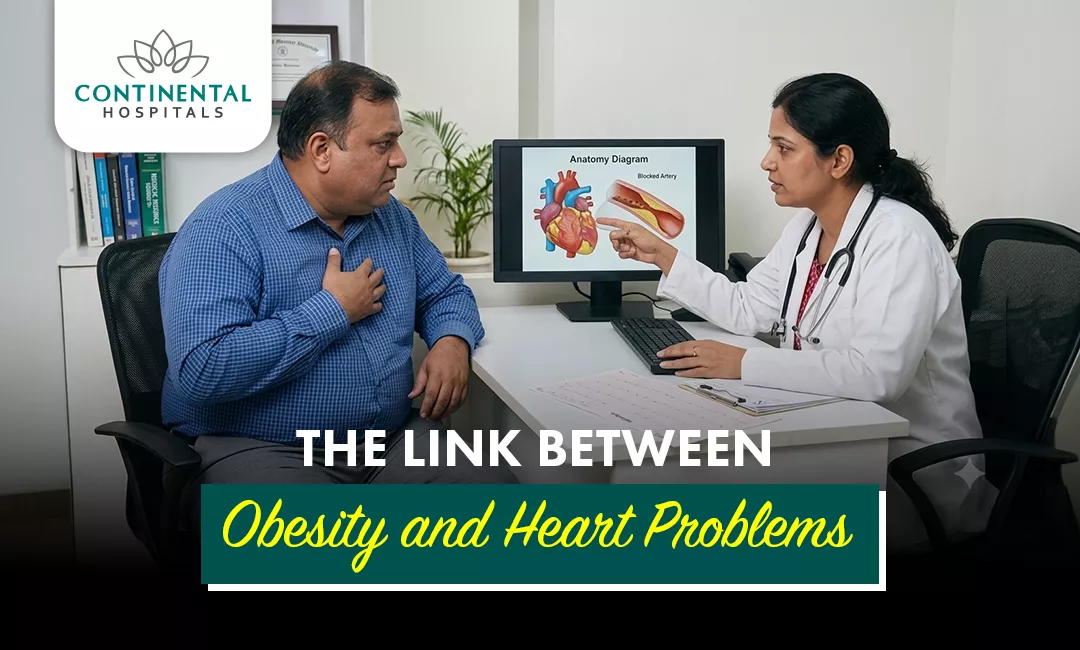
The link between cardiovascular health and the weight a person carries has emerged as one of the most important health issues we face today. Many people think about weight management in terms of how they look; however, from a medical standpoint, the reality of carrying around extra weight is much more serious than just how you appear physically. Having excess weight on your body is much more than how you appear and is an intricate medical condition where the burden of carrying that additional weight has a direct and measurable effect on your body’s most essential organ, the heart. The first step toward living a longer and healthier life is to learn about the link between heart disease and obesity.
Understanding The Relationship Between Obesity And Heart Disease
The clinical definition of obesity is part of the overall definition; it is defined as an excess accumulation of fat in the body which may cause adverse health effects. When we discuss heart disease and obesity, we need to look at multiple causes for the problem. The heart is a pump that delivers blood to all the cells in the body. As the amount of weight increases, the heart must work harder to deliver the same amount of blood to the additional tissues. As this additional workload continues over a long period of time, the heart muscles become thicker and will eventually lead to decreased efficiency with the entire cardiovascular system.
The link between obesity and heart problems is often driven by inflammation. Adipose tissue, or body fat, is not just stored energy. It is a biologically active organ that secretes various hormones and inflammatory chemicals. In individuals with obesity, these chemicals can cause chronic inflammation throughout the blood vessels. This inflammation promotes the buildup of plaque in the arteries, a condition known as atherosclerosis, which is a leading cause of heart attacks and strokes.
Concerned about weight or heart health? Visit our Cardiology Department at Continental Hospitals for expert care and timely consultation. Book today.
How Being Overweight Affects Your Heart
Obesity causes physiological changes in the body and these changes can lead to complications that affect your heart. Here are some of the different ways that being overweight and having a healthy heart are related to one another:
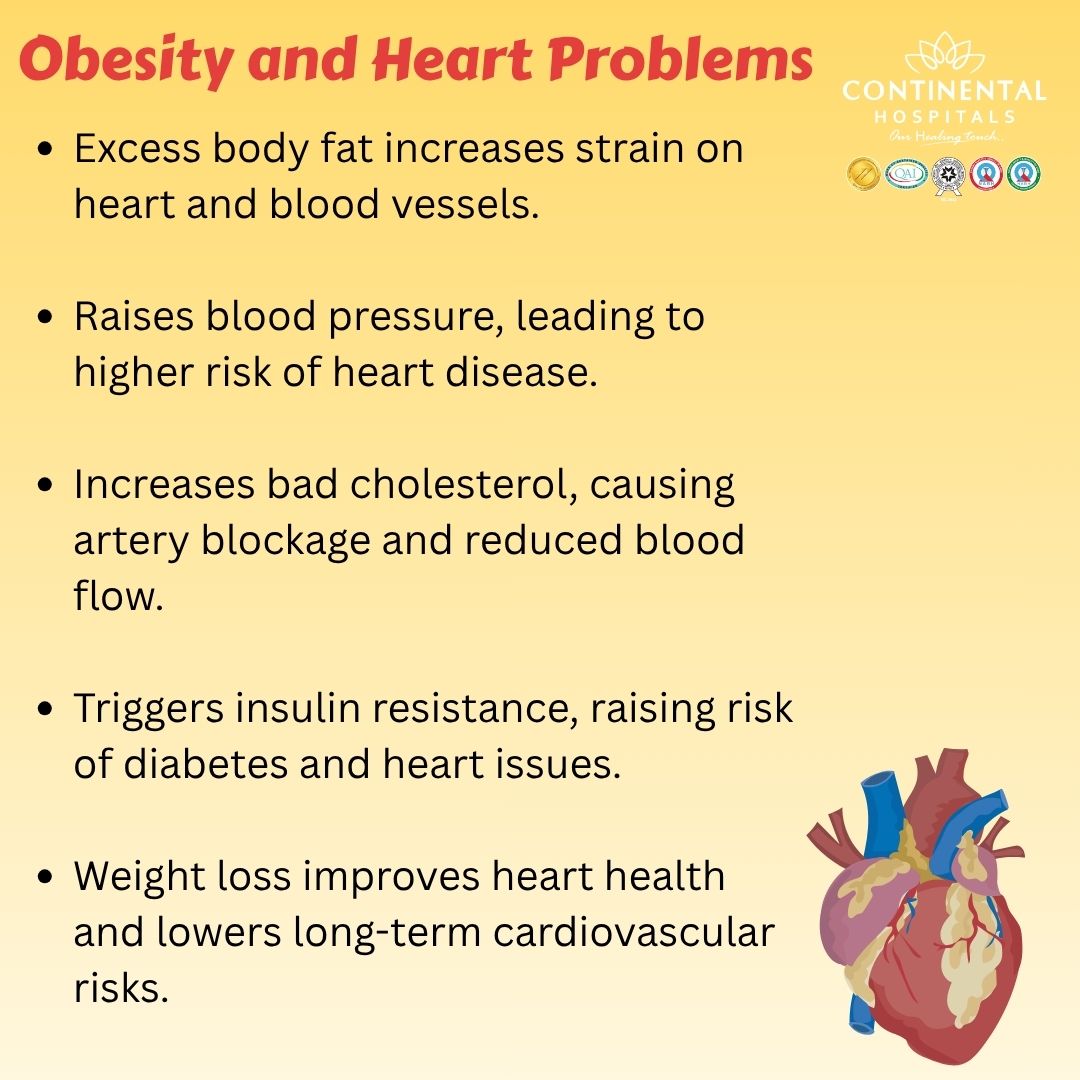
High Blood Pressure - Having too much extra fat tissue will cause an increase in the amount of oxygen and nutrients that are needed, and as a result, the amount of blood to be pumped through your arteries will be higher than your normal amount of blood. This will put additional pressure on your arteries. If you have high blood pressure, this is a major risk factor for heart failure.
Dyslipidemia - Obesity causes an increase in the amount of LDL and triglyceride (bad) cholesterol and will cause a decrease in the amount of HDL (good) cholesterol. When there are elevated levels of LDL and triglycerides and decreased levels of HDL, arteries develop plaque, which narrows the opening through which blood can flow.
Insulin Resistance - Being overweight is a major contributor to Type 2 diabetes, and one of the complications associated with diabetes is that high blood sugar damages the nerves and blood vessels that control the heart. People with diabetes are almost twice as likely as people without diabetes to develop heart disease.
Obstructive Sleep Apnea - Many people with obesity also have obstructive sleep apnea. When a person with sleep apnea has multiple episodes of low oxygen levels during the night this will result in high blood pressure and increased strain on the cardiovascular system and lead to the development of cardiac arrhythmias, including atrial fibrillation.

Strategies for Promoting Cardiovascular Health: Tips To Break The Cycle
There is good news about the relationship between obesity and cardiovascular disease; the link is not unilateral. In fact, losing only a few pounds can have a significant positive effect on heart health. For example, losing between 5 and 10 percent of your body weight can also help lower blood pressure, improve cholesterol levels, and reduce the risk of developing adult-onset diabetes.
To focus on heart health, you need to take a long-term approach rather than trying to follow the latest fad diet. This includes:
Regularly Participating in Exercise: You should get some form of exercise for 15-30 minutes most days of the week to help build your heart and maintain your ideal body weight.
Eating Foods Rich In Nutrients: Transition to eating foods that are high in fiber, include low-fat sources of protein and contain healthy fats, while eliminating high amounts of both processed sugar and saturated fat. This will help support healthy arteries.
Conducting Periodic Screening: The best way to detect a potential health problem early is by having routine screenings of your body mass index (BMI), blood pressure (BP) and lipid levels. The sooner you are able to address a small issue, the less likely it becomes a chronic issue with the onset of cardiovascular disease.
Why Choose Continental Hospitals for Heart Care?
When managing the complexities of obesity and heart disease, the quality of medical guidance makes all the difference. Continental Hospitals stands as a beacon of excellence for those seeking the best hospital in Hyderabad for cardiovascular and metabolic health.
Our approach is built on a foundation of clinical excellence and patient-centric care. Continental Hospitals is recognized for its world-class infrastructure and a dedicated team of experts who specialize in the intersection of weight management and heart health. We believe that treating heart problems requires more than just medication; it requires a holistic strategy that addresses the root causes.
Accreditations and Quality Standards
Quality and safety are the pillars of our institution. Continental Hospitals is proud to be an institution that adheres to the highest global standards. Our facility is JCI (Joint Commission International) accredited, which is the gold standard in global healthcare. This accreditation ensures that our patients receive care that meets international benchmarks for safety and quality. Additionally, our NABH (National Accreditation Board for Hospitals & Healthcare Providers) accreditation reinforces our commitment to rigorous clinical protocols and excellence in patient outcomes.
Specialized Care Pathways
At Continental Hospitals, we provide a comprehensive range of services designed to break the link between obesity and heart problems:
Advanced Diagnostics: Utilizing state-of-the-art imaging and laboratory technology to assess heart function and metabolic health with precision.
Multidisciplinary Teams: Our cardiologists work in tandem with endocrinologists, nutritionists, and bariatric specialists to create personalized wellness plans.
Preventive Cardiology: We focus on early detection and lifestyle modification to prevent the onset of heart disease in high-risk individuals.
Minimally Invasive Interventions: For patients requiring surgical or procedural intervention, we offer the latest technology to ensure faster recovery and less physical strain.
Taking the Next Step
Living with obesity increases the statistical likelihood of developing heart disease, but your future is not written in stone. By making informed choices and seeking professional medical support, you can protect your heart and enhance your quality of life. Whether you are looking for preventive guidance or specialized treatment for existing conditions, choosing the right partner in healthcare is vital.
Continental Hospitals remains committed to providing the residents of Hyderabad and beyond with advanced, compassionate care. As the best hospital in Hyderabad, we are equipped to help you navigate the journey toward a healthier heart.
Conclusion
The evidence is clear: obesity and heart disease are deeply connected. However, this connection serves as a roadmap for prevention. Every healthy choice you make today reduces the burden on your heart tomorrow. Do not wait for symptoms to appear before taking action. Prioritizing your weight management is, in essence, prioritizing your life.
If you suffer from weight-related health issues or are concerned about your cardiovascular risk, it is time to consult a professional. Our experts are here to provide the guidance, diagnostics, and treatment necessary to keep your heart beating strong. Contact Continental Hospitals today to schedule a consultation with our best cardiologist in Hyderabad at Continental Hospitals.
Related Blog Topics: