.webp)


Joint pain can be more than just a minor inconvenience. It often signals an underlying condition that requires expert attention. Two of the most common forms of joint issues are osteoarthritis and rheumatoid arthritis. While they both cause joint pain and stiffness, they are fundamentally different in how they develop and how they are treated. Understanding the differences is the first step toward finding relief and regaining mobility.
What is osteoarthritis?
Osteoarthritis is often referred to as wear and tear arthritis. It is a degenerative condition that occurs when the protective cartilage that cushions the ends of your bones wears down over time. Cartilage is a firm, slippery tissue that enables nearly frictionless joint motion. When this cartilage deteriorates, the bones begin to rub against each other, causing pain, swelling, and decreased range of motion.
This condition typically develops gradually. It is most common in older adults, though it can affect younger people who have experienced joint injuries. The joints most frequently affected by osteoarthritis include the knees, hips, hands, and spine.
Joint pain or arthritis symptoms? Don’t wait. Visit our expert rheumatology department at Continental Hospitals, Hyderabad.
What is rheumatoid arthritis?
Unlike the mechanical wear of osteoarthritis, rheumatoid arthritis is an autoimmune disorder. This means the body’s immune system mistakenly attacks its own healthy tissues. In rheumatoid arthritis, the immune system targets the lining of the joints, known as the synovium. This leads to painful swelling that can eventually result in bone erosion and joint deformity.
Rheumatoid arthritis is a systemic disease, meaning it can affect the entire body. Beyond the joints, it may impact the lungs, heart, and eyes. It often affects joints symmetrically, meaning if one wrist is inflamed, the other usually is as well.
Osteoarthritis vs Rheumatoid Arthritis: Key Differences
Distinguishing between these two conditions is essential for proper management. Here are the primary areas where they differ:
1. Underlying Cause
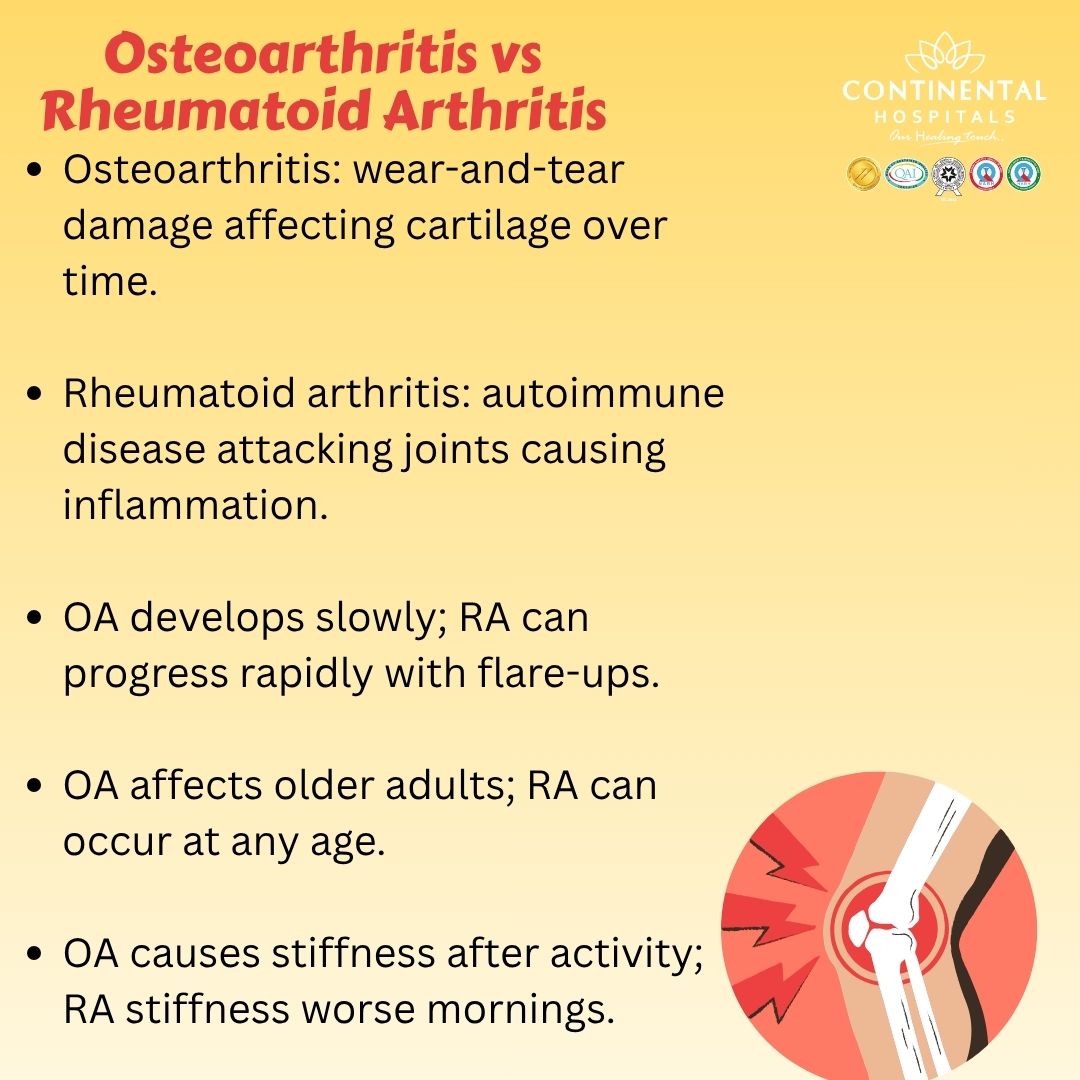
The main difference lies in the origin of the disease. Osteoarthritis vs rheumatoid arthritis comparison starts with biology. Osteoarthritis is caused by mechanical breakdown due to age, obesity, or injury. Rheumatoid arthritis is caused by an overactive immune system.

2. Age of Onset
Osteoarthritis generally appears later in life, usually after age 50. Rheumatoid arthritis can develop at any age, though it most commonly begins between the ages of 30 and 50.
3. Sensation and Stiffness
In osteoarthritis, morning stiffness usually lasts less than 30 minutes and improves once you start moving. In rheumatoid arthritis, morning stiffness is often severe and can last for an hour or much longer.
4. Symmetry
Osteoarthritis often begins in a specific joint on one side of the body. Rheumatoid arthritis is typically symmetrical, affecting the same joints on both sides of the body simultaneously.
Identifying Rheumatoid Arthritis Symptoms
Recognizing the signs of rheumatoid arthritis early can prevent long-term joint damage. Common symptoms include:
- Tender, warm, and swollen joints
- Joint stiffness that is worse in the mornings and after inactivity
- Fatigue, occasional fever, and loss of appetite
- Small joints like fingers and toes are usually affected first
Identifying Osteoarthritis Symptoms
Osteoarthritis symptoms usually develop slowly and worsen over time. Look for:
- Pain in the joint during or after movement
- Tenderness when applying light pressure to the joint
- Loss of flexibility or inability to move the joint through its full range of motion
- A grating sensation or hearing "popping" sounds when using the joint
- Bone spurs, which feel like hard lumps around the affected joint
How Rheumatology Specialists Diagnose Joint Pain
Consulting a specialist in rheumatology is vital for an accurate diagnosis. Doctors use a combination of methods to determine which type of arthritis is present:
Medical History: Discussing when the pain started and which joints are involved.
Physical Exam: Checking for redness, warmth, and range of motion.
Blood Tests: For rheumatoid arthritis, doctors look for specific markers like rheumatoid factor (RF) or anti-CCP antibodies. Osteoarthritis does not show up in blood tests.
Imaging: X-rays can show cartilage loss and bone spurs in osteoarthritis, while MRIs can detect early signs of inflammation in rheumatoid arthritis.
Management and Treatment Options
While there is no permanent cure for arthritis, modern medicine offers various ways to manage the condition and improve quality of life.
For Osteoarthritis:
- Physical Therapy: Strengthening the muscles around the joint to reduce the load on the bone.
- Weight Management: Reducing body weight decreases the pressure on weight-bearing joints like knees and hips.
- Medication: Using anti-inflammatory drugs to manage pain.
- Injections: Lubricating injections can help provide temporary relief in the knees.
For Rheumatoid Arthritis:
- DMARDs: Disease-modifying antirheumatic drugs help slow the progression of the disease.
- Biologics: Advanced treatments that target specific parts of the immune system.
- Lifestyle Adjustments: Balancing rest with gentle exercise to keep joints flexible.
Why Choose Continental Hospitals for Arthritis Care?
When searching for the best hospital in Hyderabad for joint and bone health, Continental Hospitals stands out as a leader in clinical excellence. We provide comprehensive care for patients struggling with complex musculoskeletal issues.
Expert Rheumatology Department
Our department of rheumatology is staffed by highly experienced specialists who utilize the latest diagnostic tools to identify the root cause of your joint pain. Whether you are dealing with osteoarthritis vs rheumatoid arthritis, our team ensures a personalized treatment plan tailored to your lifestyle.
World-Class Accreditations
Continental Hospitals is committed to the highest standards of safety and quality. We hold prestigious accreditations, including JCI (Joint Commission International) and NABH (National Accreditation Board for Hospitals & Healthcare Providers). These certifications ensure that our patients receive international standards of care, from diagnosis to rehabilitation.
Advanced Infrastructure
We house state-of-the-art imaging technology and laboratory services that allow for rapid and precise testing. Our multidisciplinary approach means that if surgery is required, such as a joint replacement, our orthopedic and rheumatology teams work in perfect harmony.
Comprehensive Rehabilitation
Recovery does not end with a prescription. Our dedicated physiotherapy and rehabilitation wing helps patients regain their strength and mobility in a supportive environment.
Conclusion
Joint pain should never be ignored. Whether it is the result of natural aging or an autoimmune response, early intervention is the key to maintaining your independence. Understanding the nuances of osteoarthritis vs rheumatoid arthritis helps you communicate better with your healthcare provider and take charge of your health.
If you are experiencing persistent joint stiffness, swelling, or pain that interferes with your daily activities, it is time to seek professional help. At Continental Hospitals, we are dedicated to helping you move without pain and live your life to the fullest.
If you suffer from joint pain or suspect you have symptoms of arthritis, do not wait for the condition to progress. Contact us today to schedule a consultation with our experts.
Consult our best rheumatologist in Hyderabad at Continental Hospitals, the best hospital in Hyderabad, for expert diagnosis and advanced arthritis care.
Related Blog Topics: