.webp)


Alpha-gal syndrome is a unique and serious allergic reaction that has gained significant attention in the medical community. Unlike typical food allergies that manifest almost immediately, this condition involves a delayed reaction to red meat and other products derived from mammals. Understanding this condition is vital for anyone living in areas where ticks are prevalent, as it is primarily linked to tick bites. This comprehensive guide explores the causes, symptoms, and diagnostic procedures for alpha-gal syndrome while highlighting why professional medical intervention is necessary.
What is Alpha-Gal Syndrome?
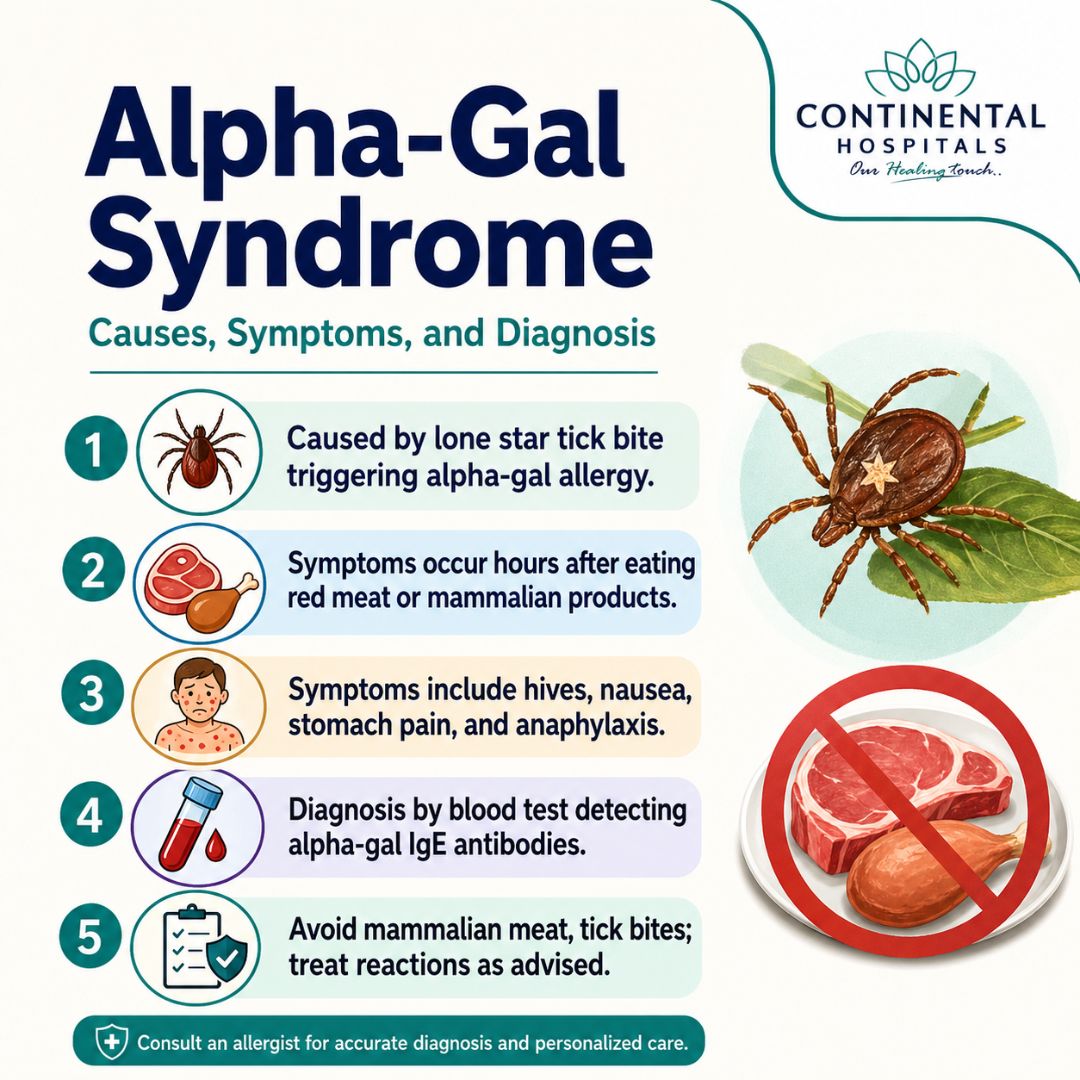
Alpha-gal syndrome is a type of food allergy to galactose-alpha-1,3-galactose, which is a sugar molecule found in most mammals. Humans do not produce this sugar, but other mammals such as cows, pigs, and sheep do. The condition typically begins when a specific type of tick bites a human and injects alpha-gal molecules into the bloodstream. This triggers the immune system to produce antibodies. Later, when the person consumes red meat or dairy, their immune system identifies the alpha-gal as a threat and reacts.
The most challenging aspect of alpha-gal syndrome is the timing. While most allergic reactions to foods like peanuts or shellfish occur within minutes, the reaction to alpha-gal usually takes three to six hours to appear. This delay often makes it difficult for individuals to connect their symptoms to the meal they consumed earlier in the day.
If you have unexplained allergies or suspect red meat allergy, don’t delay. Visit our infectious disease department in Hyderabad today.
Causes of Alpha-Gal Syndrome
The primary cause of this syndrome is the bite of a tick. In many cases, it is the Lone Star tick, though other species may also be responsible. When a tick feeds on a mammal—such as a deer or a dog—it picks up the alpha-gal molecules. If that same tick later bites a human, it transfers those molecules into the person’s skin.
The human immune system then goes into "defense mode," creating IgE antibodies specifically targeted at the alpha-gal sugar. Once these antibodies are present, the body is sensitized. The next time the person eats beef, pork, lamb, or even certain gelatins or dairy products, the body releases histamines, leading to an allergic reaction.
Recognizing the Symptoms
The symptoms of alpha-gal syndrome can range from mild discomfort to life-threatening emergencies. Because the reaction is delayed, people often experience symptoms in the middle of the night or several hours after dinner.
Common symptoms include:

- Hives, itching, or an itchy rash (urticaria)
- Swelling of the lips, face, tongue, and throat
- Wheezing or shortness of breath
- Severe stomach pain, diarrhea, nausea, or vomiting
- Headaches
- A drop in blood pressure, which can lead to dizziness or fainting
In the most severe cases, an individual may experience anaphylaxis. This is a total-body allergic reaction that can close the airways and requires immediate emergency medical attention. Because the symptoms are so varied, they are often mistaken for food poisoning or other digestive issues.
How is Alpha-Gal Syndrome Diagnosed?
If you suspect you have an allergy to red meat, a clinical evaluation is essential. Diagnosis usually involves a combination of your medical history and specific testing.
Medical History and Physical Exam
A doctor will ask detailed questions about your diet, any recent tick bites, and the timing of your symptoms. Since the reaction is delayed, keeping a food and symptom diary can be incredibly helpful for your physician.
Blood Tests
The most common diagnostic tool is a blood test that measures the amount of alpha-gal-specific IgE antibodies in your bloodstream. High levels of these antibodies generally indicate a sensitivity to the sugar molecule.
Skin Prick Tests
In some cases, an allergist may perform a skin prick test using small amounts of beef or pork extract. However, these tests can sometimes yield false negatives for alpha-gal syndrome, so blood tests are often preferred for a more accurate diagnosis.
Living with the Allergy
Currently, there is no cure for alpha-gal syndrome. The primary treatment is strict avoidance of mammalian meat and products. This includes:
- Beef, pork, lamb, and venison
- Organ meats (which often have higher concentrations of alpha-gal)
- Lard, suet, and certain gelatins
- In some sensitive cases, dairy products like milk or cheese
Many people find that their antibody levels decrease over time. If they avoid further tick bites, the allergy may eventually resolve or become less severe. However, preventing new tick bites is the most important factor in long-term management.
Why Choose Continental Hospitals for Treatment?
When dealing with complex allergic conditions, choosing the right healthcare provider is paramount. Continental Hospitals stands out as the best hospital in Hyderabad for several reasons.
World-Class Infrastructure and Accreditations
Continental Hospitals is a premier healthcare institution known for its commitment to patient safety and clinical excellence. We take pride in our prestigious accreditations, including JCI (Joint Commission International) and NABH (National Accreditation Board for Hospitals & Healthcare Providers). These certifications are a testament to our adherence to international standards of care, ensuring that every patient receives treatment that is safe, effective, and evidence-based.
Specialized Diagnostic Facilities
Our advanced laboratory services allow for precise testing of rare allergies like alpha-gal syndrome. With high-end diagnostic technology, we provide fast and accurate results, which are crucial for managing allergic reactions before they become life-threatening.
Expert Team of Specialists
At Continental Hospitals, we house a multidisciplinary team of experts. From allergists and immunologists to experienced gastroenterologists, our doctors work together to create a personalized management plan for your specific needs.
Integrated Patient Care
We believe in treating the person, not just the symptoms. Our nutritionists help patients navigate their new dietary restrictions, ensuring they maintain a balanced diet while avoiding mammalian products. Our emergency department is also equipped 24/7 to handle cases of anaphylaxis or severe allergic episodes.
Conclusion
Alpha-gal syndrome is a complex and often misunderstood condition that requires a high level of clinical suspicion for a proper diagnosis. Because it changes how you interact with food and the environment, it is not a condition you should manage alone. Early diagnosis through blood testing and a clear understanding of the triggers can prevent severe health complications and allow you to live a full, healthy life.
If you have noticed unusual rashes, digestive distress, or breathing difficulties several hours after consuming meat, it is time to seek professional advice. Protecting yourself from tick bites and staying informed are your best defenses against this unique allergy.
If you suffer from unexplained allergic symptoms or suspect a red meat allergy, do not wait for a more severe reaction to occur. Consult our best infectious disease specialist in Hyderabad.