.webp)


Many people believe that if their reports show normal sugar levels, everything is fine. But the truth is more complex. Even normal sugar levels can sometimes hide early warning signs of health issues. Understanding what your numbers really mean can help you take better control of your health and avoid long term complications.
What Are Normal Sugar Levels?
Normal sugar levels refer to the amount of glucose present in your blood at a given time. These levels vary depending on when you last ate.
A simple blood sugar level chart can help:
Fasting blood sugar
70 to 99 mg/dL is considered normal
Post-meal blood sugar after 2 hours
Less than 140 mg/dL is considered normal
Random blood sugar
- Usually less than 140 mg/dL is acceptable
- These numbers look safe, but they do not always tell the full story.
Visit the Continental Hospitals endocrinology department for expert evaluation and personalized care—early diagnosis helps prevent complications.
When Normal Sugar Levels Can Be Misleading
Sometimes people fall into what doctors call dangerous normal sugar levels. This means the readings are within range, but your body may already be struggling to manage sugar effectively.
Here are situations where normal may not mean healthy:

- High normal fasting levels: If your fasting sugar is consistently close to 99 mg/dL, it may indicate early insulin resistance.
- Sharp spikes after meals: Even if your 2-hour reading is normal, your sugar could be rising too high immediately after eating.
- Fluctuating sugar levels: Frequent ups and downs in glucose levels can strain the body even if average readings look fine.
- Family history of diabetes: If you have a strong family history, even normal readings need closer monitoring.
Understanding Hidden High Blood Sugar
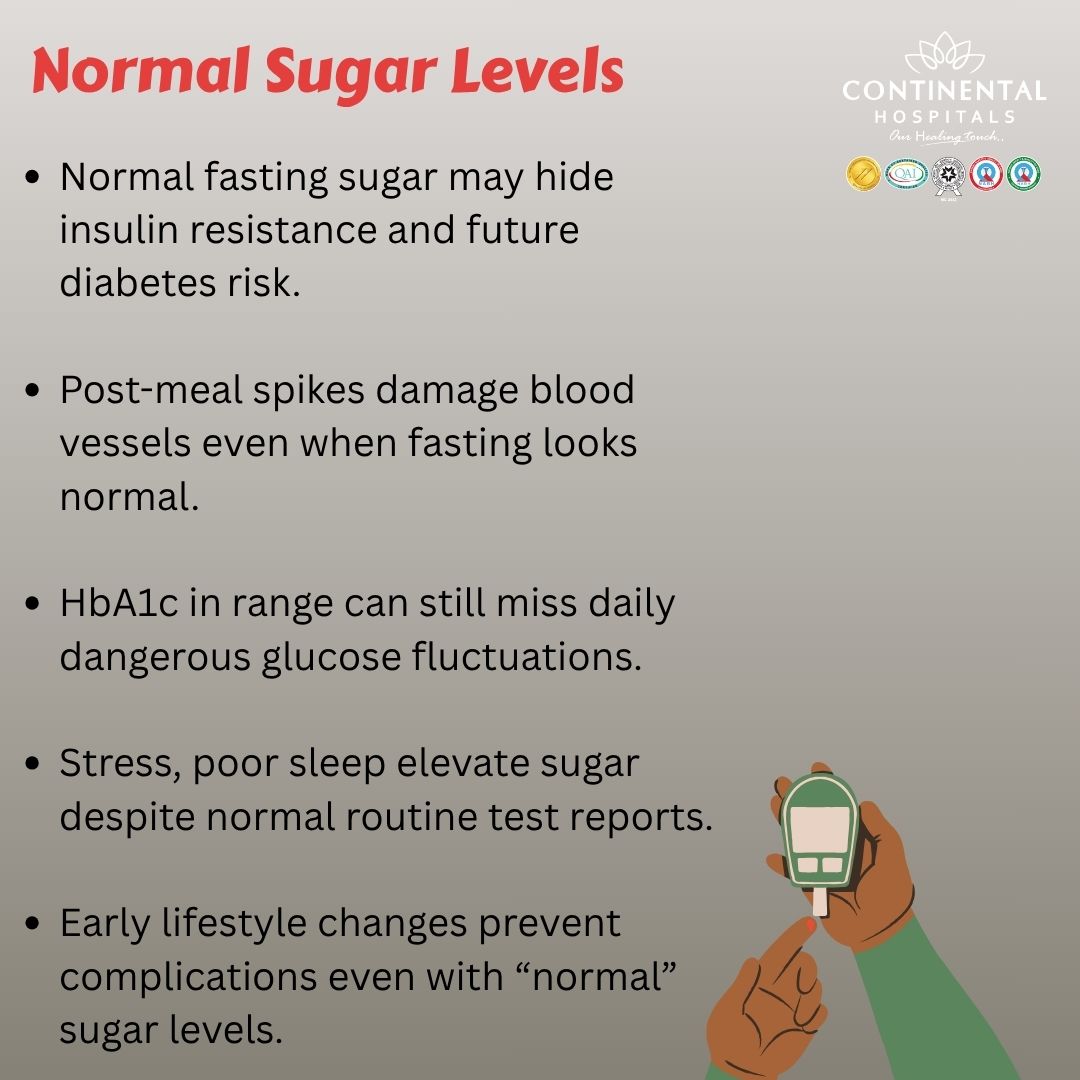
Hidden high blood sugar is a condition where standard tests fail to capture temporary spikes or patterns. These spikes can damage blood vessels and organs over time.
You may not notice symptoms in the early stages, but the damage can still occur silently.
Some warning signs include:
- Frequent fatigue
- Increased thirst
- Mild weight gain or difficulty losing weight
- Occasional blurred vision
These symptoms are often ignored because routine reports show normal sugar levels.
Prediabetes Blood Sugar Range
Prediabetes is a stage where blood sugar levels are higher than normal but not high enough to be classified as diabetes.
Prediabetes blood sugar range includes the following:
- Fasting blood sugar between 100 to 125 mg/dL
- Post-meal sugar between 140 to 199 mg/dL
Even if your results are slightly below this range, you may still be at risk if your lifestyle and metabolism are not balanced.
Why Dangerous Normal Sugar Levels Matter
Ignoring early warning signs can lead to serious health issues later. Over time, even slightly elevated glucose can affect the following:
- Heart health
- Nerve function
- Kidney function
- Eye health
Early detection and lifestyle changes can prevent these complications.
Factors That Influence Blood Sugar
Blood sugar levels are not just about food. Several factors influence how your body processes glucose.
- Diet habits: Frequent consumption of refined foods can cause sugar spikes.
- Physical activity: A sedentary lifestyle reduces insulin sensitivity.
- Stress levels: Chronic stress can increase glucose levels.
- Sleep quality: Poor sleep affects hormone balance and sugar control.
- Hormonal changes: Conditions like thyroid imbalance can impact sugar levels.
How to Monitor Blood Sugar Better
Relying only on a single fasting test is not enough. A more comprehensive approach is needed.
Useful tests include:
- HbA1c test: Shows average sugar levels over three months
- Post-meal sugar test: Helps detect spikes after eating
- Continuous glucose monitoring: Tracks fluctuations throughout the day
These tests provide a clearer picture of your overall glucose health.
Simple Steps to Maintain Healthy Sugar Levels
Making small changes can help you maintain stable normal sugar levels and avoid hidden risks.
- Follow a balanced diet: Include whole grains, vegetables, lean protein, and healthy fats
- Stay physically active: Aim for at least 30 minutes of exercise daily
- Manage stress: Practice relaxation techniques like yoga or meditation
- Get regular sleep: Maintain a consistent sleep schedule
- Avoid excess sugar intake: Limit sugary drinks and processed snacks
- Regular health checkups: Track your sugar levels periodically
Why Choose Continental Hospitals?
Choosing the right healthcare partner is important for accurate diagnosis and effective treatment.
Continental Hospitals is known as one of the best hospitals in Hyderabad, offering advanced care and expert guidance.
Key strengths include:
- Accreditations: The hospital is accredited by NABH and JCI, ensuring high standards of patient safety and quality care.
- Expert team: Highly experienced doctors across specialties, including endocrinology, diabetology, and internal medicine.
- Advanced diagnostics: State-of-the-art laboratory and diagnostic facilities help detect even subtle changes in blood sugar levels.
- Personalized care: Each patient receives a customized treatment plan based on their health condition and risk factors.
- Integrated approach: Focus on prevention, early detection, and long-term health management.
When Should You See a Doctor?
Do not wait for your sugar levels to cross into the diabetes range. Early consultation can make a big difference.
Consult a doctor if you notice:
- Repeated borderline sugar readings
- Symptoms like fatigue or excessive thirst
- Family history of diabetes
- Sudden weight changes
- Irregular eating or sleep patterns
An endocrinologist or internal medicine specialist can evaluate your condition and guide you with the right plan.
Conclusion
Normal sugar levels do not always guarantee that your body is functioning perfectly. Hidden high blood sugar and dangerous normal sugar levels can silently increase your risk of future complications.
Understanding your numbers, monitoring trends, and making healthy lifestyle choices are key to staying ahead of the problem. Early awareness helps prevent long term damage and supports better overall health.
If you are concerned about your normal sugar levels or experiencing symptoms related to hidden high blood sugar, it is important to seek expert advice.
Consult our best endocrinologist in Hyderabad at Continental Hospitals for a detailed evaluation and personalized care plan. Early diagnosis can help you stay healthy and avoid complications.
Related Blog Topics: