.webp)

Managing blood sugar levels is a daily challenge for people living with type 2 diabetes. Along with medical care, many people look for natural ways to support blood sugar control. One traditional ingredient that often comes up in health discussions is kalonji, also known as black seed. Used for centuries in traditional medicine, kalonji is now gaining attention for its potential role in diabetes care.
What Is Kalonji?
Kalonji refers to the small black seeds of the plant Nigella sativa. These seeds are commonly used in Indian and Middle Eastern cooking and traditional remedies. Kalonji has a slightly bitter taste and is often added to curries, bread, and pickles.
In traditional practices, kalonji seeds have been used to support digestion, immunity, and metabolic health. Today, researchers are studying kalonji benefits for blood sugar and its role in diabetes management.
Visit our Diabetology Department at Continental Hospitals, Hyderabad for expert care, advanced facilities, and personalized diabetes management. Book today.
Why Blood Sugar Control Matters in Type 2 Diabetes
Type 2 diabetes occurs when the body does not use insulin properly or does not produce enough insulin. This leads to high blood sugar levels over time. Poor blood sugar control can increase the risk of complications affecting the heart, kidneys, nerves, eyes, and overall quality of life.
Maintaining stable blood sugar levels helps:
- Reduce the risk of long-term complications
- Improve energy levels and daily functioning
- Support heart and kidney health
- Enhance the effectiveness of diabetes medications
Natural support methods like diet, physical activity, and certain seeds or herbs may complement medical treatment when used correctly.
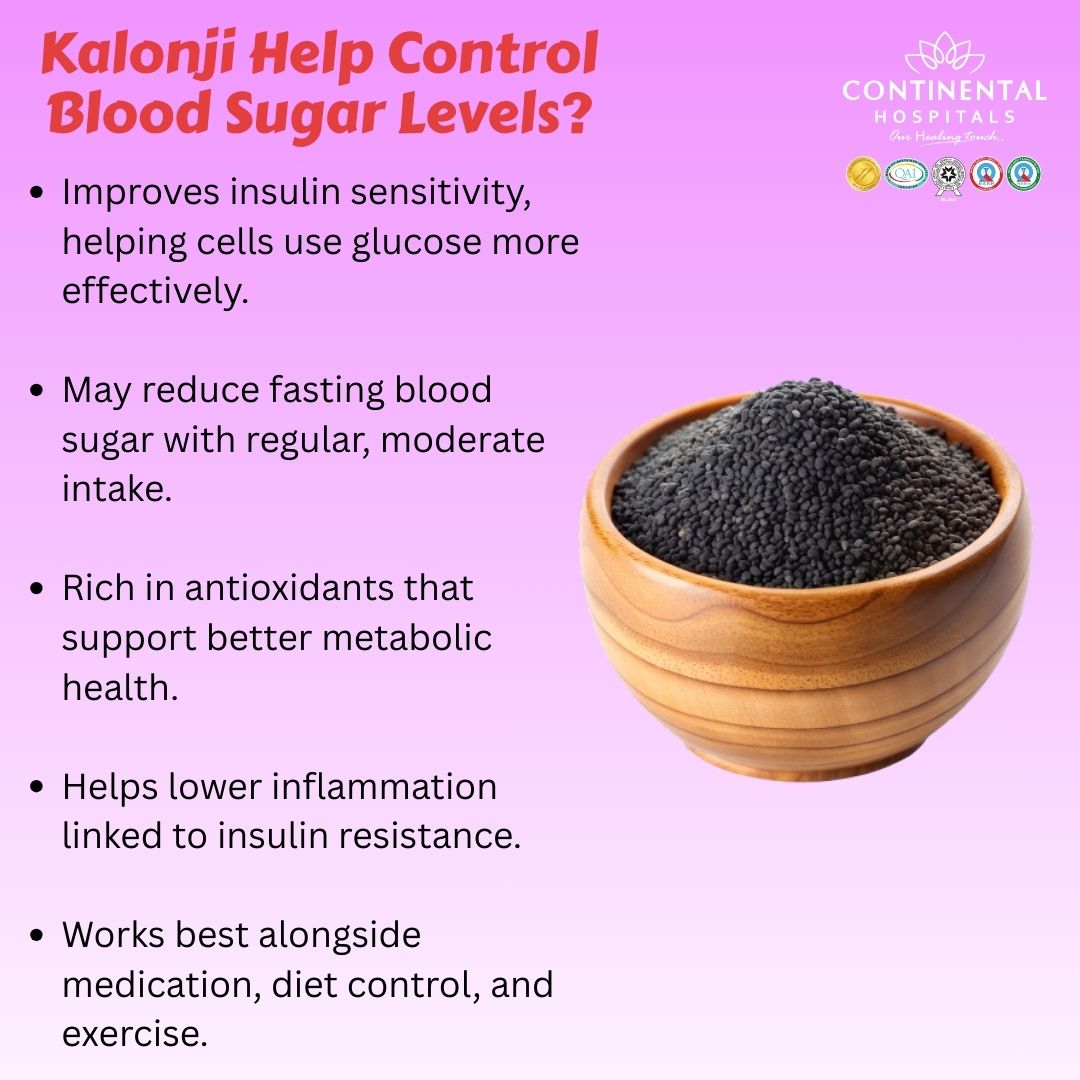
How Kalonji May Help Control Blood Sugar Levels?
Research suggests that kalonji may support blood sugar control through several mechanisms. While it is not a cure, it may play a supportive role when combined with medical care.

1. Improves Insulin Sensitivity
Some studies indicate that kalonji seeds may help the body respond better to insulin. Improved insulin sensitivity allows glucose to move from the blood into the cells more effectively, helping reduce high blood sugar levels.
2. Supports Pancreatic Function
The pancreas plays a key role in insulin production. Compounds found in kalonji, such as thymoquinone, may help protect pancreatic cells from damage caused by oxidative stress.
3. Reduces Oxidative Stress
High blood sugar can increase oxidative stress in the body. Kalonji contains antioxidants that may help reduce this stress, which is important for people with type 2 diabetes.
4. Helps Maintain Stable Blood Sugar Levels
Regular and moderate use of kalonji seeds for diabetes control may help reduce blood sugar fluctuations, especially when combined with a balanced diet.
Scientific Evidence on Kalonji for Diabetes
Several clinical and laboratory studies have explored kalonji for diabetes management. Research has shown that kalonji health tips often include its ability to:
- Lower fasting blood sugar levels
- Improve long-term glucose markers
- Support better lipid profiles, which is important for diabetic patients
However, it is important to note that results vary from person to person. Kalonji should be seen as a supportive option, not a replacement for prescribed treatment.
How to Use Kalonji Safely for Blood Sugar Control?
If you are considering adding kalonji to your routine, it is important to use it safely and consistently.
Common Ways to Use Kalonji
- Whole kalonji seeds added to food
- Roasted kalonji seeds used as seasoning
- Kalonji powder mixed with warm water
- Kalonji oil used in small quantities under guidance
Practical Kalonji Health Tips
- Start with small amounts to see how your body responds
- Use kalonji regularly rather than occasionally
- Combine with a balanced diet and regular physical activity
- Monitor blood sugar levels to observe any changes
Always talk to your doctor before using kalonji for diabetes, especially if you are on medication. Kalonji may enhance the effect of diabetes medicines, which could lead to low blood sugar if not monitored properly.
Who Should Be Careful When Using Kalonji?
While kalonji seeds are generally safe in food amounts, certain people should be cautious.
You should consult a doctor if you:
- Have type 2 diabetes and take insulin or oral medications
- Are pregnant or breastfeeding
- Have low blood pressure or digestive sensitivity
- Experience dizziness or weakness after use
Medical supervision ensures that kalonji supports your health without causing side effects.
Lifestyle Tips to Improve Blood Sugar Control
Using kalonji alone is not enough to manage diabetes effectively. A comprehensive approach works best.
Key lifestyle habits include:
- Eating high-fiber foods such as vegetables and whole grains
- Reducing refined sugars and processed foods
- Staying physically active with regular walking or exercise
- Getting enough sleep and managing stress
- Regular health checkups and blood sugar monitoring
When combined with these habits, kalonji benefits for blood sugar may be more effective.
Why Choose Continental Hospitals for Diabetes Care?
Continental Hospitals is recognized as one of the best hospitals in Hyderabad, offering comprehensive and patient-focused diabetes care. The hospital is known for its strong clinical standards and commitment to quality healthcare.
Continental Hospitals holds national and international accreditations that reflect excellence in patient safety, clinical outcomes, and advanced medical practices. These accreditations ensure that patients receive care that meets global healthcare benchmarks.
The hospital offers:
- Experienced endocrinologists and diabetologists
- Advanced diagnostic and monitoring facilities
- Personalized treatment plans for type 2 diabetes
- Integrated care with diet, lifestyle, and medical support
- A strong focus on long-term health and prevention
This holistic approach helps patients manage blood sugar levels safely and effectively.
When Should You See a Doctor?
If you suffer from persistent high blood sugar levels, unexplained fatigue, frequent urination, or sudden changes in weight, do not rely only on home remedies. Early medical evaluation can prevent complications and improve outcomes.
A specialist can guide you on:
- Proper diabetes diagnosis
- Safe use of kalonji seeds for diabetes control
- Medication adjustments
- Long-term blood sugar management strategies
Conclusion
Kalonji has gained attention for its potential role in supporting blood sugar control in people with type 2 diabetes. Its antioxidant properties and possible effects on insulin sensitivity make it a promising supportive option. However, kalonji is not a substitute for medical treatment. It works best as part of a balanced lifestyle and under medical guidance.
consult our Best Diabetologist at Continental Hospitals, Hyderabad. With advanced facilities, accredited standards, and experienced doctors, Continental Hospitals helps you take confident steps toward better blood sugar control and long-term health.
Related Blog Topics: