.webp)


Water is the foundation of life, yet it is surrounded by a surprising amount of misinformation. From the famous eight-glasses-a-day rule to the belief that thirst is always the first sign of trouble, misconceptions about hydration are everywhere. For residents in a bustling city like Hyderabad, staying hydrated is not just a health tip; it is a necessity for maintaining energy and focus. However, following outdated advice can lead to unnecessary stress or, in some cases, overhydration. This article breaks down common water intake myths and provides scientifically backed facts to help you stay healthy.
The Reality Behind Water Intake Myths
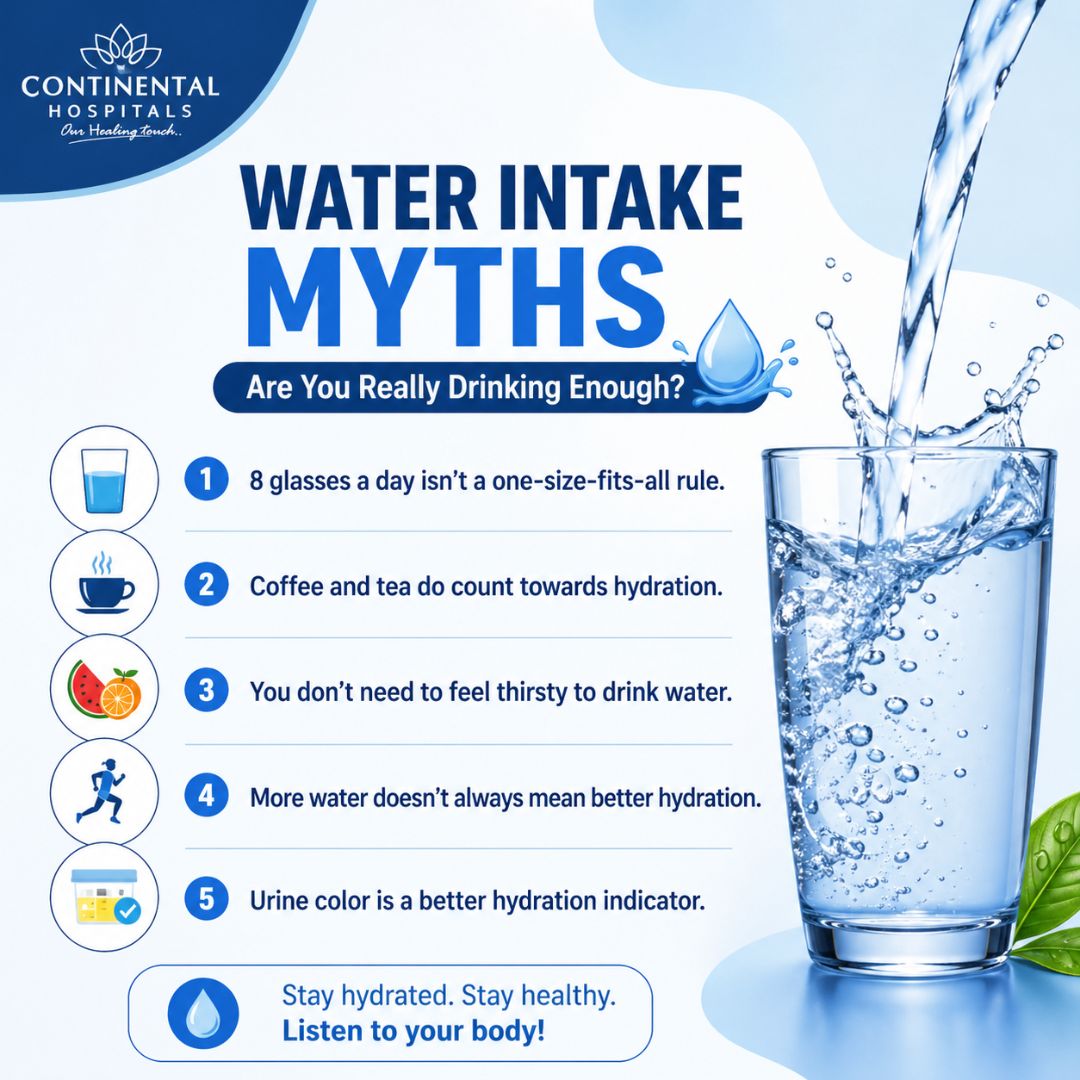
The phrase water intake myths often refers to the rigid rules we have been told since childhood. One of the most persistent myths is that everyone requires exactly eight glasses of water per day. In reality, hydration is highly individual. Your needs depend on your age, weight, activity level, and the climate you live in. Someone working in an air-conditioned office has different requirements than an athlete training outdoors.
Another common myth is that caffeinated drinks like tea or coffee cause dehydration. While caffeine has a mild diuretic effect, the water used to brew these drinks still contributes to your overall daily fluid intake. Similarly, many people believe that you must drink plain water to stay hydrated. In truth, about 20 percent of our daily fluid intake comes from moisture-rich foods like cucumbers, watermelons, and oranges.
Experiencing dehydration or metabolic issues? Visit our General Physician Department at Continental Hospitals—expert care for your long-term wellness.
Understanding the Benefits of Drinking Water
Focusing on the benefits of drinking water helps us understand why getting the right amount matters. Water is essential for almost every bodily function. It regulates body temperature through sweat, lubricates joints to prevent discomfort, and protects sensitive tissues. Furthermore, drinking water benefits your digestive system by preventing constipation and helping the kidneys flush out waste products effectively.
When you drink water consistently, you may also notice improvements in your skin health and cognitive function. Even mild dehydration can lead to brain fog, headaches, and irritability. By maintaining proper hydration levels, you ensure that your blood volume stays consistent, which helps your heart pump blood more easily throughout your body.
Can You Drink Too Much Water?
While we often focus on not drinking enough, drinking too much water is a real concern known as hyponatremia. This occurs when an excessive amount of water dilutes the sodium levels in your blood to dangerously low levels. This is why it is important to listen to your body rather than forcing yourself to hit a specific numerical goal. The benefits of water are maximized when you balance your intake with your body's actual needs.
Signs You Are Properly Hydrated
Instead of counting glasses, look for these physical indicators to know if you are meeting your needs?

- Urine Color: Clear or pale yellow urine usually indicates good hydration. Dark yellow or amber-colored urine is a sign you need more fluids.
- Thirst Levels: While thirst is a late signal, it is still a reliable one. If you feel thirsty, your body is already asking for help.
- Skin Elasticity: Healthy, hydrated skin snaps back quickly when pinched gently.
- Energy Levels: If you feel sudden fatigue in the afternoon, a glass of water might be more effective than a sugary snack.
Why Choose Continental Hospitals for Your Wellness?
When it comes to managing your health and understanding complex nutritional needs, choosing the right healthcare partner is vital. Continental Hospitals stands as the best hospital in Hyderabad, offering a holistic approach to patient care. We believe that preventive health starts with accurate information and expert guidance.
Our Commitment to Excellence
Continental Hospitals is a premier multi-specialty healthcare provider known for its world-class infrastructure and patient-centric philosophy. We are proud to hold prestigious accreditations, including the Joint Commission International (JCI) and the National Accreditation Board for Hospitals & Healthcare Providers (NABH). These certifications are a testament to our adherence to the highest global standards of safety and quality in medical care.
Advanced Diagnostic and Treatment Facilities
Our facility is equipped with state-of-the-art technology to handle everything from routine check-ups to complex surgical procedures. Whether you are seeking advice on nutrition or requiring specialized treatment for a chronic condition, our team of experts is dedicated to providing evidence-based medical solutions.
Why We Stand Out?
International Standards: Our JCI accreditation ensures that you receive care at par with the best hospitals globally.
Expert Specialists: We house a diverse team of doctors who are leaders in their respective fields.
Patient Safety: Our NABH accreditation highlights our commitment to rigorous safety protocols and quality improvement.
Comprehensive Care: From diagnostics to rehabilitation, we provide a seamless healthcare journey under one roof.
Practical Tips to Stay Hydrated
To avoid falling for water intake myths, try incorporating these simple habits into your daily routine.
- Keep a reusable water bottle with you at all times to encourage frequent sipping.
- Add a slice of lemon or mint to your water if you find the taste of plain water unappealing.
- Eat plenty of fruits and vegetables with high water content.
- Drink a glass of water immediately after waking up to jumpstart your metabolism.
- Monitor your hydration more closely during the hot summer months or during intense exercise.
Conclusion
Understanding the truth behind water intake myths allows you to take better control of your health without the stress of arbitrary rules. Hydration is a personal journey, and paying attention to your body's signals is the best way to ensure you are getting enough. By focusing on the genuine benefits of drinking water and recognizing the signs of dehydration early, you can maintain peak physical and mental performance.
If you find that you are struggling with persistent symptoms like chronic fatigue, frequent headaches, or unexplained dizziness, it may be time to consult a professional. Proper hydration is a pillar of health, but it is only one part of a larger picture that includes professional medical oversight.
If you suffer from symptoms of chronic dehydration, kidney issues, or metabolic imbalances, we encourage you to seek expert advice. At Continental Hospitals, our specialists are ready to help you navigate your health journey with precision and care.
Book an appointment today with our best general physician in Hyderabad at Continental Hospitals to ensure your lifestyle habits are supporting your long-term wellness.
Related Blog Topics: