.webp)


Understanding why we eat is the first step toward true wellness. Many people assume that a growling stomach is the only sign of hunger, but the human body is far more complex. Our relationship with food is driven by biological needs, sensory experiences, and even our emotional state. By identifying the different types of hunger, you can make informed choices that support your long-term health.
Defining Physical vs Emotional Hunger
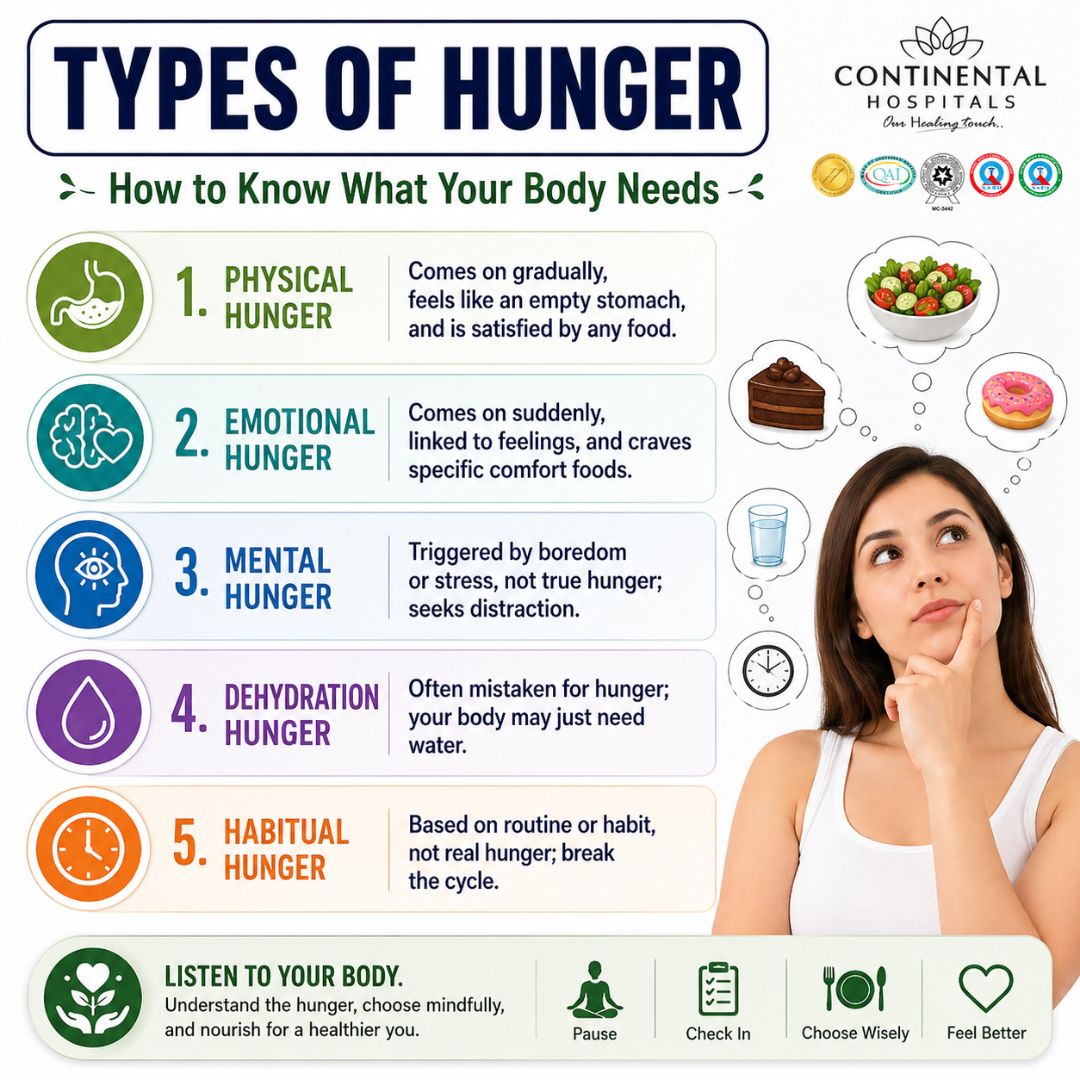
The most important distinction to make is between physical and emotional hunger. Physical hunger is a biological necessity. It develops slowly over time and is your body’s way of signaling that it requires more fuel to maintain energy levels and organ function. When you experience physical hunger, almost any nutritious food sounds appealing.
Emotional hunger, on the other hand, comes on suddenly. It is often triggered by stress, boredom, or sadness rather than a genuine need for calories. This type of hunger usually creates a craving for specific comfort foods, often those high in sugar or fats. Recognizing this difference helps prevent overeating and promotes better digestive health.
Constant hunger or weight changes? Visit our Nutrition & Dietetics department at Continental Hospitals, Hyderabad for expert evaluation and care.
The 7 Common Types of Hunger
To truly understand hunger cues and signals, we must look at the different ways our senses and minds interact with the idea of food.
1. Stomach Hunger
This is the classic "gnawing" feeling. It is a physical sensation caused by the hormone ghrelin, which signals the brain when the stomach is empty. You might feel a slight ache or hear growling sounds. This is a clear signal that your body requires a meal.
2. Brain Hunger
Often confused with physical need, brain hunger is based on the clock or a routine. You might feel "hungry" simply because it is 1:00 PM and that is your usual lunch hour. It is a mental habit rather than a physical requirement.
3. Eye Hunger
Have you ever felt full until you saw a tray of desserts? That is eye hunger. When we see food that is aesthetically pleasing or brightly colored, our brain can override our fullness signals, convincing us to eat more.
4. Nose Hunger
The smell of fresh bread or sizzling spices can trigger an immediate desire to eat. This is why many food establishments ensure their aromas reach the street. It bypasses the stomach and speaks directly to the appetite centers in the brain.

5. Heart Hunger
This is the essence of emotional eating. It is the desire to eat to fill an emotional void or to celebrate a memory. We often reach for foods that remind us of childhood or provide a temporary sense of security during difficult times.
6. Cellular Hunger
Sometimes the body craves specific nutrients. If you find yourself wanting citrus fruits, your body might be signaling a need for Vitamin C. This type of hunger is subtle and requires a high level of body awareness to interpret correctly.
7. Mouth Hunger
This is the desire for specific textures. You might crave something crunchy, cold, or creamy. It is more about the sensory experience of chewing than the actual nourishment of the food.
Recognizing Hunger Cues and Signals
Learning to listen to your body requires patience. Instead of reacting immediately to an urge to eat, take a moment to assess the situation. Use these points to help identify your true needs:
The Water Test: Sometimes thirst is masked as hunger. If you feel an urge to snack, drink a glass of water and wait ten minutes.
The Energy Check: Physical hunger is often accompanied by a dip in energy or a slight loss of focus. If you feel energetic but want to eat, it may be emotional or eye hunger.
The Satiety Scale: On a scale of one to ten, ask yourself how full you are. If you are at a five, you likely do not need food yet.
The Broccoli Test: If you aren't hungry enough to eat a piece of plain broccoli or an apple, you are likely experiencing emotional hunger rather than physical hunger.
Why Do I Feel Hungry All the Time?
If you find yourself constantly asking why do I feel hungry, there may be underlying factors beyond simple appetite. Frequent hunger can be caused by:
- Lack of Sleep: Poor sleep increases ghrelin (the hunger hormone) and decreases leptin (the fullness hormone).
- High Stress: Cortisol can trigger cravings for high-energy, sugary foods.
- Protein Deficiency: Protein is the most satiating macronutrient. If your meals are mostly carbohydrates, you will feel hungry again very quickly.
- Dehydration: As mentioned, the brain often confuses thirst signals with hunger signals.
- Medical Conditions: Hormonal imbalances or fluctuations in blood sugar can lead to constant feelings of emptiness.
Why Choose Continental Hospitals for Your Health Journey?
When it comes to managing your health, choosing the right partner is vital. Continental Hospitals is recognized as the best hospital in Hyderabad for comprehensive wellness and metabolic health. Our approach goes beyond treating symptoms; we look at the root causes of nutritional and hormonal imbalances.
We pride ourselves on our world-class infrastructure and our commitment to patient-centered care. Our facility is designed to provide a healing environment where technology meets compassion.
Accreditations and Quality Standards
Continental Hospitals maintains the highest levels of clinical excellence. We are proud to hold JCI (Joint Commission International) accreditation, which is the gold standard for global healthcare. This ensures that every process, from diagnosis to treatment, meets rigorous international safety and quality protocols. Additionally, our NABH accreditation reflects our dedication to providing high-quality care to the local community in Hyderabad, ensuring that every patient receives the best possible medical attention.
Expert Care and Multidisciplinary Approach
Our team consists of leading endocrinologists, nutritionists, and gastroenterologists who work together to help you understand your body. Whether you are struggling with weight management, digestive issues, or hormonal hunger triggers, we provide personalized plans tailored to your unique biology.
Conclusion
Understanding the types of hunger is a powerful tool for a healthier life. By distinguishing between physical needs and emotional triggers, you can nourish your body correctly and avoid the pitfalls of mindless eating. Your health is a long-term investment, and being mindful of your hunger cues is a significant step toward achieving balance.
If you suffer from constant hunger, unexplained weight changes, or metabolic concerns, it is essential to consult a professional. At Continental Hospitals, we are dedicated to helping you find the answers you need for a healthier tomorrow. Consult our best nutritionists and dietitians in Hyderabad today for a comprehensive evaluation.
Related Blog Topics: